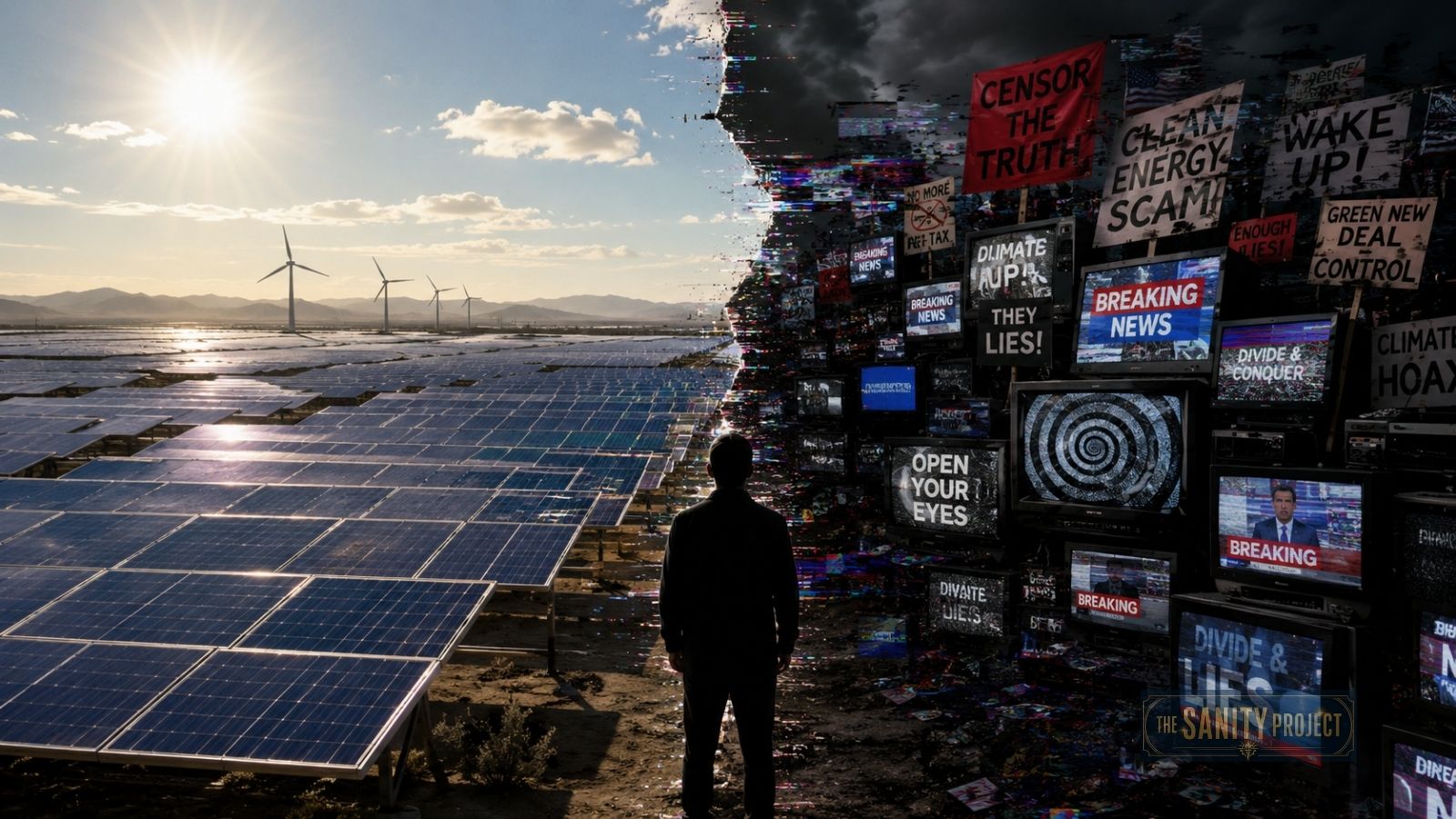
For years, the public has been told a simple story about renewable energy: wind and solar are unreliable, too expensive, too idealistic, and too politically divisive. According to this narrative, the transition away from fossil fuels is stumbling because the technology itself simply is not ready. All this can be labelled as renewable energy misinformation.
But the numbers tell a very different story.
Renewable energy is not collapsing under the weight of bad economics. In many parts of the world, it has already become the cheapest form of electricity humanity has ever produced. Solar costs continue to fall, wind power continues to scale globally, and battery storage technology improves year after year. Investment capital keeps flowing toward clean energy because, from a purely market-driven perspective, the math increasingly favours it.
And yet, despite this momentum, renewable energy is facing growing political hostility across multiple countries at the exact moment it becomes economically dominant.
That contradiction matters.
Because when a technology becomes cheaper, more scalable, and more strategically valuable — while simultaneously becoming more politically toxic — something larger is happening beneath the surface. This is no longer simply a debate about electricity generation. It is a battle over information, perception, and power.
🗝️ Quick Answer
Renewable energy is not failing economically or technologically. In many regions, wind and solar are now cheaper than fossil fuels, attracting massive global investment. However, political interests, media narratives, lobbying campaigns, and coordinated misinformation efforts are actively shaping public perception against renewables. The real conflict is no longer about whether renewable energy works — it is about who controls the narrative surrounding it.
The Economics No Longer Support the Anti-Renewable Narrative
The single most important fact in the modern energy debate is also the least discussed: renewables are winning on price.
According to recent data from the International Renewable Energy Agency (IRENA), approximately 91% of new renewable energy projects worldwide are now cheaper than the least expensive fossil fuel alternatives. Utility-scale solar and onshore wind continue undercutting coal and natural gas in many major markets, fundamentally reshaping global energy economics.
For decades, critics framed renewable energy as a noble but unrealistic environmental aspiration — something society might eventually adopt once technology matured and costs declined enough to make it practical. But that transition has already happened.
Subscribe To Our Newsletter!
Solar photovoltaic power has become dramatically cheaper over the past decade due to manufacturing scale, technological improvements, and supply chain optimization. Wind energy continues expanding globally as turbine efficiency improves and installation costs fall. Battery storage systems are also evolving rapidly, particularly with the rise of lithium iron phosphate (LFP) chemistry, which reduces reliance on expensive, cobalt-heavy designs.
Meanwhile, fossil fuel generation remains vulnerable to:
- geopolitical instability
- fuel price volatility
- transportation bottlenecks
- commodity speculation
- aging infrastructure
- environmental liabilities
The free market is responding accordingly.
Global investment in renewable infrastructure continues to expand because investors follow returns, not ideology. Countries seeking greater energy independence increasingly view decentralized renewable systems as strategic economic assets rather than environmental luxuries.
That is why the current political backlash against renewables feels so strange when viewed through a purely economic lens. If the technology is becoming cheaper, if investors continue embracing it, and if consumers benefit from lower operating costs, why is opposition intensifying instead of fading?
The answer increasingly lies outside economics.
The Real Battlefield Is Public Perception
When industries can no longer win on price, they often shift the battle elsewhere.
Historically, dominant industries facing disruption rarely surrender quietly. Instead, they attempt to slow transitions through lobbying, regulation, narrative shaping, political influence, and cultural framing. Renewable energy is now entering that exact phase.
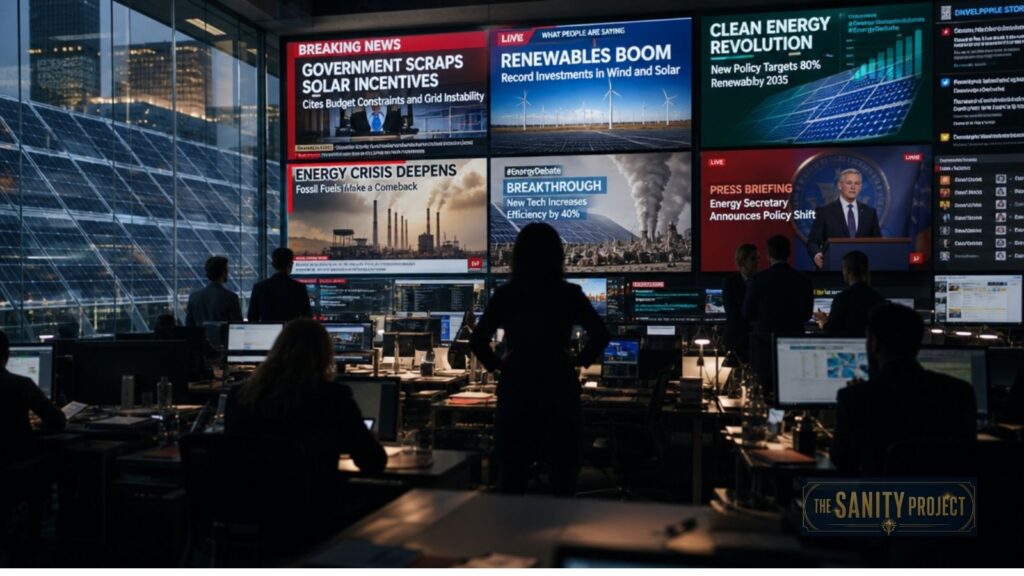
The modern energy debate increasingly resembles an information war rather than a technology debate. Instead of arguing that renewables are mathematically inferior, many anti-renewable narratives focus on emotional and cultural triggers:
- rural identity
- political tribalism
- nationalism
- fear of change
- distrust of elites
- grid reliability anxieties
- resentment toward environmental movements
The objective is not always to prove renewable energy is bad technology. The objective is to make renewable energy culturally controversial.
This distinction matters enormously. Once a technology becomes tied to political identity, people stop evaluating it rationally and begin evaluating it emotionally. That shift helps explain why discussions of renewable energy often feel disconnected from the underlying economic reality.
A homeowner rarely asks whether a solar panel is “left-wing” when trying to lower electricity bills. But political messaging can transform a practical technology into a symbolic cultural issue. Once that happens, facts alone struggle to compete against identity-driven narratives.
Alberta Became a Warning Sign
One of the clearest examples of this dynamic emerged in Alberta, Canada.
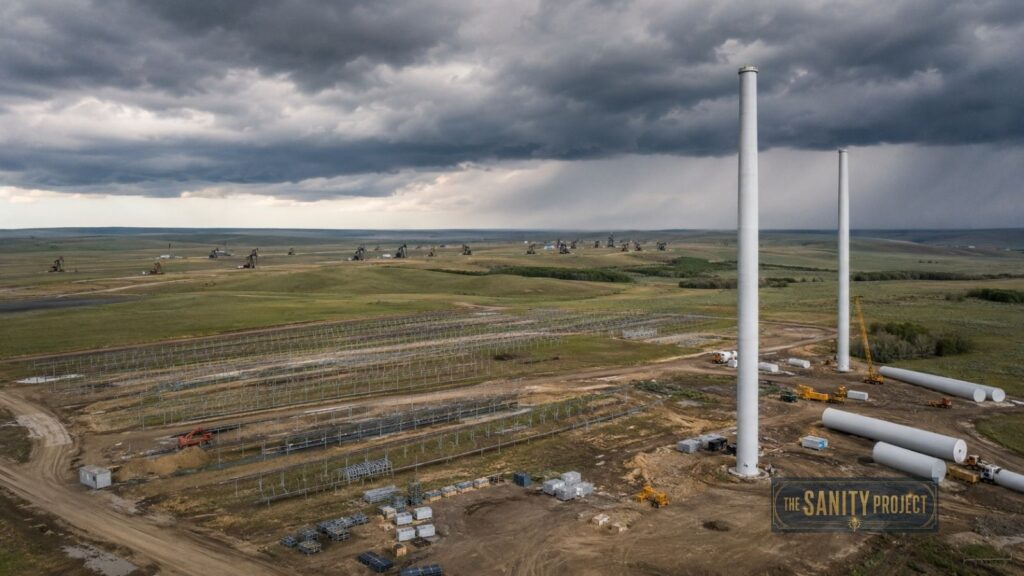
Historically known for oil and gas production, Alberta also possesses exceptional wind and solar resources. Combined with its deregulated electricity market, the province rapidly became one of Canada’s fastest-growing renewable investment environments. Private capital poured in, major companies signed long-term renewable power purchase agreements, and rural landowners began leasing portions of farmland for solar and wind projects while continuing agricultural operations.
By 2022, Alberta accounted for the majority of Canada’s renewable energy growth.
Then the provincial government abruptly imposed a moratorium on new renewable energy projects.
The stated reasons included concerns over:
- land reclamation
- visual impacts
- agricultural preservation
- regulatory review
But the economic consequences were immediate. Billions in potential investment stalled or disappeared entirely. Projects already deep in regulatory review were frozen, while investor confidence weakened dramatically.
This is where the contradiction becomes impossible to ignore.
A government that strongly identified itself as pro-business, pro-investment, pro-market, and anti-regulation suddenly used direct government intervention to halt private-sector energy development. Not because the market rejected renewables, but because renewables were succeeding too quickly.
That distinction is critical.
Renewables were not struggling to attract investment capital. They were attracting too much of it. The backlash emerged precisely because the market momentum became difficult to ignore.

How Media Narratives Shape Energy Reality
Economic battles alone cannot fully explain the growing hostility toward renewable energy. Media ecosystems now play a central role in shaping how the public interprets the energy transition.
Most people do not directly study:
- battery chemistry
- grid economics
- utility financing
- energy markets
- infrastructure planning
Instead, they absorb simplified narratives through headlines, social media clips, television segments, political commentary, and algorithmically amplified outrage. That creates enormous power for narrative manipulation.
A striking example emerged in Australia, where televised investigations framed renewable energy infrastructure as environmentally destructive and dependent on exploitative mining practices.
Some concerns surrounding mineral extraction are legitimate. Mining carries real environmental and human costs that deserve scrutiny. However, many broadcasts blurred critical distinctions between:
- older battery technologies
- modern LFP battery systems
- industrial mining operations
- artisanal mining
- legacy projects
- current grid infrastructure
The result was an emotionally powerful narrative associating renewable energy with exploitation, hypocrisy, and environmental destruction.
This is where modern misinformation becomes especially sophisticated. It rarely relies on complete fabrication. Instead, it combines:
- selective framing
- omission
- emotional imagery
- outdated information
- exaggerated conclusions
- partial truths
That approach is far more effective because it feels believable. In the age of algorithm-driven media, emotionally charged narratives often spread much faster than nuanced analysis or technical clarification.

The Culture War Around Energy Was Manufactured
One of the most fascinating developments in modern politics is how energy infrastructure became absorbed into broader cultural identity conflicts.
Solar panels became associated with urban elites. Electric vehicles became political symbols. Wind turbines became ideological flashpoints.
This transformation did not happen organically.
It emerged through years of messaging campaigns that reframed renewable technology as:
- ideological
- partisan
- elitist
- anti-rural
- anti-traditional
Once that framing takes hold, opposition no longer depends on economic logic. People begin defending identity rather than evaluating evidence.
This strategy mirrors countless historical examples in which industries facing disruption attempted to slow adoption by politicizing the change itself. Similar patterns appeared with:
- tobacco regulation
- seatbelt laws
- leaded gasoline
- acid rain policy
- ozone regulation
In many cases, delay becomes the primary objective. Not necessarily permanent victory. Even slowing adoption by a decade can preserve billions in legacy revenue and infrastructure dominance.
Fossil Fuel Dependency Is Also a National Security Issue
The renewable energy debate is increasingly about more than climate policy. It is also becoming a geopolitical issue.
Countries dependent on imported fossil fuels remain vulnerable to:
- supply disruptions
- price shocks
- pipeline disputes
- shipping chokepoints
- geopolitical conflict
The war in Ukraine accelerated this realization dramatically across Europe. As energy prices surged and gas supplies became uncertain, many countries rushed to expand renewable infrastructure not primarily for environmental reasons, but for strategic security.
Renewables offer something fossil fuels cannot fully provide: localized energy generation.
No foreign government can embargo sunlight. No hostile navy can blockade the wind.
Distributed renewable infrastructure combined with modern battery storage improves:
- energy resilience
- grid redundancy
- local autonomy
- long-term price stability
That does not mean renewables solve every energy challenge overnight. Grid modernization remains essential, storage technology continues evolving, and base-load generation questions remain complex.
However, the long-term strategic direction is becoming increasingly clear.
The countries that control future energy systems will likely possess major geopolitical advantages. Which raises an uncomfortable possibility: some political resistance to renewable expansion may no longer be purely economic or ideological. It may also involve preserving existing power structures tied to legacy energy systems.
The Information War Is Now the Real Story
At this point, the central conflict surrounding renewable energy is no longer technological viability.
The technology works. The economics increasingly work. The investment trends are visible.
The real struggle now revolves around public perception.
Can renewable energy be framed as:
- dangerous
- unreliable
- ideological
- culturally threatening
- economically risky
…even when underlying data increasingly suggests otherwise?
That is the true battlefield.
Public opinion shapes:
- elections
- regulations
- zoning laws
- infrastructure approvals
- subsidy structures
- investment confidence
Modern misinformation campaigns rarely attempt to convince everyone completely. Often, their objective is simply to create enough confusion, exhaustion, and polarization to slow action. In that sense, the strategy can succeed even when the facts eventually emerge.
A misleading narrative viewed by millions today can shape political behaviour long before corrections reach smaller audiences later.
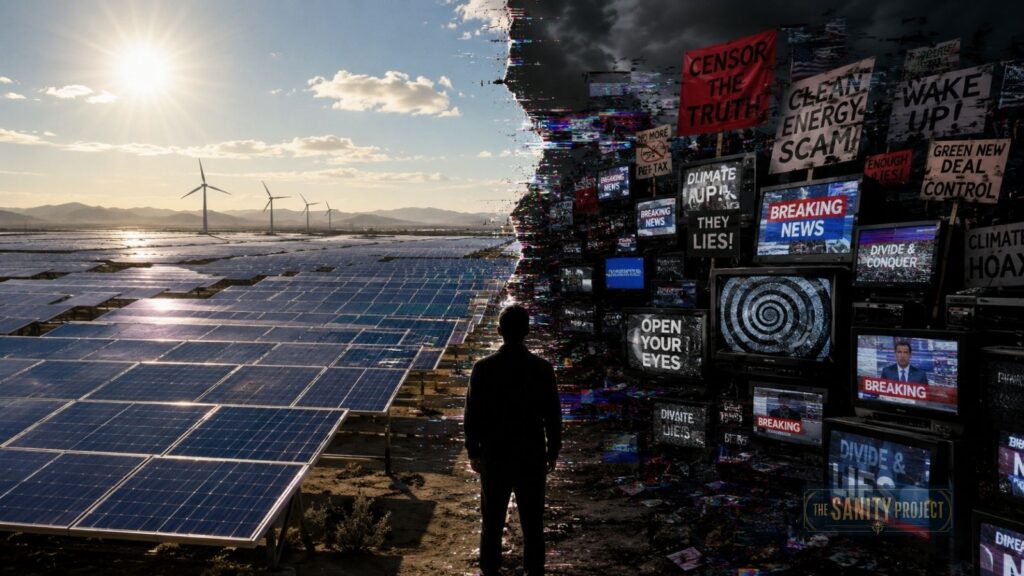
Renewables Are Not Losing the Economic War — They Are Losing the Narrative War
This distinction may define the next decade of global energy politics.
Renewable energy did not become controversial because it failed. It became controversial because it succeeded.
As renewables became cheaper, scalable, and strategically important, the industries and political systems built around older energy models faced mounting pressure. The response was not always direct economic competition. Increasingly, it became narrative warfare:
- culture wars
- media framing
- political identity
- fear-based messaging
- manufactured outrage
- information overload
The modern energy debate is no longer simply about electricity generation. It is about who controls the story people believe about the future itself.
That is why this conversation matters far beyond solar panels or wind farms. Whenever the facts consistently point one direction while public narratives push another, it is worth asking a deeper question:
Who benefits from the confusion?
Frequently Asked Questions About Renewable Energy Misinformation
Why are renewables becoming politically controversial?
Renewables are becoming politically controversial because energy systems are tied to massive economic and political interests. As renewable technologies become cheaper and more competitive, some industries and political movements increasingly frame them through cultural and ideological narratives rather than purely economic arguments.
Is renewable energy actually cheaper than fossil fuels?
In many regions, yes. According to multiple international energy agencies, utility-scale solar and wind are now often cheaper than new fossil fuel generation projects. Operating costs for renewables are also typically lower because sunlight and wind do not require fuel extraction or transportation.
What is renewable energy misinformation?
Renewable energy misinformation refers to misleading claims, selective framing, or exaggerated narratives about renewable technologies. This can include false claims about battery chemistry, grid reliability, environmental impacts, or energy costs that distort public understanding of the energy transition.
Why is Alberta often discussed in renewable energy debates?
Alberta became a major case study because the province rapidly attracted renewable investment before introducing a government moratorium on new projects. Critics argue that this demonstrated political interference in an otherwise growing free-market renewable sector.
Are renewables replacing fossil fuels completely?
Not immediately. Most energy experts expect a long-term transition involving multiple energy sources. However, renewable energy capacity continues to expand rapidly worldwide due to falling costs, energy security concerns, and investment trends.
If there’s one thing to remember, it’s this: when the data says one thing but the narrative says another, that gap rarely appears by accident.
Useful Resources
https://www.irena.org/Publications
https://www.iea.org/events/renewables-2025
https://www.pembina.org/pub/investment-impact-albertas-renewable-energy-moratoriumhttps://thetyee.ca/Opinion/2024/08/06/UCP-Gutted-Alberta-Renewable-Energy-Future/
Pembina Traces Impact of Renewables Moratorium After Alberta Cabinet Minister Attacks
https://www.desmog.com/2024/11/02/alberta-conservatives-pass-climate-denial-resolution-12-to-celebrate-co2-pollution/
https://www.desmog.com/2025/01/29/danielle-smiths-capitulation-to-big-coal-echoes-her-fawning-interactions-with-donald-trump/
Who’s paying for AB Premier’s pro-fossil fuel COP28 delegation
https://thetyee.ca/Opinion/2023/07/19/Smith-Presses-With-Handouts-Oil-Gas/
https://www.cbc.ca/news/canada/calgary/alberta-renewable-energy-pause-cancelled-development-1.7283753
Alberta’s renewables pause is leaving billions of dollars in limbo. Here’s what you need to know
https://www.theguardian.com/environment/2026/apr/22/channel-seven-7news-spotlight-clean-energy-investigation-ignores-fundamental-facts
https://www.abc.net.au/mediawatch/episodes/spotlight/106613562https://reneweconomy.com.au/how-climate-and-renewables-disinformation-networks-are-fuelling-a-major-national-security-threat/
https://www.theguardian.com/environment/article/2024/aug/08/fossil-fuel-industry-using-disinformation-campaign-to-slow-green-transition-says-un
https://www.irena.org/News/pressreleases/2025/Jul/91-Percent-of-New-Renewable-Projects-Now-Cheaper-Than-Fossil-Fuels-Alternatives
https://www.pewresearch.org/science/2026/04/03/americans-shifting-views-on-energy-issues/
https://www.sciencedirect.com/science/article/pii/S2542519626000082
https://www.congress.gov/117/meeting/house/114185/documents/HHRG-117-GO00-MState-C001078-20211028.pdf
https://www.nrdc.org/bio/zanagee-artis/unveiling-big-oils-campaign-lies
https://www.ehn.org/fossil-fuel-industry-spreads-misinformation-to-hinder-global-shift-to-renewable-energy
https://www.fractracker.org/2024/04/the-power-of-misinformation-in-blocking-clean-energy-reform/
https://www.gem.wiki/Kerry_Stokes
https://www.reuters.com/business/energy/around-90-renewables-cheaper-than-fossil-fuels-worldwide-irena-says-2025-07-22/
https://www.wri.org/insights/state-clean-energy-charted
https://theconversation.com/fossil-fuel-propaganda-is-stalling-climate-action-heres-what-we-can-do-about-it-272227
https://climate.law.columbia.edu/content/opposition-renewable-energy-facilities-united-states-june-2025-edition
https://edmontonjournal.com/news/politics/alberta-ucp-danielle-smith-renewable-energy-restrictions