A lot of the public conversation around electric vehicles follows a familiar script. First comes the promise: cleaner transport, lower emissions, less dependence on oil. Then comes the backlash: what about the batteries? And somewhere in that second act, ev battery recycling gets treated like either a magic fix or a fatal flaw.
Neither view is especially useful.
The real story is less dramatic and more interesting. EV battery recycling matters, but not for the reasons people usually assume. It is not the single solution that makes electric vehicles morally tidy. It is also not proof that the whole transition is a scam. It is an industrial systems problem – one shaped by chemistry, economics, logistics, and time.
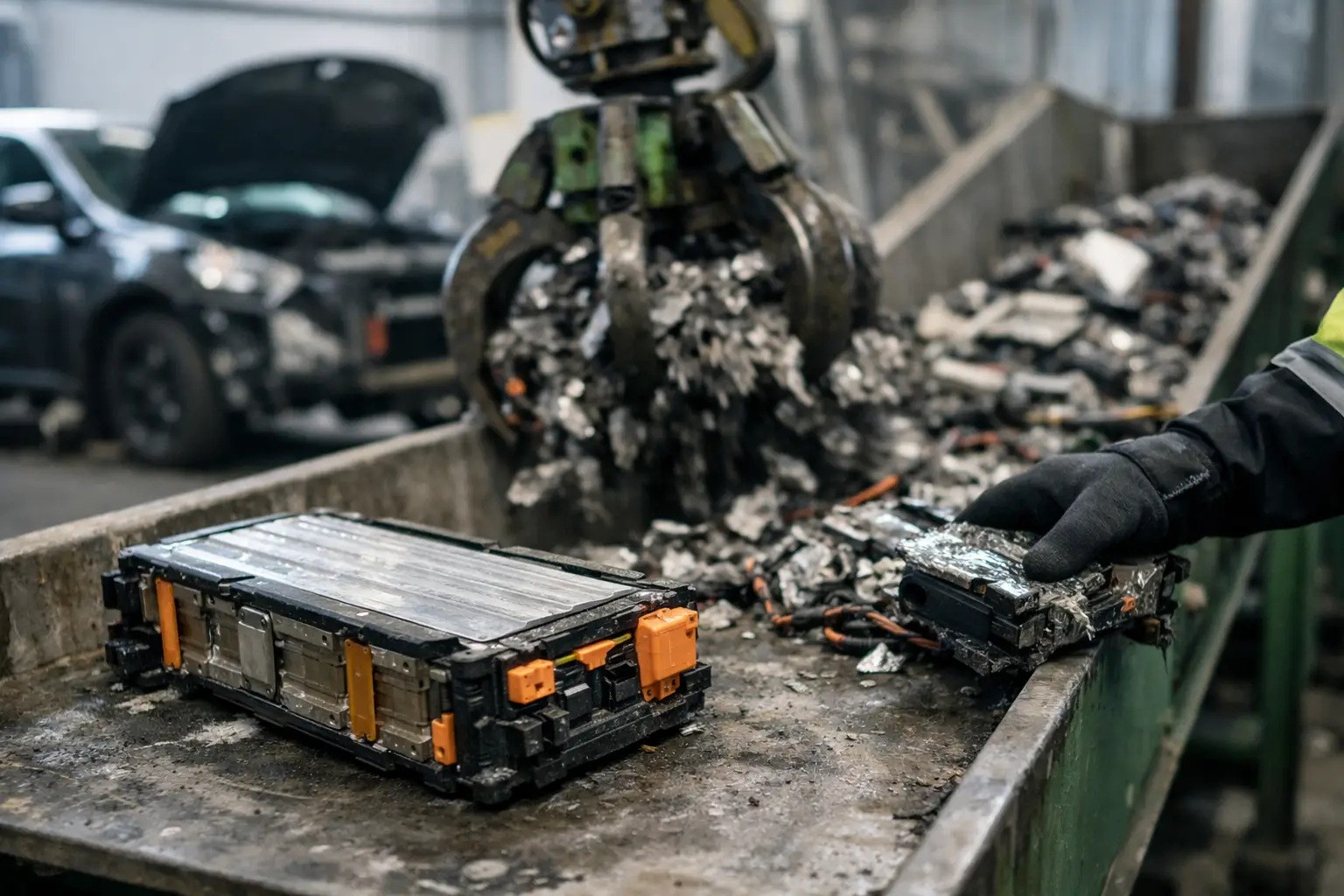
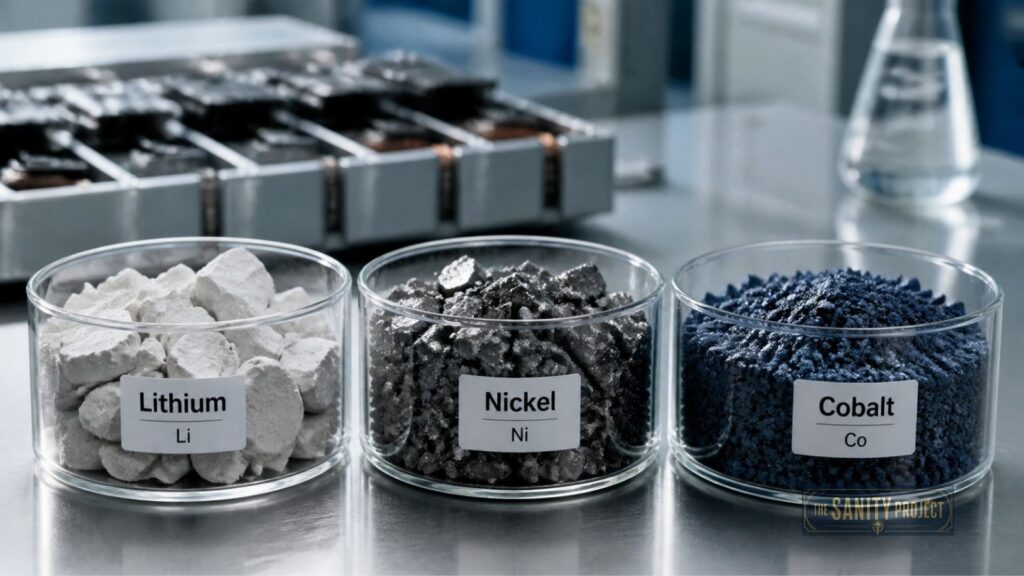
Quick Answer: EV battery recycling prevents landfill waste and recovers critical minerals like lithium, cobalt, and nickel. Facilities process depleted batteries by shredding them into a material called “black mass”. This is then refined to extract up to 95% of the original battery components for use in new battery cells.
What EV battery recycling is actually trying to solve
Most EV batteries are lithium-ion batteries, but that label hides a lot of variation. Different battery chemistries contain different mixes of lithium, nickel, cobalt, manganese, graphite, iron, and other materials. That matters because recycling is not one process. It is several different recovery strategies dealing with several different battery designs, all while trying not to catch fire.
At a high level, the goal is simple: recover valuable materials from used batteries and feed them back into new production. The logic sounds straightforward enough. These batteries contain expensive minerals. Mining is slow, politically messy, and environmentally disruptive. So recycle the old ones and reduce pressure on the supply chain.
Fair enough. But there is a catch that tends to get lost in headline-level discussions. The battery recycling industry today is not mainly solving a giant wave of dead EV packs, because that wave has not fully arrived yet. Most electric cars on the road are still relatively new, and many battery packs last longer than early critics expected. In practice, recyclers today often process manufacturing scrap, damaged packs, warranty returns, and consumer electronics more than end-of-life EV batteries.
That does not make the industry less important. It just means the timing is different from the narrative. We are building the plumbing before all the water shows up.
Why are economics more complicated than the storyline
The popular version of this story says batteries are full of precious materials, so recycling them should be obviously profitable. Sometimes it is. Sometimes it is not.
A battery pack is heavy, hazardous, and expensive to transport. It has to be discharged, dismantled, sorted, and processed under tightly controlled conditions. That alone raises costs. Then there is the chemistry problem. Packs with high nickel and cobalt content tend to offer better recycling economics because those metals are valuable. But many automakers are shifting toward lithium iron phosphate, or LFP, especially for lower-cost vehicles. LFP batteries are often cheaper, durable, and politically attractive because they rely less on cobalt and nickel. They are also less lucrative to recycle.
Subscribe To Our Newsletter!
So the industry has a slightly awkward challenge. Some battery designs that look best from a cost and supply chain perspective can weaken the direct business case for recycling. Progress, as usual, refuses to be neat.
Commodity prices also matter. If virgin lithium, nickel, or cobalt prices are high, recycled material looks more attractive. If those prices fall, margins tighten. That means the long-term case for EV battery recycling is real, but near-term profitability can swing with market conditions. This is one reason so many recycling companies talk about scale, strategic partnerships, and future feedstock. They are not wrong. They are also not operating inside the frictionless circular economy imagined by marketing decks.
How EV battery recycling works in practice
The main recycling methods
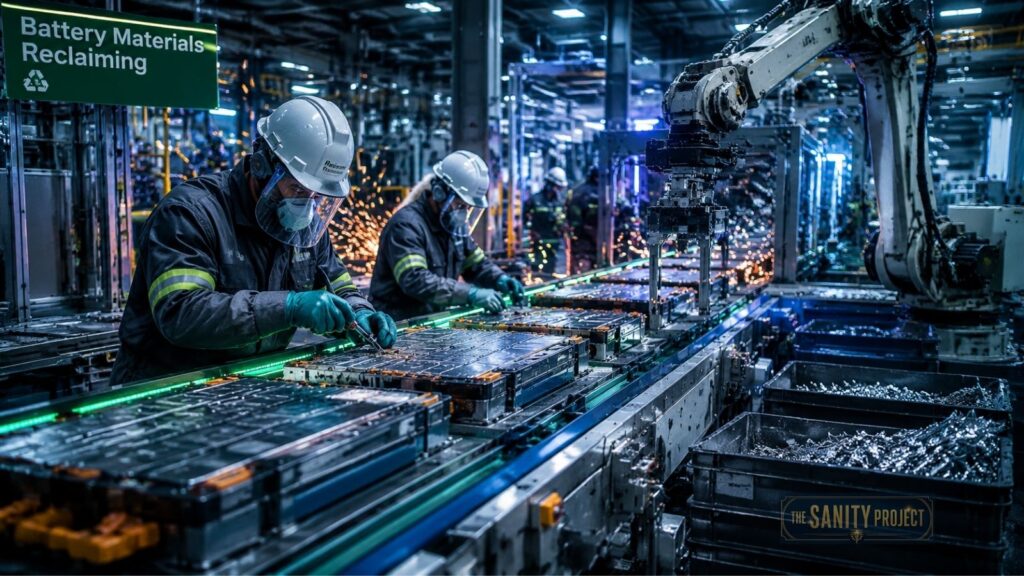
Most current recycling approaches fall into three broad categories: pyrometallurgy, hydrometallurgy, and direct recycling.
Pyrometallurgy uses high heat to smelt battery materials. It is a relatively established process and can handle mixed battery feedstocks, which makes it operationally convenient. The downside is that it can be energy-intensive and may recover some materials better than others. Lithium and aluminum recovery, for example, may be less efficient depending on the process.
Hydrometallurgy uses chemical solutions to extract metals from mechanically shredded or pre-processed batteries. This approach can achieve higher recovery rates for materials like lithium, nickel, cobalt, and manganese. It often receives more attention because it aligns better with the goal of recovering a broader range of battery-grade materials. But it also requires careful chemical handling, process control, and investment.
Direct recycling is the most intriguing on paper. Instead of breaking materials down into constituent metals, it aims to preserve and restore cathode materials more directly. If it works at scale, it could reduce processing costs and energy use. That is the appeal. The catch is that battery designs vary, feedstocks are inconsistent, and scaling a lab-friendly process into an industrial one is where many elegant ideas end up as PowerPoint slides.
That does not mean direct recycling is hype. It means the usual thing: promising is not the same as maturity.
The hidden bottleneck is logistics, not just chemistry
A battery pack is not like an empty soda can. You cannot toss it in a bin and call it infrastructure.
Used EV batteries must be identified, collected, stored, classified, transported, and processed in accordance with safety rules designed to prevent fires and environmental damage. The packs can be large, structurally integrated into vehicles, and difficult to remove. Damage from crashes can make handling riskier. Different manufacturers use different pack designs, modules, and cell formats. Some are easier to disassemble than others. Some are clearly not designed with end-of-life processing as a priority.
This is where the recycling conversation often gets too abstract. Recovery rates in a controlled facility are only part of the equation. The system also depends on reverse logistics, standardized labelling, battery passports, disassembly practices, and regulations that define who is responsible at each stage. Without those pieces, even technically impressive recycling processes struggle to scale efficiently.
The United States and Canada are both moving in this direction, but the policy landscape is still uneven. That matters because recycling capacity is not just about building plants. It is about building an entire chain of custody.
Why second life may matter almost as much as recycling
There is another wrinkle. Not every EV battery that leaves a car is ready for the shredder.
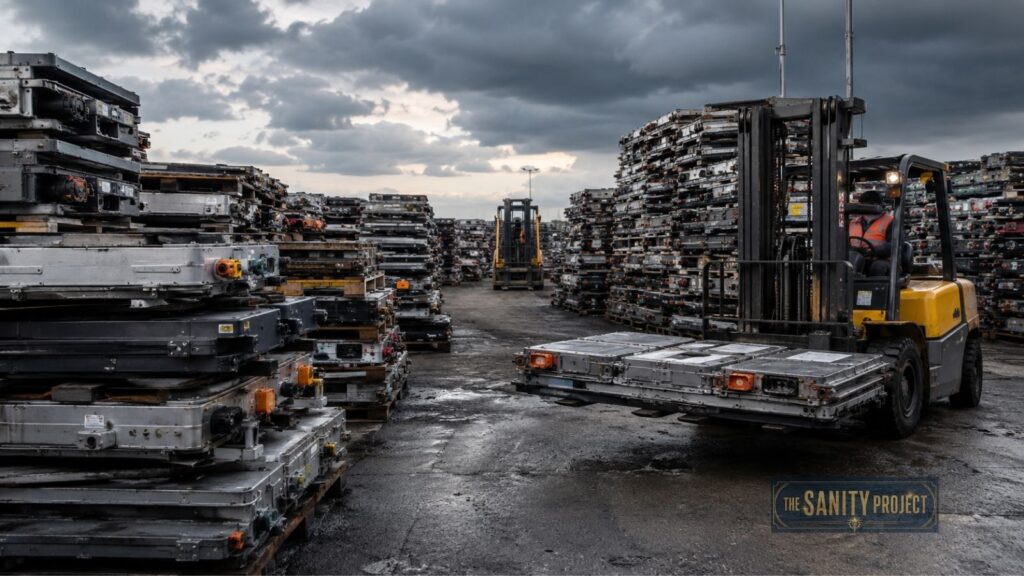
Battery packs often degrade gradually. A pack that no longer delivers the range or power expected in a vehicle may still be useful for stationary energy storage. That opens the door to so-called second-life applications, where retired EV batteries help store electricity for buildings, renewable systems, or grid support.
This sounds sensible, and in many cases it is. It can extend the battery’s productive life and delay recycling. But it also complicates recyclers’ supply forecasts. If batteries spend another five to ten years in secondary use, the flow of end-of-life material gets pushed further out. Good for resource efficiency, less convenient for anyone trying to build a recycling business on predictable volume.
Again, the theme here is not that the system is broken. It is that industrial transitions happen in layers, not slogans.
The bigger question: will recycling reduce dependence on mining?
Yes, eventually – but not immediately, and not completely.
This is probably the most misunderstood part of the entire discussion. Even if EV battery recycling becomes highly efficient, it cannot eliminate the need for new mining during a period of rapid demand growth. If the total number of batteries in the economy is rising fast, there simply are not enough old batteries available yet to supply all the materials needed for new ones.
Recycling works best as a long-term supply stabilizer. It can reduce waste, improve domestic material security, and lower dependence on volatile global supply chains. It can also cut the environmental burden per battery over time, especially as recycled content gets fed back into manufacturing. But it does not erase the front-end material requirements of scaling an entirely new vehicle fleet.
That is not a failure. It is math.
The better framing is this: recycling is essential, but it is downstream. It helps close the loop after the loop exists at scale. During the buildout phase, mining, refining, and recycling all expand together. Anyone telling you that recycling alone will solve the battery supply is selling comfort. Anyone telling you recycling is irrelevant because mining still matters is missing the point from the opposite direction.
What a realistic outlook looks like
EV battery recycling is likely to become a major industry. The policy incentives are strengthening. Automakers want more secure supplies of critical materials. Manufacturers have financial reasons to recover scrap. And over time, more EV packs will reach the end of life.
But the smart view is measured. Recycling will not be a silver bullet, and it does not need to be. Its value lies in improving the material efficiency of the entire system, reducing exposure to geopolitical bottlenecks, and turning part of the waste stream back into an industrial input. That is meaningful, even if it is less cinematic than the usual narrative war.
A calmer way to think about this is simple. The future of electric vehicles does not depend on one perfect answer. It depends on whether messy systems can get steadily better. Battery recycling is one such system. Not glamorous, not magical, but very likely necessary – which, in the real economy, is usually the part that matters.