Ask ten people how the economy is doing, and you will often get a more dramatic answer than the data supports. That gap – perception vs economic reality – is not a minor quirk of public opinion. It shapes elections, spending decisions, business sentiment, and the broader sense that something is off even when headline indicators look decent.
This is where a lot of economic discussion goes sideways. People hear that GDP is growing, unemployment is low, or inflation is cooling, and then look at their rent, grocery bill, or credit card balance and think: compared to what, exactly? Fair question. The problem is not that people are irrational. It is that economic reality is measured one way, experienced another, and narrated in a third.
Quick Answer: The gap between economic perception and objective reality drives consumer behaviour and market trends. While macro-indicators like GDP and inflation rates define reality, personal factors like grocery bills and housing costs drive the perception. When these two disconnect, it can create profound impacts on spending, investing, and politics.
Why perception vs economic reality keeps drifting apart
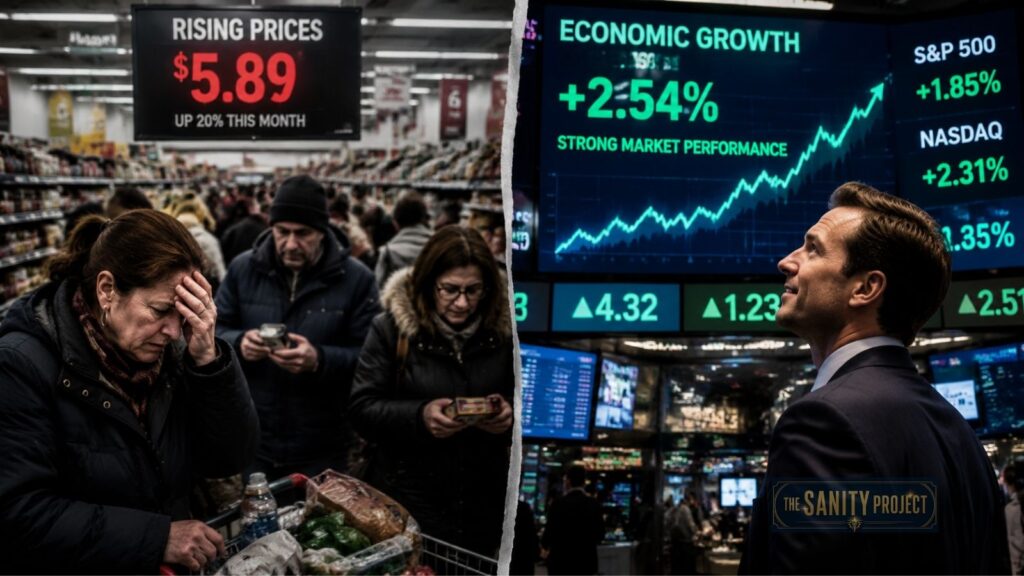
Economics, at the national level, is an aggregate story. It tells us what is happening across millions of households and firms at once. But households do not live in aggregates. They live in monthly budgets, local job markets, mortgage rates, and egg prices. So when official data says one thing and lived experience says another, people tend to trust the thing hitting their bank account.
That instinct is understandable. It is also incomplete.
A low unemployment rate, for example, can coexist with deep anxiety. Someone may have a job and still feel economically insecure because wages have not kept pace with housing costs, or because their industry feels fragile, or because replacing a lost job would now take longer and pay less. By the same token, inflation slowing does not mean prices went back down. It only means they are rising more slowly. Consumers are not confused when they say life still feels expensive. They are noticing the level, while economists are often discussing the rate of change.
This is one reason public mood can remain sour long after some indicators improve. If prices jumped 20 percent over a few years and then inflation fell from 7 percent to 3 percent, people do not feel relief in proportion to that statistic. They feel a permanent reset in the cost of everyday life.
The media problem is real, but it is not the whole story
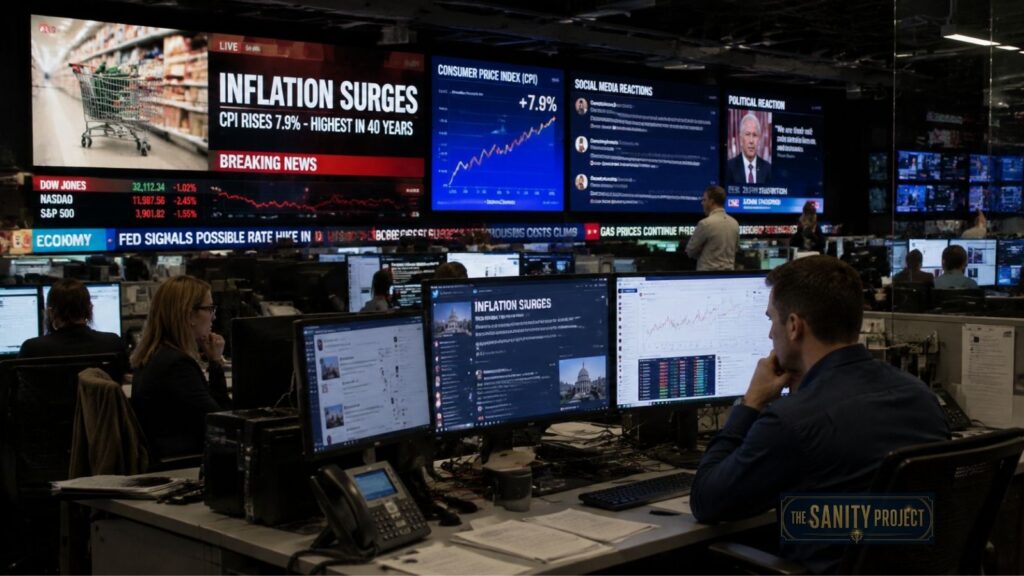
It is easy to blame bad economic perception on media negativity. That explanation is tempting because it is partly true. News coverage tends to overrepresent disruption, conflict, and downside risk. A stable labour market is not especially clickable. A sudden layoff announcement is. Financial markets get constant coverage because they move fast and look dramatic, even though most people experience the economy through wages, prices, and debt, not minute-by-minute stock charts.
Still, blaming the media alone is a bit too tidy.
Perception is also shaped by frequency and salience. Consumers see prices constantly. They buy food, gas, insurance, and household basics every week. They do not check productivity growth or business investment with the same regularity, shockingly enough. So expensive essentials leave a much stronger imprint than abstract macro improvements.
Subscribe To Our Newsletter!
There is another wrinkle. Negative changes are often felt faster than positive ones. If your grocery bill rises this month, you will notice it immediately. If your real wages improve gradually over a year, that may not register as strongly. Losses feel concrete. Gains often feel conditional, fragile, or already spoken for.
When the data is right, and the public is also right
This is the part many commentators skip. Sometimes the data does not contradict people at all. It is answering a different question.
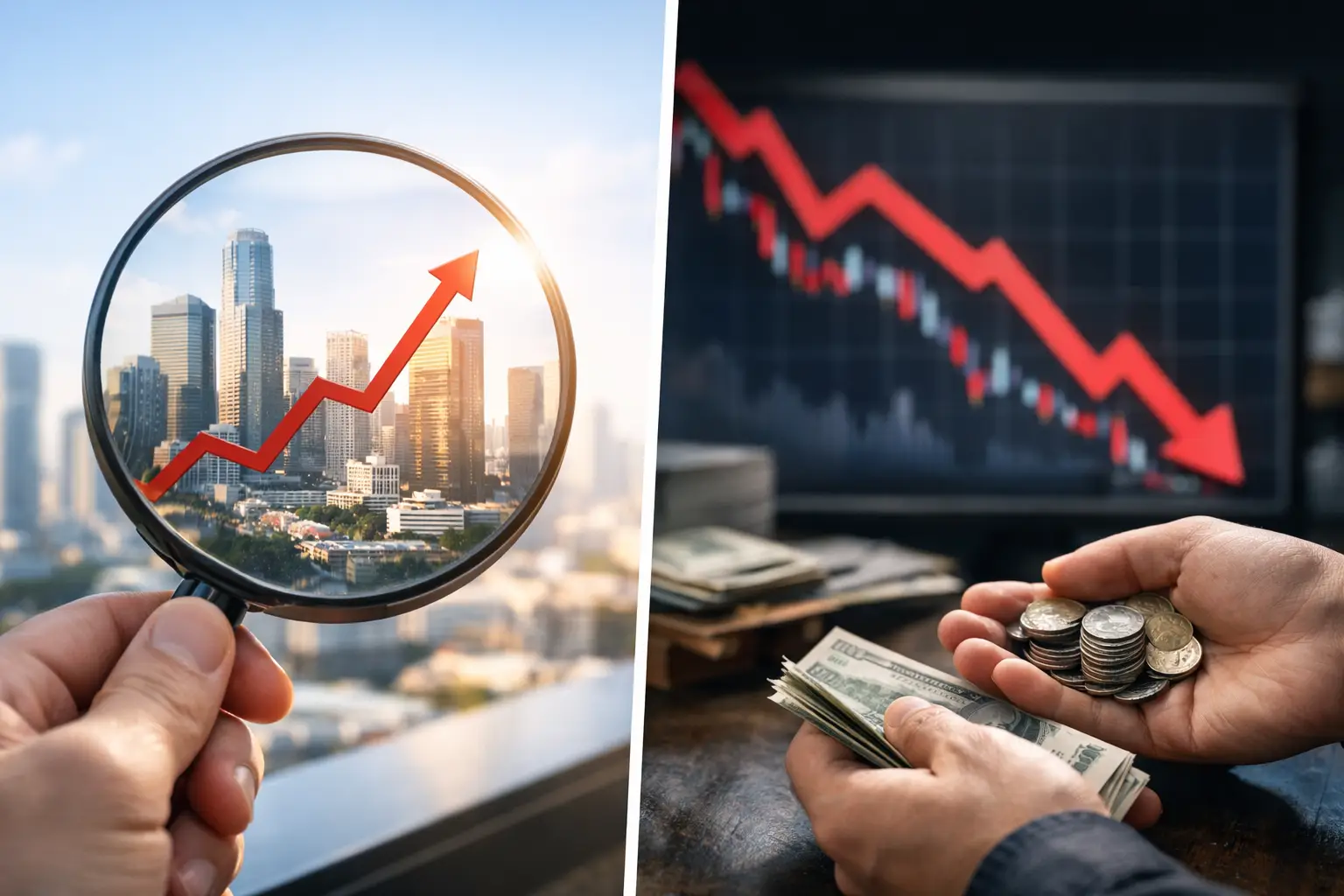
If the question is, “Is the economy in recession?” the answer may be no. If the question is, “Do households feel financially stretched?” the answer may still be yes. Both can be true at once.
Headline economic indicators are useful, but they are blunt tools. GDP growth can be driven by sectors that do not improve median household well-being. Rising asset prices help people with assets much more than those without. Wage growth may look solid overall while remaining uneven across age groups, regions, and industries. A national average can hide a lot of local pain.
This matters especially in the United States, where consumer sentiment has often looked weaker than labour market data would suggest. One reason is that many households judge the economy less by whether jobs exist and more by whether life feels affordable, stable, and upward-moving. That is a higher bar than simply avoiding recession.
So yes, people can overreact to narratives. But they can also be responding to real pressures that standard indicators smooth over. Calling that irrational is usually just a polite way of saying, “the spreadsheet is not built for your actual life.”
Inflation changed the emotional baseline
If there is one force that helps explain the modern gap between sentiment and statistics, it is inflation. Not just because inflation raises prices, but because it changes how people interpret everything else.
When inflation is high, every trip to the store becomes a reminder that money buys less. That does more than strain budgets. It erodes confidence in institutions, forecasts, and official reassurance. If policymakers say inflation is moderating while rent, insurance, and food still feel punishing, many people hear a technical truth delivered in the least comforting way possible.
And unlike a stock market drop, inflation reaches almost everyone. It is broad, repetitive, and personal. You do not need to follow economic news to know your utilities cost more.
That is why inflation leaves a long tail in public perception. Even after the pace slows, the memory of rapid price increases sticks. Consumers become more cautious. Workers push harder for raises. Businesses worry that demand may weaken. The emotional residue outlasts the chart.
Perception vs economic reality in politics and business
The gap between perception and reality is not just academic. It changes behaviour.
In politics, public frustration with economic conditions can persist even when traditional indicators improve. Incumbents then cite job numbers, voters cite household bills, and both sides talk past each other. One is speaking in macro terms, the other in daily terms. Neither is entirely wrong, but one side is usually worse at explaining the disconnect.
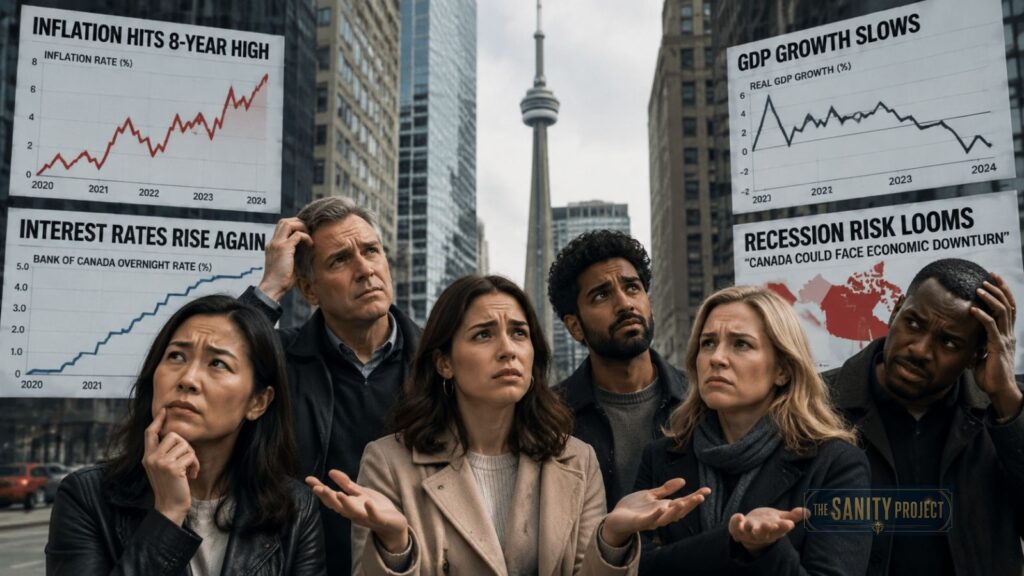
In business, this gap affects hiring, pricing, and investment. Executives do not make decisions based on official data alone. They respond to customer mood, credit conditions, and expectations about what people will tolerate. If consumers feel uneasy, they may spend more selectively even in a technically healthy economy. That caution becomes part of the economic reality itself.
This is the awkward feedback loop. Perception does not merely distort reality. It can help create it.
If enough households pull back because they feel financially exposed, consumption slows. If enough firms delay hiring because they expect demand to weaken, labour markets soften. Sentiment, while often dismissed as soft data, can have hard consequences.
How to read the economy without getting played
The better approach is not to choose between official data and lived experience. It is to ask what each one is measuring.
Start with three questions. What are the headline indicators saying? What are households most likely feeling right now? And where are averages hiding the real pressure points? That frame alone clears up a surprising amount of confusion.
For example, if growth is solid but consumer sentiment is weak, look at price levels, debt servicing costs, and housing affordability. If unemployment is low but people feel pessimistic, check whether job gains are concentrated in sectors that do not significantly affect middle-class stability. If inflation is easing but frustration remains high, remember that people buy levels, not rates.
It also helps to resist one of the most common media habits: turning every economic release into a verdict on everything. The economy is usually not amazing or terrible in a clean, universal sense. It is mixed. Some groups are insulated, others exposed. Some indicators lead, others lag. Sometimes the trend is improving while the lived experience still stings.
That kind of answer is less satisfying than a hot take. It is also usually closer to the truth.
The real lesson
Perception vs economic reality is not a battle between foolish feelings and enlightened data. It is a reminder that economic life has layers. The top line can improve while the middle feels squeezed. National strength can coexist with household fragility. Sentiment can be distorted, but it can also be a signal that our favourite metrics are missing something important.
A calmer reading of the economy starts there. Not with the assumption that people are wrong, or that the numbers are fake, but with the recognition that reality looks different depending on whether you are measuring a nation, a market, or a month in someone’s kitchen budget.
If you want to understand what is actually happening, pay attention to both the chart and the checkout line.