One month, the jobs report is strong, and everyone says the economy is fine. The next month, consumer confidence slips and suddenly recession chatter is back. If that feels less like analysis and more like mood lighting, you’re not wrong. Economic indicators are useful, but they are also easy to misuse, especially when they get flattened into a single headline.
The real question is not whether economic indicators matter. They do. The better question is which ones deserve attention, what they actually measure, and where they can mislead you. A healthy economy is not one number. It is a moving system with contradictions, delays, revisions, and plenty of room for people to cherry-pick whatever supports the story they already wanted to tell.
Quick Answer: Economic indicators are statistics used to analyze, measure, and predict the health and future performance of an economy. Key indicators include GDP (growth), unemployment rates, inflation (CPI), interest rates, and retail sales. They act as a “pulse check” for professionals to make informed financial, strategic, and policy decisions.
What economic indicators are really for
At their best, indicators help us reduce guesswork. They give businesses, investors, policymakers, and households a way to track change over time rather than relying on vibes, which, despite their recent promotion to public-policy status, remain an unreliable statistical method.
But indicators do not show reality in full. They show slices of it. Gross domestic product tells you how much output an economy is producing. Inflation data tells you how prices are changing. Unemployment measures how many people are actively looking for work but do not have a job. None of those figures, by themselves, tells you whether families feel secure, whether wage gains are keeping up with housing costs, or whether growth is being carried by a narrow part of the economy.
That is where people get tripped up. An indicator is not a verdict. It is evidence.

The main types of economic indicators
A useful way to think about economic indicators is in terms of timing. Some lead, some confirm, and some lag.
Leading indicators
Leading indicators are the early signals. They move before the broader economy does, which is why everyone wants them to be predictive and why they often get more attention than they deserve. Stock market trends, new manufacturing orders, building permits, and consumer expectations can all hint at where things may be headed.
The catch is that leading indicators are noisy. Markets can fall because traders are nervous, not because the real economy is collapsing. Consumers can say they feel pessimistic while still spending. Housing permits can weaken for reasons tied to financing costs rather than a broad economic downturn. These indicators are useful, but they are not crystal balls.
Coincident indicators
Coincident indicators move roughly with the economy in real time. Employment, industrial production, personal income, and retail sales usually sit in this category. If you want to know what is happening now rather than six months ago, these are often more useful than the headline debates suggest.
Subscribe To Our Newsletter!
Even here, context matters. Retail sales might rise because consumers are buying more, or because prices have gone up. Job growth might look strong, but the gains may be concentrated in lower-paying sectors. The number alone is the beginning of the analysis, not the end.
Lagging indicators
Lagging indicators confirm trends after they are already underway. Unemployment duration, business loan defaults, and some measures of wage growth tend to show stress later in the cycle. They matter because they tell you whether weakness or strength has become entrenched.
They also explain why public perception can feel out of sync with official commentary. By the time a broad economic slowdown is obvious in lagging data, many households have been feeling it for months.
The indicators people watch most, and why
Some metrics dominate the conversation because they are broad, familiar, and politically useful. That does not make them worthless. It just means they deserve a second look.
GDP is useful, but blunt
GDP gets treated like the scoreboard for the whole economy. It measures the total value of goods and services produced, which makes it important. If GDP is shrinking for a sustained period, something is usually wrong.
Still, GDP has obvious limits. It does not tell you how gains are distributed. It can rise while living standards stagnate for large parts of the population. Government spending can lift GDP, but that does not automatically mean the private economy is thriving. In short, GDP is a big number. Big numbers impress people. They are not always precise.
Inflation is more personal than it looks
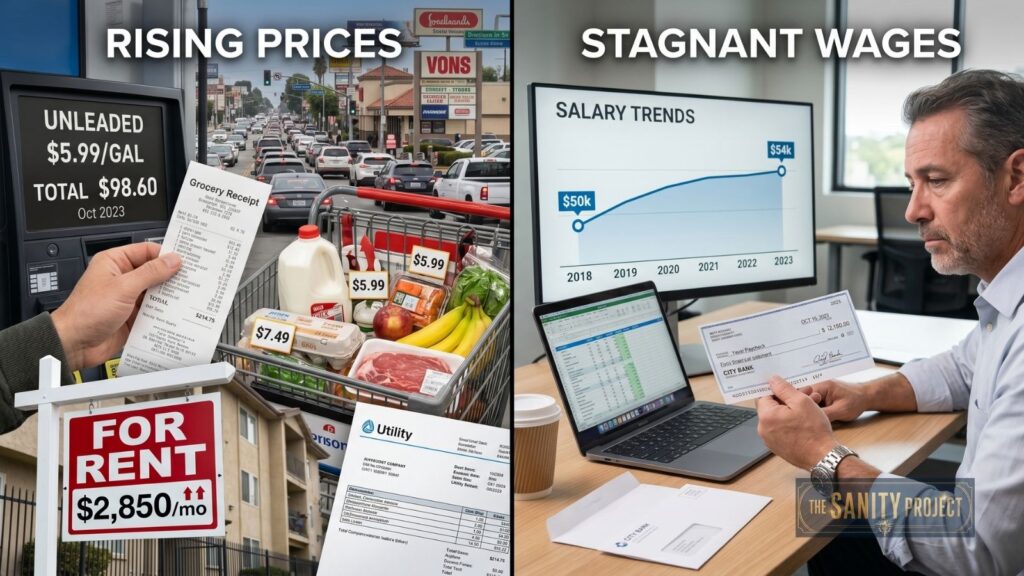
Inflation measures how prices change over time, typically using indexes such as the Consumer Price Index. It matters because it affects real purchasing power. A 4 percent raise feels less impressive when essentials are up 6 percent.
But inflation is not one experience. A renter, a retiree, and a homeowner with a fixed mortgage can all face the same official inflation rate and experience very different financial realities. Energy prices, food costs, and shelter carry different weights depending on the household. So when someone says inflation is cooling, the sensible follow-up is: cooling where, and for whom?
Unemployment can hide labour-market stress
The unemployment rate is one of the most cited indicators in the United States, and for good reason. It tells us something important about labor demand. A low unemployment rate usually signals a strong job market.
Usually. It can also hide underemployment, falling participation, or workers taking multiple jobs to stay afloat. If people stop looking for work, they may no longer count as unemployed. If job openings are concentrated in sectors with low wages or unstable hours, the headline can still look healthy while households feel stretched. That gap between the official rate and lived experience is not imaginary. It is built into the metric.
Why indicators often seem to contradict each other
Because the economy is not a machine with one dial. It is millions of households, firms, lenders, and governments reacting to each other in real time.
You can have strong hiring alongside weak manufacturing. You can have falling inflation with stubborn housing costs. You can have rising wages and declining consumer sentiment. These are not signs that the data is broken. They are signs that the economy is uneven.
This is also why single-number narratives are so seductive. They simplify complexity into something shareable. The problem is that reality does not become simpler because a headline editor needed a cleaner sentence.

How to read economic indicators without getting played
Start with trends, not isolated releases. One month of data can be distorted by weather, strikes, revisions, seasonal quirks, or plain old randomness. Three to six months tells you more.
Next, compare indicators rather than treating one as decisive. If payroll growth is strong but temporary-help employment is falling, business confidence is weakening, and household savings are thinning, the picture is more fragile than one upbeat report suggests. On the other hand, if sentiment is poor but incomes and spending remain steady, the economy may be more resilient than the mood implies.
It also helps to ask whether an indicator is nominal or real. If sales rise 5 percent but inflation also rose 5 percent, then congratulations, the number got bigger. That does not mean people bought more stuff.
And pay attention to revisions. Early data gets treated like fact when it is often closer to a first draft. This is especially true with payrolls, GDP estimates, and productivity numbers. The first release drives the headline. The revised release gets far less attention, which is convenient if your business model relies on panic or triumph.
What matters most for regular people
For households and business owners, the most useful economic indicators are often the least glamorous. Real wage growth matters. Labour-force participation matters. Delinquency rates matter. Productivity matters. Housing affordability matters a lot, even when it gets awkward for people trying to insist the economy is either universally strong or universally broken.
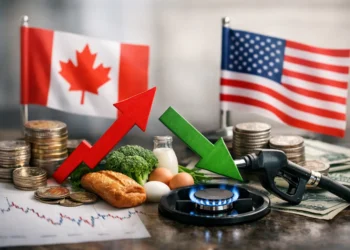
In the U.S. and Canada alike, headline growth can look decent while affordability deteriorates. That does not mean the economy is fake. It means that aggregate growth and household pressure can coexist. Once you accept that, much of the supposedly confusing public debate becomes much easier to decode.
The more grounded approach is to treat economic indicators as tools for orientation, not instruments of certainty. They help you ask better questions. Are incomes keeping up with costs? Is growth broad-based or narrow? Is demand holding up because households are healthy, or because they are leaning harder on credit? Those questions get you closer to reality than any single monthly number.
A calm reading of the economy is not about pretending the data is clean or the story is obvious. It is about resisting the urge to confuse one signal with the whole system. If you can do that, you are already ahead of most of the conversation.