The global electric vehicle (EV) race has transitioned from a battle of brand prestige to a war of molecular economics. A structural “chemistry gap” has emerged between Lithium Iron Phosphate (LFP) and Nickel Manganese Cobalt (NMC) battery packs, often referred to as the LFP vs NMC battery comparison. With LFP prices hitting 81/kWh** against NMC’s **128/kWh, Western manufacturers face a staggering $47/kWh cost penalty.
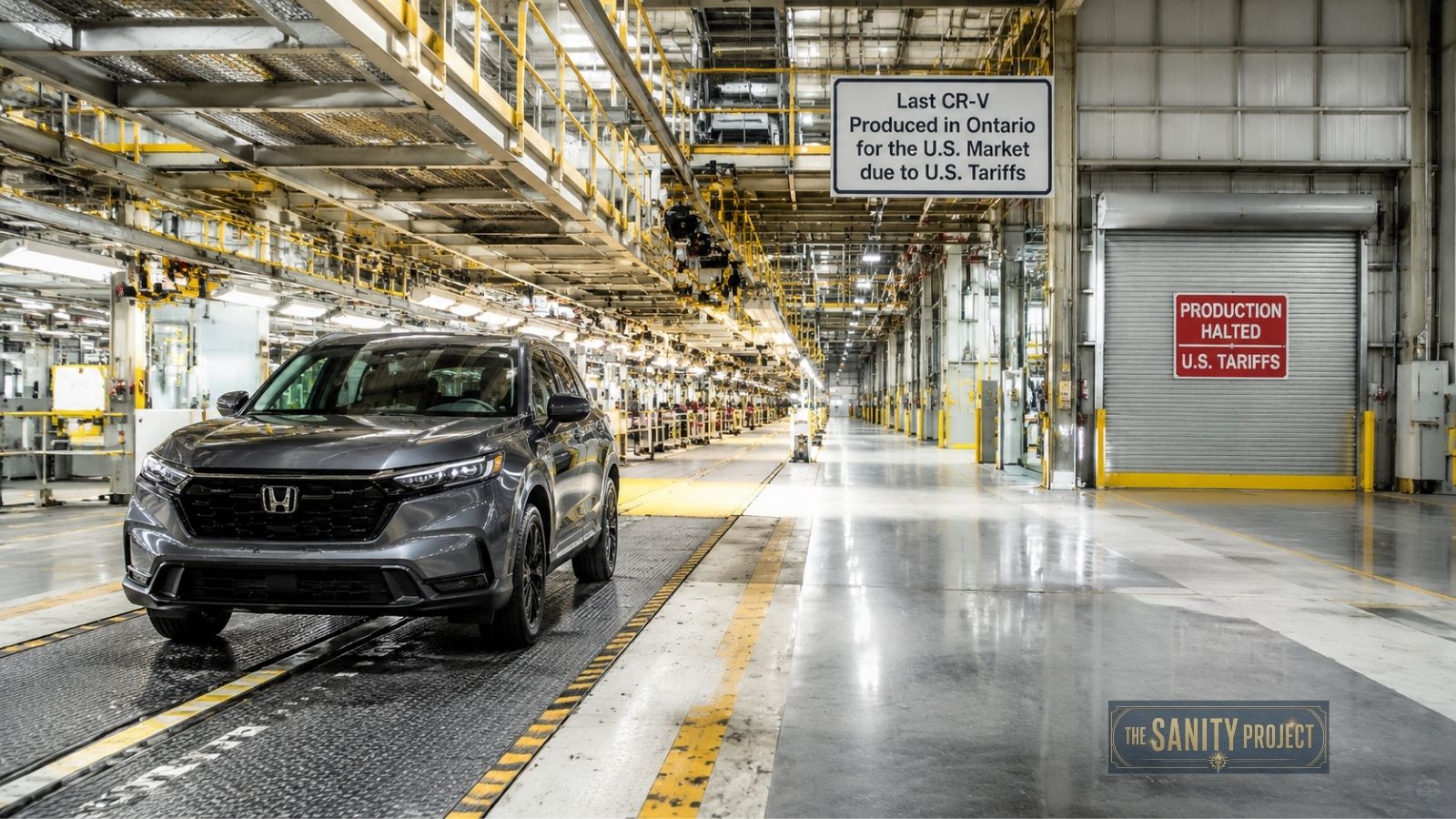
This disparity is the primary catalyst for the “calamitous” industrial shifts of 2026, including Honda’s indefinite suspension of its $15-billion Ontario complex. While NMC offered a historical range advantage, its reliance on volatile nickel and cobalt has become a liability. Conversely, the cost superiority of LFP has reached a tipping point, rendering many Western-subsidized NMC projects economically nonviable before they even reach full production. Understanding this requires an objective look at the underlying chemical architecture and the high-stakes gamble made by G7 industrial policies.
——————————————————————————–
The Molecular Divide: Analyzing the LFP vs NMC Battery Performance Evolution
The cathode chemistry of a lithium-ion battery dictates a vehicle’s MSRP, safety profile, and supply chain resilience. Historically, Western OEMs prioritized NMC for its high energy density, aiming to soothe “range anxiety” in the premium market. However, this choice posed inherent risks: the high-nickel chemistry of NMC carries a significant risk of thermal runaway, necessitating complex and expensive cooling systems.
In contrast, Chinese manufacturers like CATL and BYD leveraged the olivine structure of LFP. This molecular arrangement offers intrinsically superior thermal stability and safety, alongside a vastly superior cycle life. By utilizing abundant iron and phosphate, Chinese firms insulated themselves from the nickel-cobalt volatility that plagues the West. Furthermore, the “historical range advantage” of NMC has effectively collapsed; innovations like BYD’s Blade Battery have closed the density gap, making cost and safety the dominant consumer metrics. The market has shifted from “prestige performance” to “structural cost-efficiency,” a reality reflected in the brutal economic data of 2025–2026.

Economic Benchmarks: The $47/kWh Reality in a Global Lithium Battery Comparison
Battery pack pricing is now the definitive “make-or-break” metric for manufacturer solvency. As global overcapacity drives prices to record lows, the “NMC Premium” has become a structural anchor for those tied to traditional supply chains.
2025 Global Battery Pricing Benchmarks
| Battery Type | Price per kWh ($) | Year-over-Year Change (%) |
| Average Lithium-Ion Pack | $108 | -8% |
| LFP Battery Pack | $81 | -13% (in China) |
| NMC Battery Pack | $128 | -5.4% (Est.) |
| Stationary Storage (LFP-based) | $70 | -45% |
| Data Source: BloombergNEF 2025 Lithium-Ion Battery Price Survey. |
The “Canary in the Coal Mine” Interpretation: The 45% collapse in stationary storage pricing is the automotive sector’s early warning. Because storage is less weight-sensitive, LFP’s cost superiority first achieved dominance there; that dominance is now aggressively cannibalizing the transport sector.
The “So What?” Calculation: For a standard 60-kWh battery pack, the 47-kWh disparity creates a **2,820 structural cost disadvantage** per vehicle. For an operation like Honda’s suspended plant, designed for 240,000 units annually, this translates to a 676 million annual cost penalty** compared to an LFP competitor. This gap is further exacerbated by trade frictions, such as the $ 5 billion annual U.S. tariff bill facing manufacturers like Toyota and Honda due to non-U.S. content rules.
Global Market Share: The Dominance of LFP-Driven Manufacturers
The market is no longer fragmented; it is a duopoly of Chinese innovation. While legacy firms often operate as “bloated corporate fiefdoms,” CATL and BYD have behaved like “scrappy startups,” moving with lethal speed to capture the LFP volume advantage.
Top EV Battery Manufacturers by Market Share (2025)
| Company | Country | Market Share (%) | Installations (GWh) |
| CATL | China | 39.2% | 464.7 |
| BYD | China | 16.4% | 194.8 |
| LG Energy Solution | South Korea | 9.2% | 108.8 |
| CALB | China | 5.3% | 62.8 |
| Gotion High-tech | China | 4.5% | 53.5 |
| Others | Various | 25.4% | 302.4 |
| Data Source: SNE Research (February 2026). |
CATL and BYD control a combined 55.6% of the global market. Conversely, South Korea’s LG Energy Solution has seen its share struggle at 9.2%. This is a critical vulnerability for the Canadian strategy, as LGES is the primary partner for the Stellantis-LGES (NextStar Energy) project in Windsor. As LGES’s global share thins, the risk to its Western “branch-plant” joint ventures intensifies.
Subscribe To Our Newsletter!
——————————————————————————–
Case Study: The Canadian Industrial Strategy and the LFP vs NMC Gamble
Canada’s industrial policy illustrates the strategic risk of “top-down” planning decoupled from chemical trends. Governments have committed 52 billion** to the sector, including **28.2 billion in production subsidies for Stellantis-LG and Volkswagen.
The Subsidy Disconnect: The federal government claimed a 5-year payback for these investments. However, the Parliamentary Budget Officer (PBO) issued a sober correction, estimating a 20-year break-even timeline. This fiscal exposure is worsened by extreme demand volatility; when purchase incentives paused in early 2025, ZEV registrations plummeted from 18.3% to a mere 8.7%.
The $4.5 million per direct job cost is a staggering metric of subsidy dependence. Honda’s 2026 suspension—officially attributed to a “change in external resource strategy”—is corporate shorthand for abandoning an obsolete NMC mineral supply chain. By betting $33 billion on a nickel-based roadmap (NMC) while the global market pivoted to iron (LFP), Canada essentially subsidized the “wrong chemistry.”

Beyond the Liquid Electrolyte: Solid-State and the Next Technology Wave
To survive, Western OEMs are attempting to “leapfrog” current LFP dominance by pivoting to solid-state batteries, as seen in Honda’s US$15.7 billion restructuring. Solid-state promises higher density and safety, but it faces a narrow “Strategic Window Risk.”
Commercial-scale solid-state is not expected until 2028–2030. The window between 2026 and 2030 is a lethal “valley of death” during which LFP’s cost dominance will be most pronounced. Western plants producing NMC cells during this period are effectively producing a legacy product—obsolete but still operational—while waiting for a successor technology that may not arrive in time to save their balance sheets.
——————————————————————————–
Conclusion: Naming the Chemistry Problem
The EV industrial struggle is not just a story of tariffs; it is a story of chemistry. Canada’s strategy failed by betting on NMC at the exact moment LFP had achieved global cost parity and performance maturity.
Industrial policy must shift from “steering” to fixing fundamentals. This means addressing the 18-year permitting delays for Canadian mines and moving R&D away from mature-stage subsidies toward pre-commercial solid-state research. Without acknowledging the reality of the chemistry gap, Western manufacturing remains on public life support rather than achieving self-sustaining competitiveness.
Frequently Asked Questions
Why is the choice of LFP vs NMC battery critical for car buyers? It dictates the vehicle’s total cost of ownership. LFP batteries provide a $2,820 structural price advantage on mid-range vehicles and offer superior thermal safety and cycle life, making them the preferred choice for value-conscious consumers over high-nickel NMC.
How does the LFP vs NMC battery cost gap affect government subsidies? The $47/kWh gap forces governments to provide massive, ongoing production subsidies just to keep NMC-based plants competitive. This has extended Canada’s break-even timeline from the promised 5 years to a sobering 20 years, according to the PBO.
Is the energy density of an LFP vs NMC battery still the deciding factor? No. Innovations like BYD’s Blade Battery have significantly narrowed the range gap. Most consumers now prioritize LFP’s lower purchase price and lack of “thermal runaway” risk over the marginal range benefits offered by expensive, nickel-dependent NMC chemistries.
- Sources List:
- https://about.bnef.com/insights/clean-transport/lithium-ion-battery-pack-prices-fall-to-108-per-kilowatt-hour-despite-rising-metal-prices-bloombergnef/
- https://www.iea.org/reports/global-ev-outlook-2025/electric-vehicle-batteries
- https://www.theglobeandmail.com/business/article-honda-canada-suspends-ontario-ev-complex-alliston/
- https://www.pbo-dpb.ca/en/publications/RP-2324-015-S–break-even-analysis-production-subsidies-stellantis-lges-volkswagen–analyse-seuil-rentabilite-subventions-production-accordees-stellantis-lges-volkswagen
- https://macdonaldlaurier.ca/wp-content/uploads/2025/09/20250915_Subsidies-Without-Markets-Gessaroli_FINAL.pdf
- https://cnevpost.com/2026/02/04/global-ev-battery-market-share-2025/
- https://www.iea.org/data-and-statistics/charts/electric-vehicle-battery-pack-driving-range-and-price-by-chemistry-at-constant-size-2025
- https://www.anl.gov/sites/www/files/2025-09/GPRA2025_%2011Sep2025.pdf