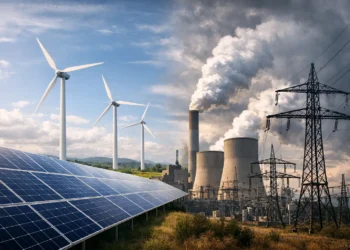
A wind farm goes up outside a rural county, and the headline practically writes itself: jobs are coming. Sometimes that is true. Sometimes it is true for 18 months, and then mostly over. Sometimes the bigger gain is not direct employment at all, but tax revenue, land lease income, and lower energy costs for nearby businesses. That is the core problem with the renewable energy job creation local communities debate – people keep using one phrase to describe several very different economic outcomes.
If you want a clear view, start by separating political marketing from local economics. Renewable energy does create jobs. It also creates uneven job patterns, different wage profiles, and very different benefits depending on the type of project, the supply chain, and whether a community has the workforce and infrastructure to capture the upside. In other words, yes, the jobs are real. No, they are not magic.
What renewable energy job creation in local communities actually means
The public conversation often treats energy jobs as if they all look the same. They do not. A natural gas plant, a solar installation company, a battery manufacturer, and a wind maintenance contractor all generate work in different ways.
In local terms, there are usually three layers. First, there is construction employment. This is the most visible burst of hiring, and it is often what gets announced at ribbon cuttings and public meetings. Second, there are operations and maintenance roles, which are fewer but longer lasting. Third, there are indirect effects, like contracts for trucking, site preparation, electrical work, hospitality, accounting, and equipment servicing.
That third category matters more than many critics admit, but less than some advocates imply. If a county gets a six-month wave of hotel bookings and restaurant traffic from out-of-town crews, that is useful. It is not the same as building a durable middle-income labor market.
Why the local payoff varies so much
This is where the national narrative gets sloppy. People hear big job numbers tied to clean energy investment and assume every host community gets a comparable boost. Not quite.
Solar, wind, storage, transmission, and manufacturing each have different labor needs. Utility-scale solar tends to create a substantial number of construction jobs during buildout, but relatively few permanent jobs once a site is operating. Wind projects also create strong construction demand and a smaller set of ongoing technician roles. Manufacturing is a different animal entirely. If a community attracts a plant producing turbines, panels, inverters, transformers, or battery components, the employment base is much more durable.
So when local officials ask whether a renewable project will create jobs, the right response is another question: what kind of project, over what timeline, and how much of the supply chain is actually nearby?
A county that hosts generation alone may see modest long-term headcount but meaningful tax receipts. A region that also has fabrication, warehousing, transport, and skilled trades capacity may keep much more of the value. Geography still matters, despite the internet’s ongoing promise to make place irrelevant.
The jobs are real, but they are not all permanent
Some skepticism around clean energy jobs comes from a basic mismatch between expectations and reality. A developer announces hundreds of jobs. Residents imagine stable positions for local workers over a decade. Then the project reaches completion, staffing drops sharply, and people conclude the promise was fake.
Subscribe To Our Newsletter!
That reaction is understandable, but it often confuses temporary jobs with worthless jobs. Construction employment is still employment. For union labor, electricians, equipment operators, and specialized contractors, a series of projects can support steady work even if each individual site is temporary. The catch is that this works best in regions with enough project density to keep crews moving from one job to the next.
A one-off project in an area with limited labor mobility delivers a thinner result. A recurring pipeline of solar, wind, grid modernization, and storage projects delivers something closer to a functioning employment ecosystem. This is one reason state policy, permitting speed, and transmission planning matter more than the average headline suggests.
Who benefits first, and who gets left out
Renewable energy job creation in local communities often benefits workers with existing skills before it benefits workers with the greatest need. That is not a moral failure. It is just how labor markets work.
Electricians, welders, heavy equipment operators, engineers, and project managers are usually first in line. Communities with trade schools, apprenticeship programs, and nearby contractors are better positioned to capture local hiring. Communities without those assets may host the project physically while importing much of the labor.
That creates an awkward but necessary point: a project can be good for a place without being broadly transformative for its residents. Landowners may gain lease payments. Local governments may gain tax revenue. A few businesses may gain contracts. But if workforce development is weak, the project may not materially change employment prospects for a large share of the population.
This is why the quality of local institutions matters so much. Community colleges, workforce boards, labor partnerships, and permitting offices do not get glamorous headlines. They do determine whether economic opportunity stays local or drives in, works a shift, and leaves.
The often-overlooked benefits beyond payroll
The fixation on direct job totals can obscure other local effects that may be just as important. Some renewable projects expand the tax base, which can support schools, roads, and emergency services. Others create long-term lease income for farmers and rural landowners, helping stabilize household finances in areas where commodity markets are less than relaxing.
Lower and more predictable energy costs can also matter. If a region adds generation and transmission capacity that improves reliability or reduces exposure to fuel price spikes, local manufacturers and commercial users may benefit in ways that do not show up on a clean-energy jobs flyer. Those gains are real, even if they are less photogenic than a hard-hat press conference.
Of course, there are trade-offs. Utility-scale projects can trigger land use conflicts, visual concerns, transmission disputes, and legitimate questions about who bears the cost of grid upgrades. Pretending otherwise is a good way to lose public trust.
Why manufacturing changes the conversation
If policymakers want renewable energy to have a stronger local employment footprint, generation projects alone are not enough. The bigger shift comes when manufacturing and supply-chain activity cluster around deployment.
A battery plant, transformer facility, cable manufacturer, or inverter assembly line creates a very different local labor profile than a completed solar field with a small maintenance team. It can support production workers, supervisors, logistics roles, and adjacent service businesses over a much longer period. It can also create regional specialization, which is where local economies start moving from one project at a time to something more durable.
But manufacturing is harder to win than politicians imply. It depends on incentives, land, grid access, transport links, permitting certainty, and workforce readiness. And yes, global competition still exists, despite repeated attempts to wish it away.
What local leaders should ask before celebrating
The smartest local question is not, “How many jobs?” It is, “Which jobs, for whom, for how long, and under what conditions?”
A serious assessment looks at whether contractors will hire locally, whether training pipelines exist, whether tax agreements are favorable, and whether local businesses can realistically compete for procurement opportunities. It also asks whether the project fits broader regional strategy. One renewable project can help. A portfolio of generation, storage, transmission, and industrial investment can reshape an area’s economic trajectory.
That is especially relevant in communities trying to replace employment tied to coal, legacy manufacturing, or aging industrial assets. Renewable energy can be part of that transition, but it rarely works as a one-for-one substitute. Different sectors need different skill mixes, and wage outcomes vary. Anyone promising a perfect replacement is selling comfort, not analysis.
The calmer, more useful way to think about it
The cleanest answer is also the least satisfying for people who want slogans. Renewable energy can create meaningful local economic value, but the form of that value depends on project type, labor capacity, supply-chain depth, and policy design. Some communities will get a construction boom and a stronger tax base. Some will add stable technical roles. A smaller number will capture manufacturing and build something closer to a lasting industrial ecosystem.
That does not make the optimistic case false. It just makes it conditional.
And maybe that is the useful correction. Instead of arguing over whether renewable energy is good or bad for jobs in the abstract, ask a more grounded question: what would it take for this specific project to leave this specific community better off five years from now? Once you ask that, the conversation gets less ideological and a lot more honest.