
Why does it feel like everyone is talking past each other about whether Mark Carney has delivered as Prime Minister? For some, he’s the architect of a stronger economic foundation. For others, he’s failed to move the needle on housing, jobs, or affordability. If you’re tired of polarized takes and want a clear-eyed assessment, this is the post for you.
Cutting through the spin, we break down what Carney’s government has actually done since he took office in March 2025, what’s measurable so far, and what’s just getting started. You’ll leave knowing exactly where things stand—and where the claims don’t match the facts.
The Debate: Has Mark Carney Delivered Real Economic Change?
From the moment Mark Carney became Prime Minister, he inherited high expectations. Canadians were told to anticipate economic credibility, stability, and a decisive plan. Yet, over a year into his tenure, the country remains sharply divided about whether he’s brought about real change.
The Skeptic’s View: Where Are the Tangible Results?
- Housing crisis still looms large, with average home prices and rents remaining sky-high for most Canadians.
- Unemployment stands at 6.7% as of February 2026, only marginally higher than the previous year.
- Inflation is down from earlier peaks, but food and essentials remain expensive, and wages have struggled to keep up.
These are not minor issues: everyday Canadians are still feeling the squeeze, fueling skepticism about whether any of Ottawa’s new policies are actually working. As Abby Inglewood argued, a wave of policy announcements means little if daily life hasn’t improved.

The Policy Reality: What Carney’s Government Has Actually Done
The narrative that “nothing has happened” doesn’t hold up under scrutiny. There’s a robust track record of legislation, programs, and investments—just not always the kind that generates instant results.
Budget 2025: Laying the Groundwork for Future Growth
Budget 2025 is the backbone of the Carney government’s economic agenda. The numbers are significant:
- $280 billion in capital investment over 5 years
- $450 billion on a cash basis
- Up to $1 trillion in total investment is aimed for by leveraging public-private partnerships
Key Takeaways:
- The government isn’t directly spending a trillion dollars but is creating conditions for massive private investment.
- This “co-investment” approach aims to kickstart long-term growth, odds with quick-fix expectations.
Productivity Superdeduction & Investment Incentives
One of the more technical—and potentially transformative—moves is the Productivity Super Deduction.
- Businesses can now expense a much bigger share of eligible capital investments immediately. Think:
- Equipment
- Technology infrastructure
- Clean energy systems
- Projected impact: An estimated $9 billion boost to annual economic output in the coming years.
Why this matters: Productivity has long been a weak spot in Canada’s economy. These incentives are designed to make capital investments less risky and more attractive to Canadian businesses.
The “Buy Canadian” Policy: Supporting Domestic Industry
The Buy Canadian policy marks a big shift in federal procurement. Instead of choosing suppliers solely by cost, Ottawa will now prioritize domestic economic impact when spending up to $70 billion of public funds.
Subscribe To Our Newsletter!
Implications:
- Strengthens local supply chains
- Bolsters manufacturing, construction, and resource industries
- Helps insulate Canada from global supply shocks
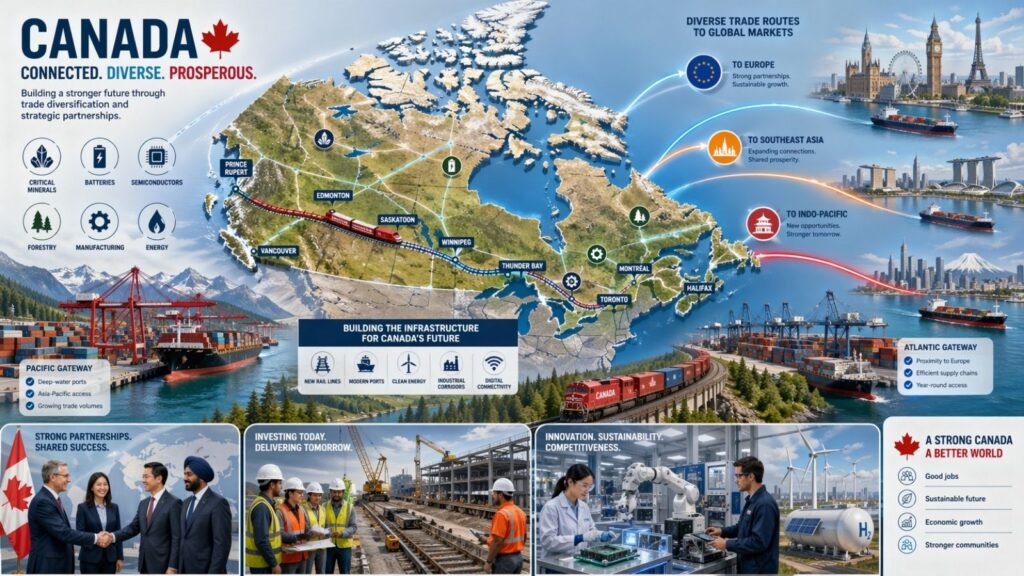
Trade Diversification: Reducing Dependence on the U.S.
Canada has long shipped 70%+ of its exports to the U.S.—a risky concentration, especially during trade disputes.
The Carney government’s response:
- $5 billion invested in Trade Diversification Corridors: ports, rail, and logistics for easier export to other markets.
- Active pursuit of new partnerships across Europe, Southeast Asia, and the Indo-Pacific—emphasizing memoranda, investment frameworks, rather than “overnight” free trade deals.
End goal: Build new “pipelines” for goods and resources so the Canadian economy isn’t held hostage by shifts in U.S. policy.
Tax Relief for the Middle Class
Ottawa shaved the lowest personal income tax rate from 15% to 14%, impacting nearly 22 million Canadians.
What this means for you:
- Up to $420 in annual savings per individual
- Up to $840 for dual-income households
Not a game-changer for most people, but a concrete, measurable win—especially as cost-of-living challenges persist.

First-Time Homebuyer GST Relief
Doing something about housing affordability is political dynamite. The Carney government responded by:
- Eliminating GST on new homes up to $1 million for first-time buyers
- Reducing GST on homes priced up to $1.5 million
Potential savings: As much as $50,000 per qualifying home.
Reality check: Doesn’t fix supply issues or broader affordability, but helps some Canadians cross the homeownership threshold.
National School Food Program Expansion
While not a direct economic lever, this $1 billion, 5-year commitment supports children and families by:
- Reducing the household grocery burden
- Expanding access across provinces/territories
- Ensuring more children have reliable nutrition
This is about supporting families and tackling food insecurity—a rising concern as grocery bills eat into disposable income.
Evaluating the Record: It’s Complicated
Here’s the rub: As Abby Smith highlights, most of these policies are early in their impact cycle. Economic transformation takes time:
- Infrastructure projects span years from funding to completion.
- Productivity strategies take time to show up in GDP stats.
- Trade diversification builds decade-long relationships, not overnight turnarounds.
So, has Mark Carney “fixed” affordability, jobs, and housing in just over a year? No.
But saying he’s done nothing is equally inaccurate.
7 Key Takeaways on Mark Carney’s Economic Impact
- Substantial Action, Limited Immediate Results:
Major legislation and investment are underway, but most impact is still over the horizon. - Housing Remains a Critical Pain Point:
Measures like GST relief—while helpful to some—don’t yet address the root cause of the affordability problem. - Productivity Push Could Be Transformative:
Superdeduction and incentives are well received among business groups and economists, but the results will be a slow burn. - Trade Moves Are About Future-Proofing:
Diversification of partners and infrastructure is essential—but benefits will take years to materialize. - Middle-Class Relief Is Tangible, If Modest:
Tax cuts and targeted supports help, but don’t offset larger cost increases for most Canadians. - “Buy Canadian” Prioritizes Resilience:
Domestic prioritization in procurement is a big change, with long-term potential for stable growth and supply security. - Communication Challenge:
The biggest risk is not a lack of action, but the time lag between bold policy moves and visible, everyday improvements.
Frequently Asked Questions
Did Mark Carney deliver on his promises?
He’s made meaningful progress, especially in laying policy groundwork, but hasn’t produced fast or dramatic change in core areas like affordability and housing.
What are the biggest wins so far?
- Tax relief for tens of millions
- Clear push for productivity and investment
- Steps to diversify trade and support the local industry
Where is he vulnerable?
On immediate economic pain points: housing prices, cost of living, and stagnant wage growth remain stubbornly high-profile issues for most households.
Will These Policies Deliver?
That’s the real debate: It’s not whether the Carney government is “doing something”—it clearly is—but whether these moves will show up as real, felt improvements for average Canadians soon enough to matter.
If there’s one principle to take away, it’s that economic strategy and lived experience move on very different timelines. The result? Skepticism and competing narratives persist. As policies roll out, expect more heated debates about who’s “winning” or “losing” under Carney’s vision for Canada.
To subscribe to our weekly newsletter, go to https://thesanity.org/subscribe