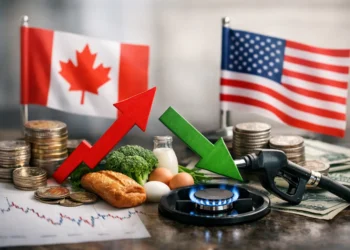
If you have ever looked at an inflation report and thought, Wait, how can inflation be cooling when groceries still feel brutal, you are not confused. You are running into the difference between headline inflation vs core inflation – one of those economic distinctions that sounds technical, gets quoted constantly, and quietly shapes how the public understands reality.
This matters because the gap between the two is often where the narrative starts to wobble. Politicians, markets, and media outlets may point to whichever measure better supports the story they want to tell. Inflation is down. Not really. The Fed is winning. Households are still losing. Sometimes all of those claims contain a piece of the truth.
What headline inflation vs core inflation actually measures
Headline inflation is the broad measure. It tracks the overall change in consumer prices across the full basket of goods and services, including food and energy. If gasoline spikes, headline inflation feels it immediately. If egg prices fall, headline inflation reflects that too.
Core inflation removes food and energy from the calculation. That sounds suspicious at first, and to be fair, it often lands that way with the public. People do, in fact, buy food and energy. Excluding them can seem like an economist’s version of cleaning the crime scene before taking notes.
But there is a reason core inflation exists. Food and energy prices tend to swing sharply from month to month because of weather, supply disruptions, wars, refinery outages, and commodity shocks. Those swings can blur the underlying trend in inflation. Core inflation is meant to filter out some of that noise and show whether price pressures are becoming more embedded across the broader economy.
That does not make core inflation more real than headline inflation. It makes it useful for a different question.
Why economists focus on core inflation
Central banks care less about one bad month for gas prices than about whether inflation is spreading through rents, services, wages, insurance, and other categories that tend to move more slowly. Core inflation can help answer that.
If headline inflation jumps because oil prices surge after a geopolitical shock, policymakers may not want to overreact. Raising interest rates will not pump more oil. But if core inflation stays elevated for months, that suggests inflation is becoming more persistent, and that is the kind central banks worry about.
So when the Federal Reserve or Bank of Canada pays close attention to core measures, they are not pretending food and fuel do not exist. They are trying to judge whether inflation is temporary, broad-based, or getting baked into expectations.
That said, this is where public frustration comes in. Households experience headline inflation first. Nobody tells the cashier, Sorry, I only consume core goods.
Subscribe To Our Newsletter!
Headline inflation captures lived experience faster
For most people, headline inflation feels more honest because it includes the prices they notice most often. Gas stations update by the day. Grocery prices hit weekly. Utility bills arrive with rude little surprises. These are not abstract categories.
That is why headline inflation often drives public sentiment more than core inflation. Even if core is easing, a jump in food or fuel can make people feel like inflation is getting worse. And from the household perspective, that reaction is not irrational. It is the economy as lived, not the economy as modeled.
Core inflation captures persistence better
Core inflation, by contrast, is more helpful for identifying trend. Categories like shelter, medical services, education, and other service-sector costs usually move more slowly and reflect deeper pressures in the economy. When those prices keep rising, it can signal that inflation is not just a temporary commodity story.
This is why an economist can say inflation is moderating while a consumer feels mocked by the claim. They are often looking at different slices of the same reality.
Why the gap between the two matters
The difference between headline inflation vs core inflation becomes especially important during periods of shock.
Imagine oil prices collapse. Headline inflation may fall quickly, maybe even dramatically. That looks encouraging, and sometimes it is. But if rent, wages, insurance, and restaurant prices keep rising at a stubborn pace, core inflation stays elevated. In that case, the drop in headline inflation may tell you less about lasting progress than the headlines suggest.
The reverse can also happen. Energy prices can surge, pushing headline inflation up even while core inflation stays relatively stable. Then the economy looks hotter than it really is beneath the surface.
This is where bad analysis thrives. If someone wants to argue inflation is basically solved, they may highlight falling headline numbers during an energy dip. If someone wants to argue inflation is still deeply entrenched, they may point to sticky core readings. Both could be technically correct. Neither tells the whole story alone.
Which measure should regular people care about?
Both, but for different reasons.
If you want to understand how inflation is affecting your budget right now, headline inflation is more relevant. It reflects the full consumer basket, including the categories that can hit hardest and fastest.
If you want to understand where monetary policy may go next, core inflation is usually more informative. It gives a better sense of whether central banks are likely to stay cautious, cut rates, or keep warning that inflation is not fully under control.
That distinction matters in the United States because rate decisions affect mortgages, credit cards, business borrowing, hiring plans, and asset prices. It matters in Canada too, where household sensitivity to interest rates is often even sharper. The inflation measure getting the most policy attention can have very real consequences.
The political and media problem
Inflation data does not speak for itself. It gets translated, framed, and simplified. Usually a little too enthusiastically.
When headline inflation falls, the public may hear that inflation is over. Not quite. Prices can still be much higher than they were two years ago, even if the rate of increase has slowed. That is another common confusion. Lower inflation does not mean lower prices. It means prices are rising more slowly.
When core inflation stays high, the public may hear that inflation is still raging everywhere. Also not quite. Some of the most painful categories may actually be cooling while more persistent services inflation remains sticky.
So the problem is not just headline inflation vs core inflation. The problem is what happens when one number gets used as a talking point instead of a measurement with limits.
A better way to read inflation data
The useful question is not, Which measure is correct? The useful question is, What is each measure telling us, and what is it leaving out?
Headline inflation tells you what is happening across the full price basket now, including volatile categories people notice immediately. Core inflation tells you more about the underlying trend and whether inflation pressures are broadening or fading beneath those short-term swings.
Neither is sufficient on its own. Headline can overreact to commodity shocks. Core can understate the pain households feel in essential spending categories. One is more sensitive. The other is more stable. One captures lived experience better. The other often predicts policy thinking better.
That is not a contradiction. It is a reminder that economic indicators are tools, not truth machines.
What this means when you hear inflation news
The next time an inflation report sparks instant celebration or panic, it is worth slowing down long enough to ask a few boring but useful questions. Is the move being driven by energy? Are food prices distorting the top-line number? Is shelter still sticky? Are services cooling? Is this a one-month swing or part of a longer trend?
Those questions are less exciting than the average cable-news segment, which is precisely why they help.
The healthiest way to read inflation data is to resist the urge to let one number settle the argument. Headline inflation vs core inflation is not a fight where one side wins. It is a pair of lenses. If you only look through one, you get a partial picture and a louder opinion than the evidence deserves.
Clarity usually starts there – not with a hotter take, but with the mild realization that the simple story was doing too much work.