There’s a version of Canada’s renewable energy future that is accelerating fast. Discover 2030 projections, the best energy source by province, solar ROI, and the clean energy jobs coming your way. That sounds almost too optimistic to be true. A vast country already generating two-thirds of its electricity from renewable sources, sitting on some of the world’s most powerful rivers, windiest coastlines, and — increasingly — sunniest open landscapes. A country that has committed, in writing, to a net-zero grid by 2035 and a net-zero economy by 2050.
And then there’s the version that includes the complications. Provinces that still burn coal. Grids that weren’t built to handle variable solar and wind. A federal government navigating a very noisy argument about what “clean energy transition” actually means in a country that also exports oil.
Both versions are true. And the five years between now and 2030 are where those two stories collide.
Quick Answer
Canada’s renewable energy future centers on a massive, rapid expansion of wind, solar, and energy storage. As the backbone of the country’s grid decarbonization, renewable capacity is projected to double by 2035 and continue surging toward 2050. Hydro and traditional nuclear will maintain current baselines, while solar and wind generation are set to jump exponentially
Key Takeaways
- 🌊 Hydropower still dominates — Canada generates over 60% of its electricity from hydro, making it one of the world’s cleanest major grids already
- ☀️ Solar is surging — Alberta has emerged as Canada’s solar hotspot, with utility-scale projects driving down costs across the country
- 💼 Clean energy is a jobs story — Canada’s energy transition is projected to create hundreds of thousands of jobs by 2030, many in provinces currently dependent on fossil fuels
- 🏛️ Policy is the accelerator — Federal Clean Electricity Regulations and carbon pricing are reshaping which energy sources pencil out economically
- 🌍 Global comparisons reveal the gap — Countries like Iceland and Norway show what’s possible with political will and the right geography; Canada has both, but the execution is uneven
Canada’s Renewable Energy Future Right Now
Start with the baseline, because it matters more than most people realize. Canada is not starting from scratch. According to Natural Resources Canada, roughly 67% of the country’s electricity comes from renewable sources — mostly large-scale hydropower that has been running for decades in Quebec, British Columbia, Manitoba, and Newfoundland.
That’s a significantly cleaner starting point than almost any other major economy. The United States sits at around 22% renewable sources. Germany, often cited as a clean energy leader, hit 59% in 2023 after decades of aggressive policy. Canada was already near that threshold a generation ago.
The challenge isn’t that Canada lacks renewable capacity. The challenge is that the remaining 33% is stubbornly fossil-fuel-dependent in certain provinces — particularly Alberta, Saskatchewan, and Nova Scotia — and that electricity demand is expected to roughly double by 2050 as heating, transportation, and industry electrify. The clean energy transition, in other words, isn’t just about replacing what exists. It’s about building an enormous amount of new capacity from scratch and doing so fast enough to accommodate electric vehicles, heat pumps, and industrial electrification simultaneously.
That context shapes everything that follows.
Is Renewable Energy Growing in Canada? The Numbers Are Encouraging
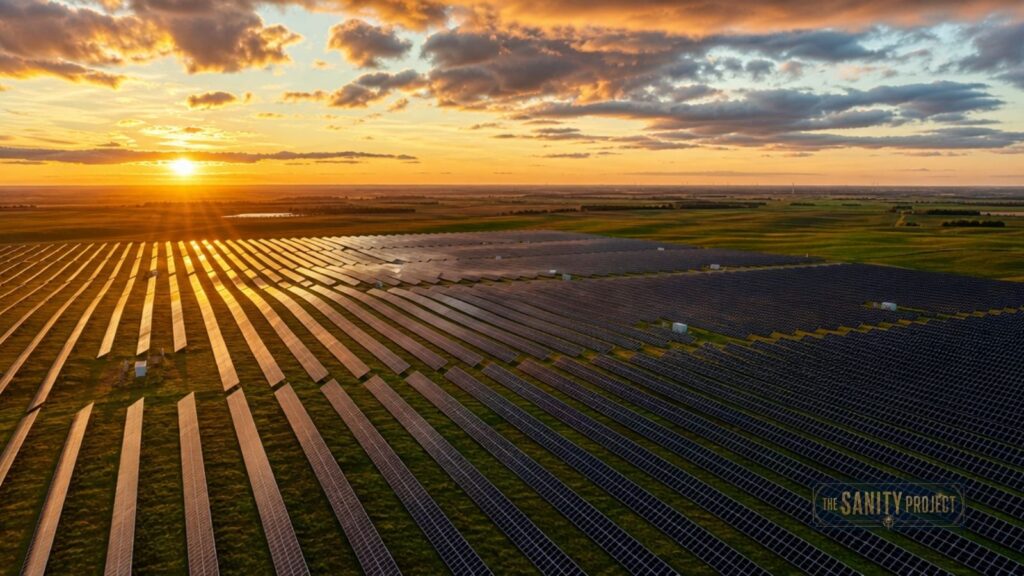
Between 2015 and 2025, Canada’s installed wind capacity more than doubled, from roughly 11,000 megawatts to over 25,000 megawatts. Solar capacity, starting from a much smaller base, grew even faster — from under 2,000 megawatts to well over 5,000 megawatts, with large-scale projects announced in Alberta alone expected to add several thousand megawatts more before 2027.
The growth isn’t evenly distributed. Ontario and Quebec built out their renewable capacity aggressively in the 2010s. Alberta, ironically, has emerged as one of the most interesting clean energy stories in recent years — a province known for oil sands that is now attracting billions in solar investment, partly because of its deregulated electricity market and partly because the southern prairies turn out to receive more solar irradiance per year than many parts of Europe.
Subscribe To Our Newsletter!
Saskatchewan is earlier in its transition, still generating the majority of its electricity from natural gas and coal. But announced projects suggest the province is moving, even if more slowly than the federal government would prefer.
Investment tells a similar story. BloombergNEF and Clean Energy Canada have both tracked significant acceleration in private capital flowing into Canadian renewable energy, with 2023 and 2024 both setting records for announced clean energy investment. The Inflation Reduction Act in the United States raised brief concerns that Canadian projects would migrate south for better incentives, prompting the federal government to respond with its own investment tax credits, which are now making Canadian renewable projects considerably more attractive to institutional capital.
What’s the Best Renewable Energy Source for Canada?
The honest answer: it depends entirely on where you are. Canada is a geographically absurd country. What works in coastal British Columbia doesn’t necessarily work in rural Ontario.
Hydropower
Hydro remains the backbone. Quebec generates nearly 99% of its electricity from hydro. BC and Manitoba are similarly dominant. The Muskrat Falls project in Labrador, despite its troubled history and cost overruns, added significant capacity to Atlantic Canada. Hydro is reliable, dispatchable — meaning you can turn it up and down as needed — and produces essentially no emissions once built.
The constraint is geography. The best sites are largely already developed. New large-scale hydro requires decades of planning, enormous capital, and increasingly complex environmental assessments. It’s not going away, but it’s not the primary growth story for the next decade either.
Wind Energy
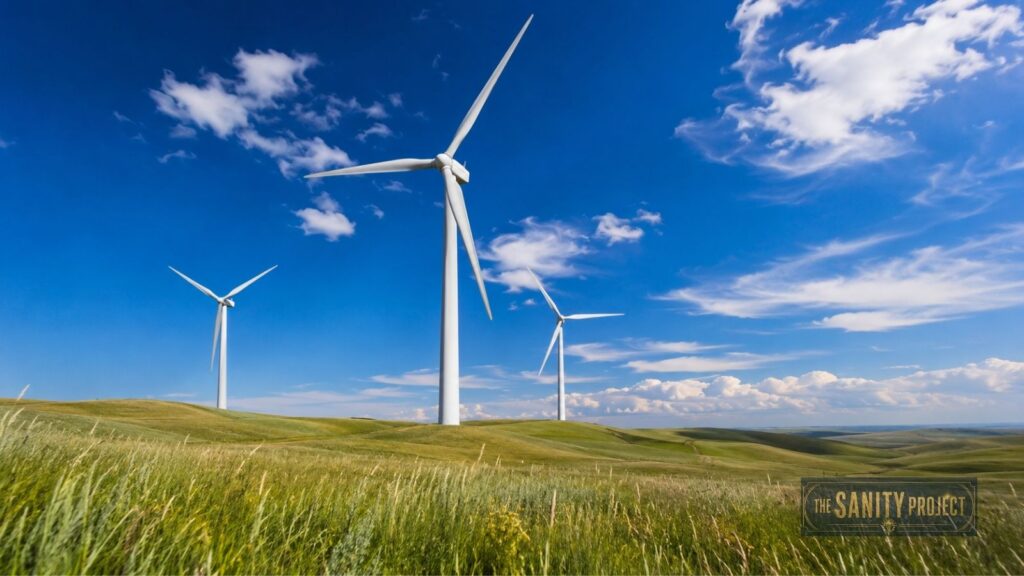
Wind is where the volume growth is happening. The prairie provinces — Alberta, Saskatchewan, and Manitoba — have exceptional wind resources, particularly in areas where agriculture and wind farms coexist comfortably. Atlantic Canada’s coastline, including Nova Scotia and New Brunswick, is also being eyed for offshore wind development that could transform the region’s energy mix.
The economics of wind have improved dramatically. The cost of onshore wind generation has dropped by roughly 70% globally over the past decade, and Canadian projects are benefiting from the same trends. Wind is now often the cheapest source of new electricity generation in Canada.
Solar
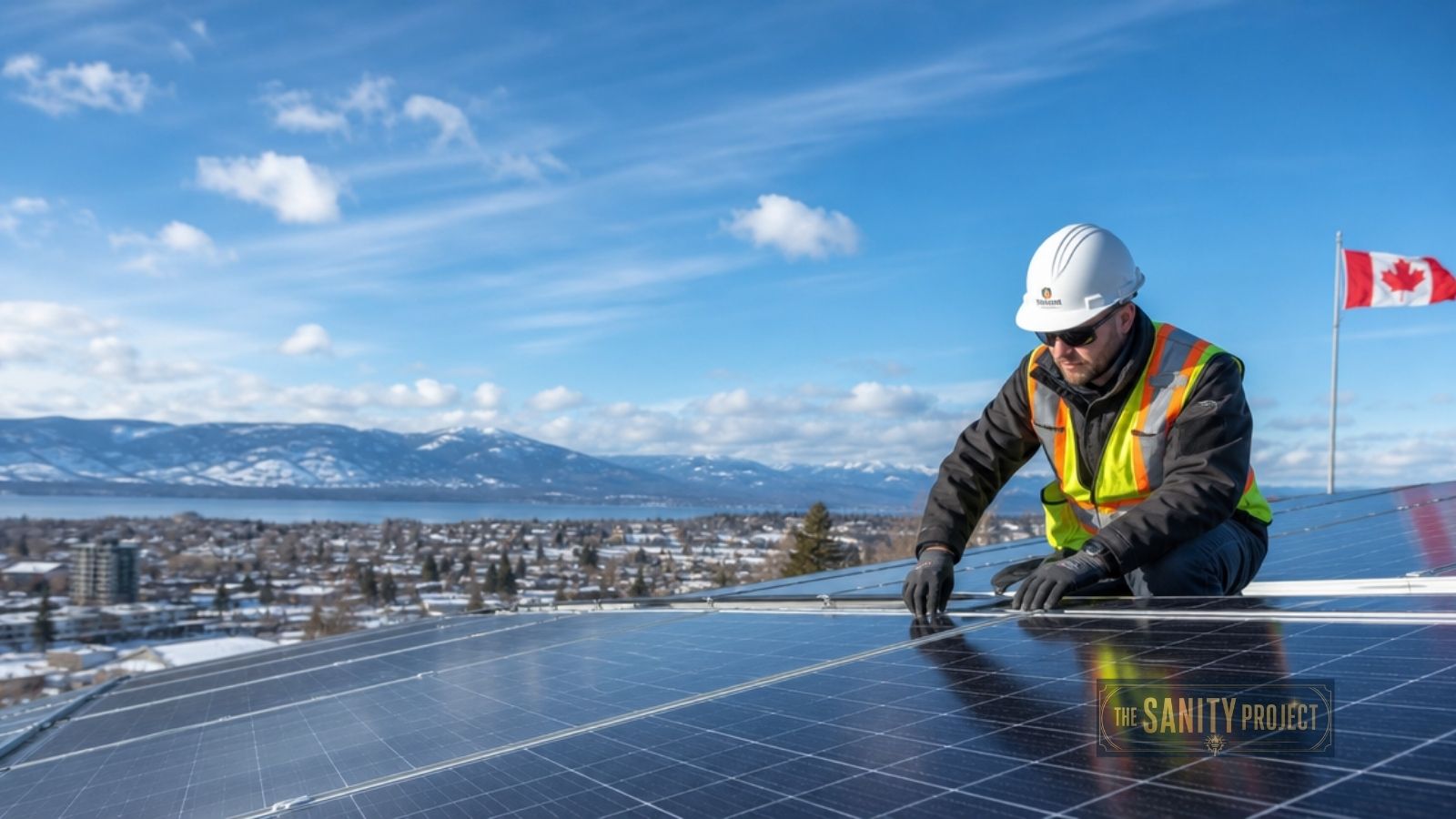
Solar’s story in Canada requires some myth-busting. The persistent assumption that Canada is too cold and too dark for solar is simply incorrect. Solar panels respond to light, not heat — and cold temperatures can actually improve their efficiency. Calgary receives more annual sunshine hours than Hamburg or London, both of which are in countries with robust solar industries.
Alberta has led the surge. The province went from negligible solar capacity in 2019 to multiple utility-scale projects exceeding 400 megawatts by 2025, with more under construction. Ontario has extensive residential and community solar installations. Even Quebec, with its hydro advantage, is beginning to add solar to manage peak demand.
For residential solar, the calculus varies. More on that shortly.
Emerging Technologies
Tidal energy is genuinely exciting in the Bay of Fundy, where the world’s highest tides create enormous generation potential. The Fundy Ocean Research Centre for Energy (FORCE) in Nova Scotia is testing in-stream tidal turbines in conditions unlike anywhere else on earth. Commercial-scale deployment is still years away, but the potential is real.
Geothermal, underutilized in Canada relative to its potential, is attracting renewed interest — particularly in British Columbia and Alberta, where existing oil and gas drilling infrastructure could be repurposed. It’s a longer-term story, but one worth watching.
Is Solar Power Worth It in Canada in 2026?
For the majority of Canadian homeowners and businesses, yes — with important caveats.
The economic landscape has shifted materially over the past several years. The installed cost of a residential solar system in Canada has dropped significantly, now in the range of $10,000 to $20,000 for a typical 6- to 10-kilowatt system after provincial and federal incentives. Federal programs like the Canada Greener Homes Initiative (and its successors) have provided thousands of dollars in grants and access to loans, while provincial programs layer additional incentives in certain markets.
Payback periods — the point at which your energy savings exceed your installation cost — now typically range from 8 to 14 years, depending on the province. Alberta homeowners, benefiting from high electricity rates and strong solar irradiance, can see payback in as few as 7 to 8 years. Ontario, with its own incentive programs and decent solar resources, typically sees 10 to 12-year payback horizons. Quebec, where hydro electricity is extraordinarily cheap, presents a harder economic case purely on energy cost savings.
Net metering policies, which allow homeowners to sell excess solar generation back to the grid, exist in all provinces but vary considerably in the generosity of their structures. Ontario and Alberta have relatively favourable net metering frameworks. Checking your provincial utility’s specific policy before investing is essential, as the difference between a good and a mediocre net metering arrangement can materially affect your return on investment.
The long-term argument for solar isn’t just today’s electricity price — it’s hedging against rate increases over a 25-year panel lifespan. Electricity prices in most Canadian provinces have risen steadily and show no structural reason to reverse that trend as grid infrastructure is upgraded and demand grows.
Canada’s Net-Zero Path: Policy, the 2030 Clock, and What It All Actually Means
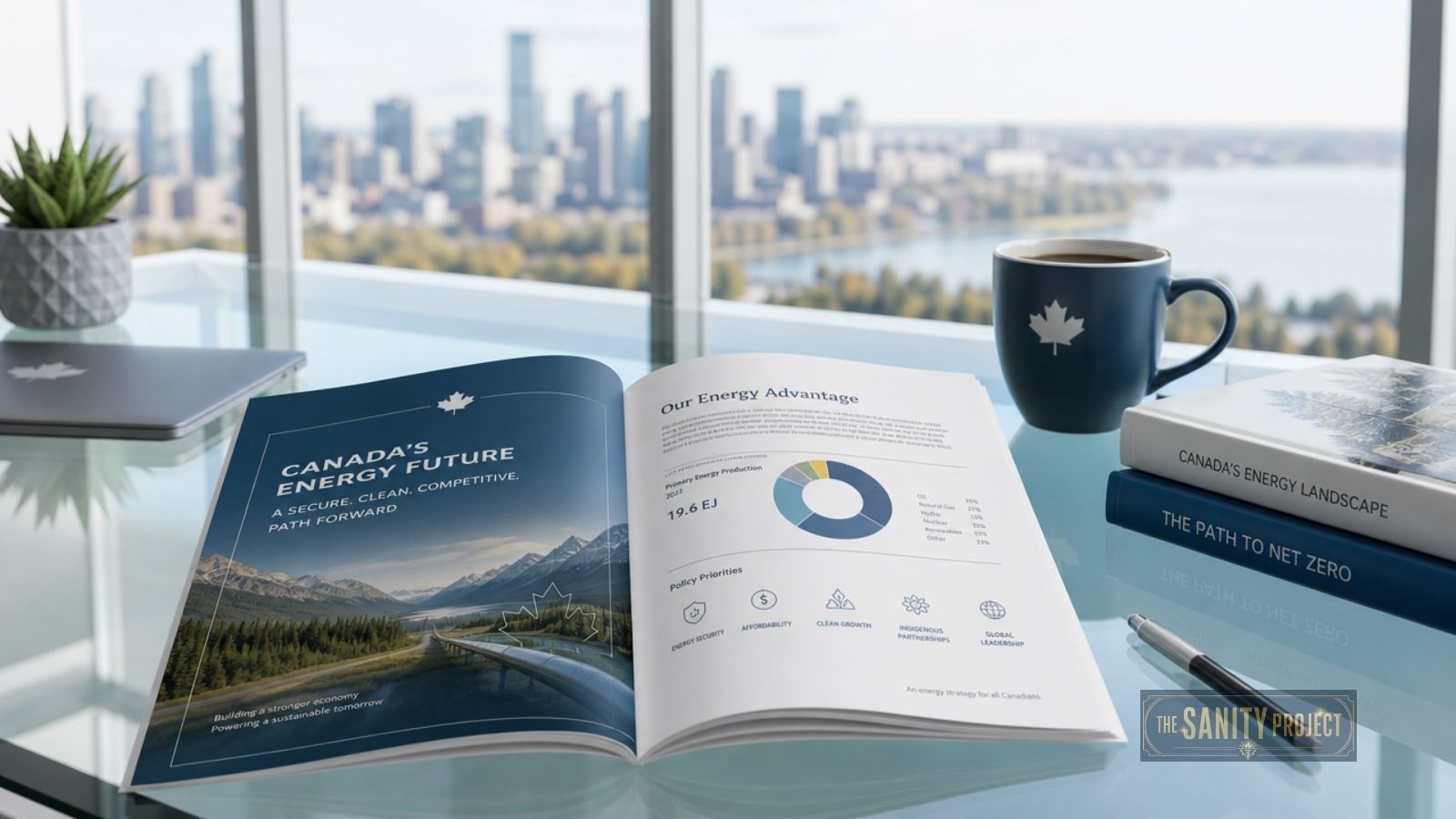
The federal government’s Clean Electricity Regulations, which aim to achieve a net-zero electricity grid by 2035, represent the most significant policy shift in Canadian energy history. They effectively require that by 2035, any electricity generation from fossil fuels either be paired with carbon capture or face regulatory restrictions.
By 2030, Canada has committed to reducing greenhouse gas emissions by 40 to 45% below 2005 levels. The electricity sector, already relatively clean, is expected to achieve emissions reductions faster than other sectors like transportation and heavy industry. But meeting the 2030 target requires accelerating the deployment of renewables at a pace with no historical precedent in Canada.
Carbon pricing — the mechanism that makes fossil fuel energy more expensive relative to alternatives — reached $65 per tonne of CO2 equivalent in 2024, with a scheduled path toward $170 per tonne by 2030. Even with the political noise around the carbon tax, the economics are clear: higher carbon prices improve the competitiveness of every renewable energy source against natural gas and coal.
Federal infrastructure programs, including the Canada Infrastructure Bank’s clean energy focus and the Clean Growth Fund, are channelling capital toward projects that would otherwise struggle to access financing. Provincial governments, with varying degrees of enthusiasm, are layering their own incentives and policy frameworks on top.
The honest assessment: Canada is moving faster than it was five years ago, slower than its targets technically require, and faster than most critics acknowledge.
The Economic Case: Jobs, Investment, and the Capital Flowing In
This is where the renewable energy story becomes genuinely tangible for most Canadians.
Clean Energy Canada, tracking announced investments, has documented over $100 billion in clean energy project announcements in Canada between 2020 and 2025. That figure includes utility-scale wind and solar, battery storage, hydrogen projects, and grid infrastructure. It’s not all built — announced is not the same as constructed — but the pipeline is larger than at any previous point in Canadian history.
Job projections are significant. The International Energy Agency’s Canada-specific analysis, alongside domestic research from institutions like the Canadian Institute for Climate Choices, projects that Canada’s clean energy sector could employ between 150,000 and 400,000 people by 2030, depending on policy ambition. That spans electricians, engineers, project managers, environmental scientists, data analysts, and the full range of construction trades.
The regional picture is uneven. Ontario and British Columbia are already clean energy employment hubs. Alberta — again, the interesting case — is seeing significant growth in renewable energy employment alongside its existing fossil fuel workforce. The transition, often discussed in the abstract, is increasingly concrete for tradespeople choosing among

training in solar installation, wind turbine maintenance, or grid modernization.
Skills training is a gap the federal government has explicitly identified. The Sustainable Jobs Act and associated funding aim to accelerate reskilling for workers transitioning from fossil-fuel sectors. How effectively that lands in practice will shape the political sustainability of the transition as much as the technology does.
What Countries Running on 100% Renewables Can Teach Canada
Three countries are most frequently cited as models: Iceland, Norway, and Costa Rica.
Iceland generates essentially 100% of its electricity from geothermal and hydropower — a fortunate geological circumstance that Canada cannot replicate, but one that demonstrates what a fully renewable grid looks like operationally. Iceland’s lesson is less about technology and more about political commitment to leveraging existing natural advantages.
Norway’s electricity system is roughly 98% hydropower. The country has also become the world’s leader in electric vehicle adoption — more than 90% of new car sales in recent years — demonstrating how clean electricity enables clean transportation at scale. Norway’s lesson for Canada: when your grid is clean, electrifying everything else becomes a straightforward economic decision for consumers.
Costa Rica runs on approximately 99% renewable electricity, mixing hydro, geothermal, wind, and solar. A country with GDP per capita far below Canada’s has managed to build and maintain a nearly fully renewable grid through decades of consistent policy commitment. The lesson is that political continuity matters as much as capital.
Canada’s challenge differs from those of the other three. It’s a larger, colder, more geographically diverse country with a more complex federal-provincial political structure. Quebec already runs like Norway. Saskatchewan still runs like the 1970s. The national story is really ten provincial stories told simultaneously.
What global leaders suggest is possible: individual Canadian provinces reaching 90%+ renewable electricity by 2035 is achievable. Quebec is essentially there. British Columbia and Manitoba are close. Ontario has the trajectory. Alberta is the surprise story. The laggards — Saskatchewan, Nova Scotia, New Brunswick — face longer roads, but the road exists.
Frequently Asked Questions
Is renewable energy growing in Canada?
Yes, significantly. Wind capacity has more than doubled since 2015, solar capacity has grown from under 2,000 megawatts to over 5,000 megawatts, and billions in new projects are under construction or in permitting across multiple provinces. Growth is fastest in Alberta and Ontario.
What country is running 100% on renewable energy?
Several countries operate with near-100 % renewable electricity. Iceland (geothermal and hydro), Norway (hydro), and Costa Rica (hydro, geothermal, wind, solar) consistently exceed 99% renewable electricity generation. Albania and Paraguay also run primarily on hydro.
Is solar power worth it in Canada in 2026?
For most homeowners outside Quebec, yes. With federal and provincial incentives, typical payback periods run 8 to 14 years, and modern panels carry 25-year performance warranties. Alberta offers the strongest economy due to its electricity rates and solar irradiance. Quebec is the exception, where cheap hydro electricity makes the financial case harder.
What is the best renewable energy source in Canada?
Hydropower remains the largest and most reliable source nationally. Wind is the fastest-growing and often cheapest new generation source, particularly in the prairies and Atlantic Canada. Solar is the most accessible for residential investment. The best source for any given location depends on provincial grid mix, geography, and available incentives.
How many jobs will Canada’s clean energy transition create?
Estimates vary by projection scenario, but most credible analyses point to 150,000 to 400,000 direct and indirect clean energy jobs by 2030. Construction, operations, engineering, and skilled trades dominate the job categories.
When will Canada achieve net-zero emissions?
Canada’s legislated target is net-zero by 2050. The electricity grid specifically is targeted for net-zero by 2035 under the Clean Electricity Regulations. Emissions reductions of 40 to 45% below 2005 levels are targeted by 2030.
Which Canadian province has the most renewable energy?
Quebec generates approximately 99% of its electricity from hydropower, making it the most renewable province by percentage. Manitoba (97% hydro) and British Columbia (90%+ hydro) follow closely. Nationally, Canada averages around 67% renewable electricity.
How much is Canada investing in renewable energy?
Over $100 billion in clean energy projects were announced between 2020 and 2025. The Canada Infrastructure Bank has committed billions specifically to clean energy infrastructure. Federal investment tax credits introduced in 2023 and 2024 are designed to match the scale of US incentives under the Inflation Reduction Act.
The Road Ahead
Canada’s renewable energy future isn’t a question of whether — it’s a question of how fast and how equitably.
The technology exists. The resources exist. The investment is arriving. The policy framework, whatever its political friction, is directionally consistent. What the next five years will reveal is whether Canada can move fast enough to meet its own targets, whether the jobs and economic benefits of the transition land in the communities most affected by the shift away from fossil fuels, and whether the provinces furthest from a clean grid can close the gap before 2030 becomes 2040.
For individuals, the most actionable near-term decisions are the ones that don’t require waiting for government: evaluating whether residential solar makes sense in your province, understanding the clean energy job pathways that are opening up, and paying attention to the provincial policy environment that will shape your electricity costs for the next two decades.
Canada started with extraordinary natural advantages. The question now is simply whether it uses them.
EXTERNAL LINKS (High-Authority Sources)
- Natural Resources Canada — Renewable Energy Facts https://natural-resources.canada.ca/our-natural-resources/energy-sources-distribution/renewable-energy
- Clean Energy Canada — Annual Progress Reports https://cleanenergycanada.org
- Canada Energy Regulator — Canada’s Energy Future https://www.cer-rec.gc.ca/en/data-analysis/canada-energy-future/
- International Energy Agency — Canada Country Profile https://www.iea.org/countries/canada