The transition to electric vehicles (EVs) acts as a primary catalyst for grid modernization, shifting the electricity sector toward a more nimble, flexible, and resilient system. While the Electric Vehicle Grid Impact involves significant load growth, managed integration transforms these vehicles from mere energy consumers into strategic assets. By leveraging demand flexibility and energy storage within vehicle batteries, the transportation and energy sectors form a symbiotic relationship. This transition allows the grid to handle increased demand while maintaining affordability, provided that proactive EV Infrastructure Planning and smart orchestration replace the rigid, deterministic operational parameters of the past.
Quick Answer: Electric vehicles (EVs) present a significant, manageable increase in electrical demand, with studies indicating a 38% rise in demand by 2050. While uncontrolled charging can strain local grids and peak capacity, EVs offer flexibility that, with smart charging and infrastructure upgrades, can balance demand, support renewable energy integration, and improve grid efficiency

The Great Energy Transition
The 2024 Department of Energy (DOE) Report to Congress arrives at a pivotal moment in the American energy landscape. The convergence of the transportation and electricity sectors is no longer a distant projection; it is a current reality and a fundamental pillar of national competitiveness. As the United States pursues a path toward energy decarbonization, integrating electric vehicles is essential to a sustainable and secure future. This strategic shift requires a total reimagining of how we produce, distribute, and consume power, moving away from the siloed planning of the 20th century toward a holistic, cross-sector approach that aligns mobility needs with grid capabilities.
To navigate this landscape, two primary frameworks must be understood: Electric Vehicle Grid Impact, which encompasses the technical and operational stresses placed on the system, and EV Infrastructure Planning, the strategic coordination required to mitigate those stresses. This analysis explores several critical components of this transition, including:
- Managed charging and its contribution to grid resilience.
- Light-duty PEV adoption and the resulting need for distribution upgrades.
- Bidirectional charging and its role in providing vehicle-to-grid (V2G) services.
- Load forecasting as a tool for managing the shift from deterministic to stochastic demand.
The “So What?” Layer: A Behavioural Revolution
The most profound shift in this transition is the movement from a deterministic system to a behaviour-driven stochastic system. For decades, utility-customer relationships were passive; the utility provided power to immobile structures with predictable usage patterns. Today, the grid must respond to mobile, battery-stored loads driven by human behaviour and complex freight mobility patterns. This changes the utility’s role from a simple provider to a sophisticated orchestrator of Distributed Energy Resources (DER). If managed correctly, this behavioural shift allows the grid to use EVs as “dispatchable resources” to stabilize the system; if ignored, the unpredictable nature of EV charging could lead to localized instability, thermal overloads, and significantly inflated infrastructure costs for all ratepayers.

Forecasting the Surge: Adoption Scenarios through 2030
Strategic infrastructure planning requires “directionally relevant” projections. While the exact number of EVs on the road in 2030 remains subject to variables like battery cost trajectories and consumer sentiment, modelling provides a range that de-risks multi-billion-dollar infrastructure investments. By establishing a consensus on these scenarios, utilities and regulators can ensure that electricity infrastructure is in place before demand arrives, rather than reacting after the fact, which has historically led to suboptimal and more expensive solutions.
According to NREL data, the U.S. is poised for a massive expansion in both Light-Duty (LD) and Medium/Heavy-Duty (MHD) plug-in electric vehicles (PEVs).
Table 1: U.S. PEV Stock Adoption Projections (2030)
| Scenario | Light-Duty (LD) Stock | Medium/Heavy-Duty (MHD) Stock | Key Drivers |
| Low / Delayed | 30 Million | 0.2 Million | Slower battery cost reduction; limited public charging access; supply chain constraints. |
| Mid / Baseline | 33 Million | 1.0 Million | Current policy incentives (IRA/BIL); moderate fuel price volatility; manufacturer sales goals. |
| High / Rapid | 42 Million | 1.4 Million | Ambitious state emissions standards (CA ACCII/ACT); rapid technical breakthroughs in range. |
The “So What?” Layer: The Spatial Disparity Risk
The macro-level adoption numbers mask a critical “spatial distribution” challenge identified in Core-Based Statistical Areas (CBSAs). Adoption is not uniform; urban areas are projected to reach up to 35% PEV share by 2030, while rural areas may see as little as 3%. This geographic disparity creates a “localized distribution network” problem. Urban circuits in high-adoption pockets will face immediate, acute stress requiring rapid distribution upgrades. Conversely, rural circuits—often featuring fixed radial topologies—might lack the redundancy to handle high-power agricultural or long-haul charging. Planning must be hyper-local, utilizing actual charging data to prevent reliability gaps in areas where adoption outpaces traditional utility upgrade cycles.

Contextualizing Power: From Level 1 Charging to Mega-Depots
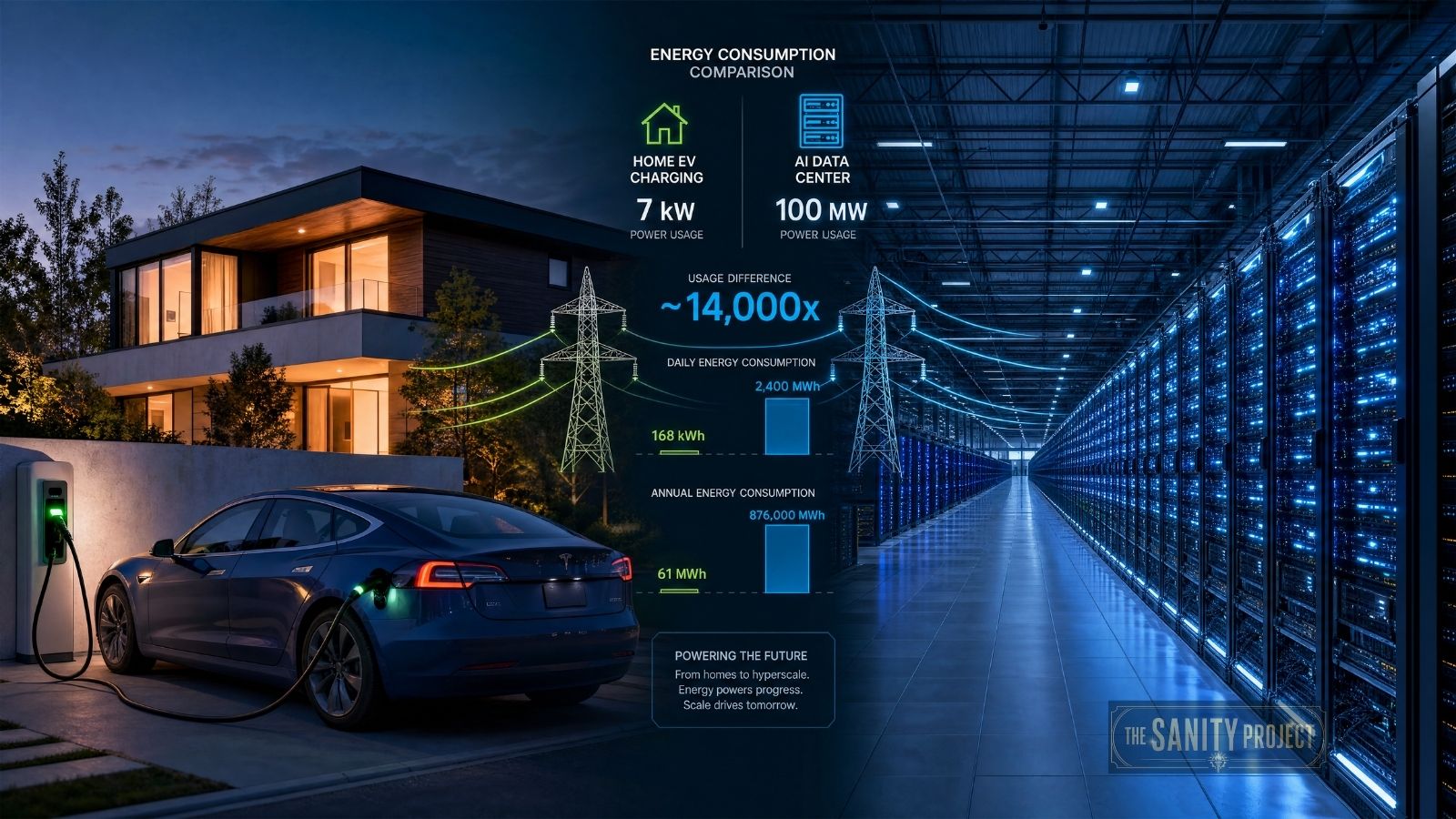
Not all charging is created equal. The true determinant of Electric Vehicle Grid Impact is the “intensity” and “timing” of the load. A vehicle plugged into a standard home outlet (Level 1) is a negligible load, but a highway truck stop represents an industrial-scale energy event that can rival the demand of an entire municipality.
Comparative Load Profiles
To visualize the impact, consider how different charging facilities compare to traditional utility loads:
Subscribe To Our Newsletter!
- Level 1 Charging (1.4 kW): Equivalent to a small household appliance or toaster.
- Level 2 Charging (10 kW): Equivalent to an electric clothes dryer or water heater.
- NEVI Minimum (600 kW): A standard 4-charger fast-charging station; equivalent to a large commercial building.
- Small Fleet Depot (3.5 MW): Equivalent to a minor industrial facility.
- Stadium / Skyscraper (5–9 MW): Massive commercial loads now rivaled by large charging plazas.
- Highway Truck Stop (19 MW): Nearly equivalent to the power needs of a small town (20 MW).
Technical Barriers to Minimizing Electric Vehicle Grid Impact
The “intensity” variable creates significant technical hurdles in the distribution system. Analysis of Figure 10 in the DOE report reveals that various system voltages respond differently to vehicle classes. For example, on a 4.16 kV distribution line, Medium and Heavy-Duty (MD/HD) vehicle penetration triggers a “Red” status—meaning major new solutions are required—at almost any measurable level of adoption. Even on 12.47 kV lines, MD/HD charging reaches a critical threshold at 50% penetration, whereas LD vehicles generally remain in the “Yellow” zone (manageable with smart solutions) until much higher penetration levels.
Without proactive distribution upgrades, these “thin” lines will experience thermal overloads or voltage fluctuations. The challenge is not just generating enough energy; it is the physical limitation of the conductors and transformers in the neighbourhood-level “last mile” of the grid.
Strategic EV Infrastructure Planning: Balancing Affordability and Reliability
A fundamental “planning misalignment” currently exists: a private developer can install a high-speed charger in weeks or months, but a utility requires significantly longer lead times for the necessary back-end infrastructure. According to the DOE source context, the timelines for deployment are starkly different:
- EV Charging Infrastructure: 6 months to 2+ years.
- Electricity Distribution Upgrades: 2-7 years.
- Transmission Upgrades: 10-15 years.
Integrated Frameworks for EV Infrastructure Planning
To bridge this gap, planning must move beyond siloed utility models to involve cross-sector collaboration between Departments of Transportation (for highway corridors), State Energy Offices (for climate goals), and Public Utility Commissions (for ratepayer protection). This ensures grid investments are “right-sized, right-timed, and right-placed.”
Planning Implications – Blue Sky vs. Gray Sky Days
| Feature | Standard Operations (Blue Sky) | Emergency/Disaster Recovery (Gray Sky) | Key Stakeholders |
| Grid Focus | Economic efficiency; peak load shifting. | Resilience: rapid restoration of mobility. | Utilities, ISOs/RTOs |
| EV Role | Managed charging to lower costs. | Bidirectional charging for backup power. | Consumers, Aggregators |
| Infrastructure | Fixed charging plazas; home ports. | Mobile charging units; temporary microgrids. | DOT, Private Charging Providers |
| Planning Goal | Maximize asset utilization. | Evacuation routes; mutual aid operations. | FEMA, State Energy Offices |
The “So What?” Layer: The Economic Mandate for Proactive Planning
Continuing with “business-as-usual” reactionary planning will lead to inflated costs. A study commissioned by the California Public Utility Commission estimates that unmanaged load could cost the distribution grid 50 billion by 2035. However, with flexible load management and proactive investments, that cost could drop to **15 billion. Similarly, in New York, managed charging is projected to lower distribution upgrade costs by 46–61%. Proactive, phased investments allow utilities to replace aging assets as they reach the end of their natural lifecycle with higher-capacity equipment, keeping electricity affordable for all.
Operational Excellence: Load Management and Managed Charging
The grid is shifting from “passive delivery” to “active orchestration.” Flexibility serves as a “non-wires alternative” to physical infrastructure. By controlling when a vehicle draws power, utilities can “flatten the curve” of demand.
- Unidirectional Charging (V1G): The decision process to start, stop, or modulate charging based on grid conditions. This can be “Passive” (responding to time-of-use rates) or “Active/Interactive” (direct utility control).
- Bidirectional Charging (V2G/V2X): The vehicle battery discharges power back to a building or the grid, providing a buffer during peak demand.
Leveraging V2G for Enhanced Electric Vehicle Grid Impact Mitigation
The rise of Virtual Power Plants (VPPs) represents the pinnacle of operational excellence. By aggregating thousands of small, dispersed EV batteries, a “dispatchable resource” is created. These aggregations can provide critical ancillary services beyond simple load shifting. According to Figure 11, these include:
- Frequency Regulation: Responding in seconds to keep the grid stable.
- Ramping Compensation: Varying charging rates to offset the fluctuations of variable renewable generation.
- Energy Scheduling: Moving charging to off-peak hours to avoid coincident peak demand.
In Texas, analysis suggests that widespread deployment of such demand management strategies could save customers an average of over $150 per year while improving reliability.
Institutional Pillars: Cybersecurity, Interoperability, and Workforce
In the electrified future, data is the “new fuel.” For managed charging to function at scale, the vehicle, the charger, and the utility must speak a common language. This requires established, open communication protocols—such as ISO 15118—to prevent proprietary “lock-in,” which increases costs and limits consumer choice.
Furthermore, cybersecurity is a strategic necessity for national security. Every charging port is a potential entry point for a systemic hack. Building appropriate cybersecurity protocols into the infrastructure today is essential as the grid’s “control surface” expands to millions of customer-owned devices.
Developing a Workforce to Manage Electric Vehicle Grid Impact
The transition requires a surge in skilled labour, with the energy sector having added nearly 300,000 jobs recently. However, talent shortages in power system engineering and EV maintenance persist.
The “So What?” Layer: Job Quality and Industry-Valued Credentials
To solve this, the industry must move beyond general recruitment toward employer investments in “earn-while-you-learn” apprenticeship models. Success depends on providing industry-valued credentials and focusing on job quality to ensure retention. This is not just about labour; it is about developing the “critical thinking” and adaptability required to manage a behaviour-driven, high-tech energy ecosystem.
Conclusion: A Call to Collaborative Action
The transition to electrified transportation is not merely an environmental goal; it is a fundamental restructuring of the American energy system. The findings of the 2024 DOE report suggest that while the challenges of Electric Vehicle Grid Impact are significant, they are achievable through proactive, integrated EV Infrastructure Planning.
The relationship between EVs and the grid is fundamentally symbiotic. EVs provide the flexibility and storage the grid needs to integrate more renewable energy, while the grid provides the affordable, clean fuel that will power the next century of mobility. Success requires reimagining the rules and processes of the last century to embrace a future where the customer is an active, valued participant in a resilient energy ecosystem.
Frequently Asked Questions (FAQ)
- How does EV charging affect local electricity prices? If vehicles use managed charging during off-peak hours, this improves overall system utilization. This spreads fixed grid costs across a larger volume of energy sales, which can reduce electricity prices for all ratepayers by maximizing the value of existing assets.
- What is the primary keyword for understanding the relationship between cars and the power system? The most critical term is Electric Vehicle Grid Impact. This captures how vehicle adoption, charging intensity, and timing affect the need for upgrades to generation, transmission, and distribution across the entire electricity infrastructure.
- Can the current grid handle 30 million EVs by 2030? Yes, provided that the 30M–42M vehicles use proactive EV Infrastructure Planning and demand flexibility. While existing off-peak capacity is generally sufficient, unmanaged charging during peak times would require massive, costly infrastructure upgrades to maintain system reliability.
Source List:
- Impact of Electric Vehicles on the Grid – Report to Congress (June 2024), U.S. Department of Energy (DOE).
- Global EV Outlook 2023, International Energy Agency (IEA).
- Powering Canada’s Future: A Clean Electricity Strategy, Natural Resources Canada.
- The 2030 National Charging Network Study, NREL.