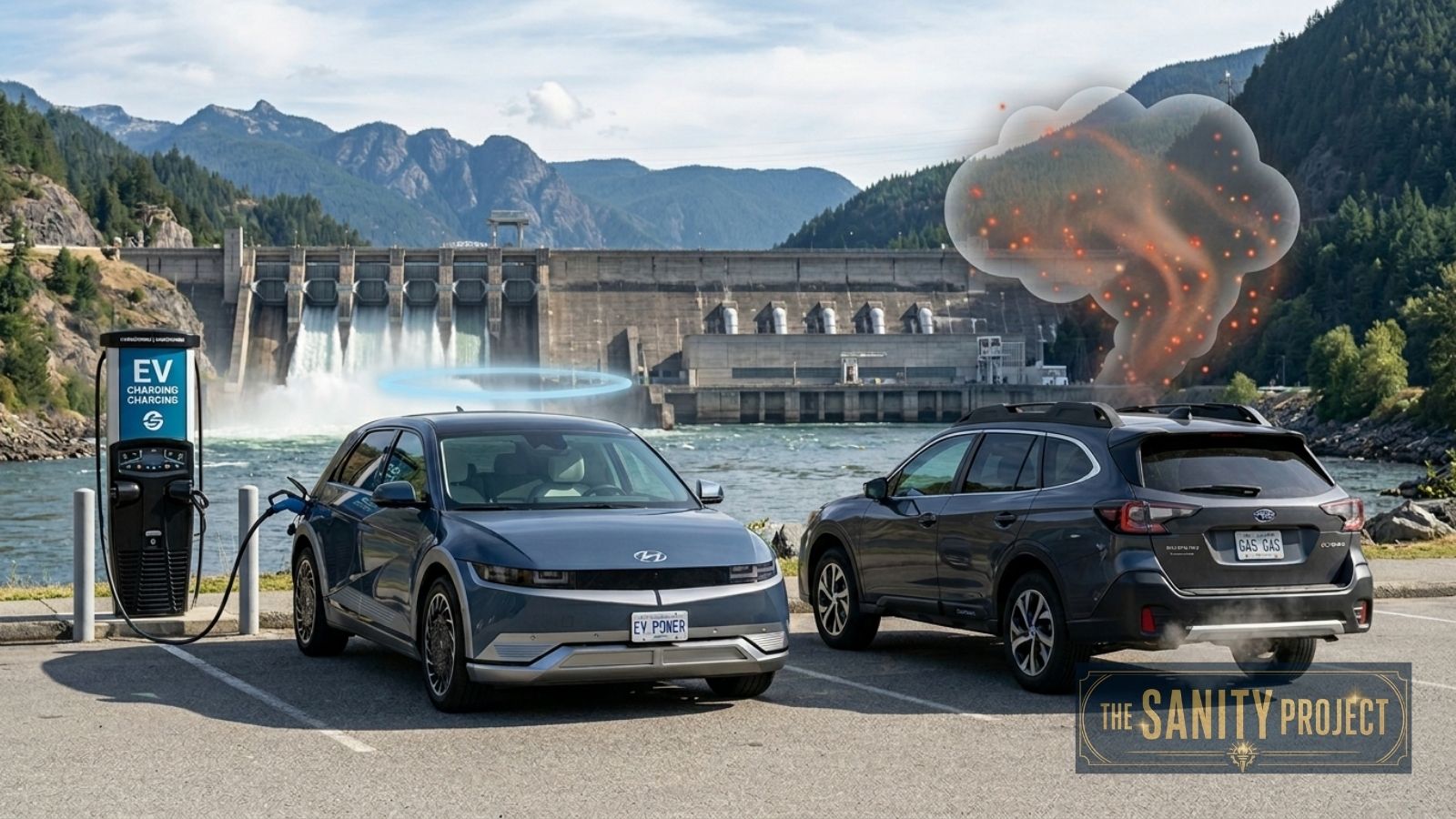
Is the debate over electric vehicles (EVs) versus gas cars just hype or is one truly better for the environment? If you’ve spent any time at dinner parties, reading comment sections, or scrolling social media, you’ve probably heard the argument: “Aren’t electric vehicles just as bad, if not worse, for the environment because of battery mining?”
Let’s separate myth from fact. This deep dive uses data from leading organizations like the EPA, the Union of Concerned Scientists, and firsthand investigations into battery supply chains to unpack what’s really at stake with electric vehicles. Get ready for a skimmable, no-nonsense breakdown tailored to the Canadian context but relevant everywhere.
The Origin Story: Building an EV vs Building a Gas Car
Fact: Building an electric vehicle has a larger carbon footprint than building a gas-powered car.
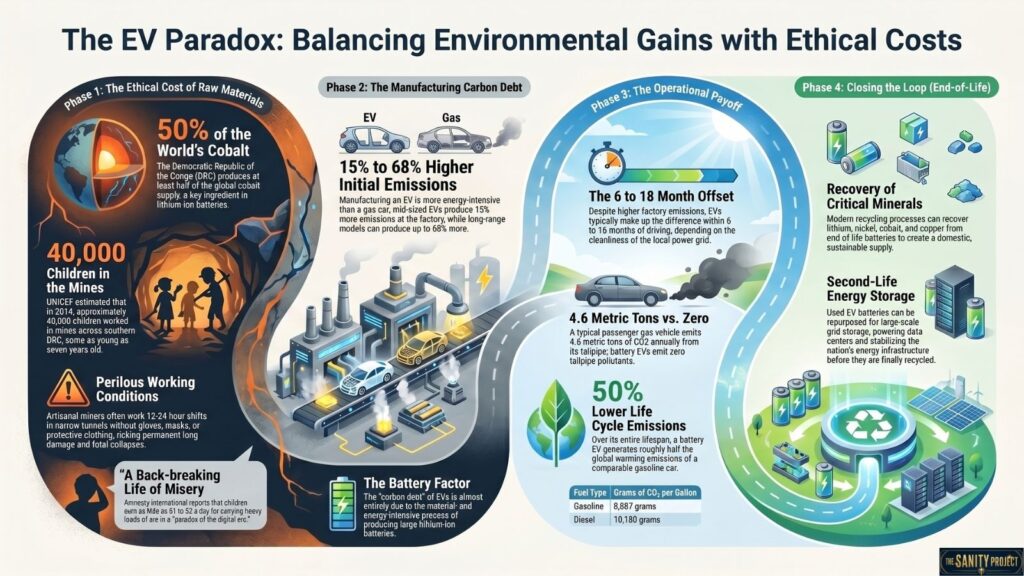
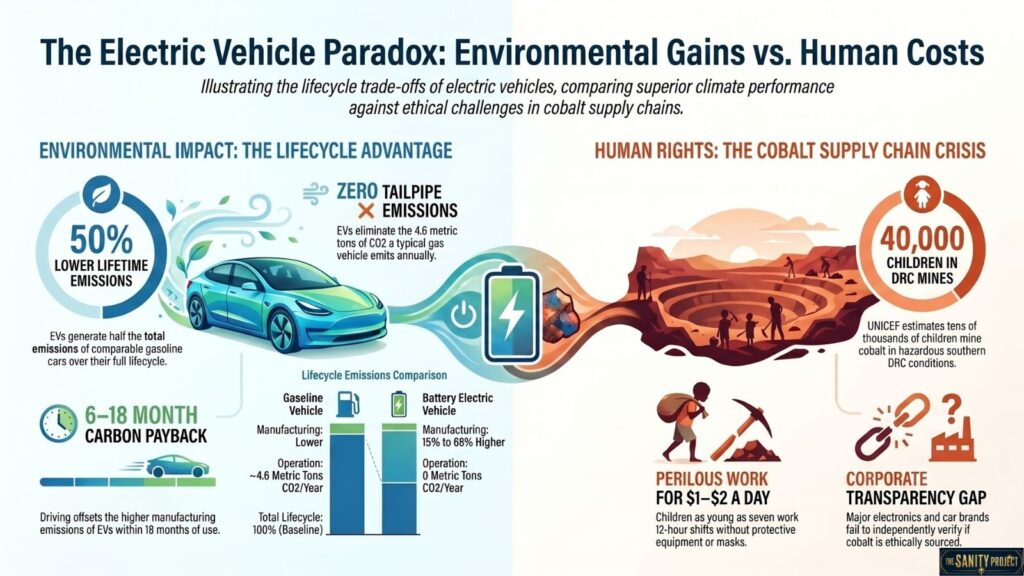
- EV manufacturing emissions are 15 percent higher (for a typical model) than those from making a traditional gasoline car
- For larger, long-range EVs, manufacturing emissions are up to 68 percent higher due to their massive lithium-ion batteries
Why? That battery pack is heavy, complex, and requires intense energy to produce. Think of producing an EV like forging a heavy-duty reusable water bottle, while making a gas car is a bit like churning out a disposable cup: the initial investment is much greater for permanence.
Life Cycle Analysis: The Only Truth That Matters
Snapshot comparisons don’t tell the story. Environmental scientists use cradle-to-grave life cycle analysis to compare vehicles, weighing not just production but also everything that happens over the years of driving.
Key Life Cycle Considerations:
- Upfront emissions of manufacturing (where EVs start off “worse”)
- Years of use: driving, fueling, maintenance
- End-of-life: scrapping, recycling, or reusing materials
Where do gas car critics go wrong? They stop the clock on day zero, missing the relentless, ongoing emissions from every mile you drive.
The Daily Reality: Gas Cars Are Nonstop Polluters
Every gallon of gasoline burned in a car:
- Releases about 20 pounds of carbon dioxide into the air (even though a gallon weighs just 6 pounds)
- That math seems impossible, but it’s chemistry: combustion pulls in heavy oxygen from the atmosphere, creating CO2
For most gas vehicles, this adds up to:
- 4.6 metric tons of CO2 per year (driving an average of 11,500 miles at 22 MPG)
- Every gas car on the road demands a weekly, global extraction and supply chain: seismic ocean blasts for oil, deep drilling, oceanic shipping, refining, and endless combustion
One-time battery mining for an EV is a significant hit, but gas cars require a “marathon” of extraction and emissions every week for their entire lifespan.
When Do Electric Vehicles Pay Off Their Carbon Debt?
So, when does the environmental investment in an EV start paying off?
- For most drivers in Canada and the US, an EV pays off its manufacturing carbon debt in about 18 months
- Smaller, short-range EVs can beat gas cars in just six months
- Even the largest, long-range EVs break even by the third year
From then on, EVs leave gas cars in the dust. Over a typical 10 to 15-year life, gas-powered vehicles emit twice as much pollution as a comparable EV — even in regions where the electric grid still relies on coal or natural gas.
The Canadian Perspective on Electric Vehicles: Clean Energy Superpowers
Canada’s electricity is among the cleanest in the world. For example:
- In British Columbia, the grid is almost entirely hydropowered
- Charging your electric vehicle at home is like plugging into a river, not a smokestack
Result? Break-even for EVs is measured in weeks, not years. Every kilometre driven puts even more distance between an EV and its gas-powered rival in environmental impact.
Plus, the grid is getting cleaner globally. As wind, solar, and hydro expand, each year makes your EV’s carbon footprint even smaller, really a “reverse aging” for emissions. Gas cars, on the other hand, are as dirty as the day you bought them.
Beyond Carbon: The Ethical Minefield of Battery Supply Chains
The environmental argument is strong, but what about the moral math behind all those batteries?
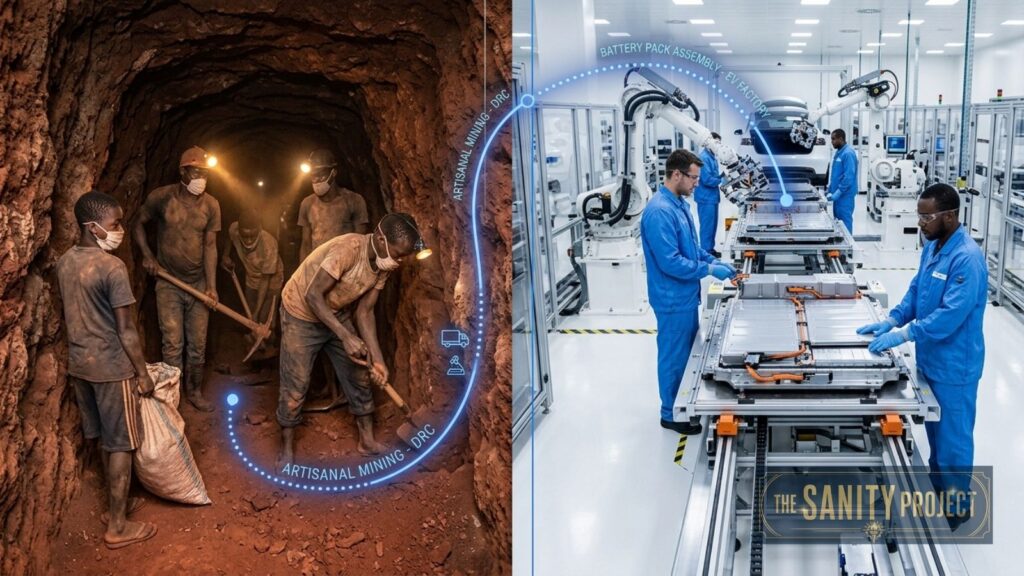
- Cobalt mining in the Democratic Republic of the Congo (DRC) is notorious for human rights abuses, child labor, and dangerous conditions
- “Artisanal” mines mean thousands of children and adults dig by hand, without protection, often for $1-2 a day, risking deadly cave-ins and lung damage
The global battery industry faces a genuine crisis: supply chains are opaque, and minerals from hand-dug tunnels often get mixed with “clean” industrial sources, obscuring their origins before they end up in products from the world’s top brands.
Is Sticking with Gas Cars the Ethical Choice?
Not quite. The fossil fuel industry is no ethical haven. Consider:
- Continuous, destructive oil extraction wrecks entire ecosystems with spills and pollution
- Global conflicts, wars, and geopolitical upheavals erupt over access to oil
- Air pollution from tailpipes, refineries, and gasoline logistics kills millions prematurely every year
- Climate change, fueled by burning fossil fuels, disproportionately harms the world’s poorest
In short, neither car is impact-free, but EVs offer a potential path for reform. Battery supply chains can be fixed through corporate accountability, transparent tracing, and new chemistries that minimize or eliminate cobalt. Fossil fuel combustion, by physical law, cannot be made “cleaner” — you can’t burn gas without creating CO2.
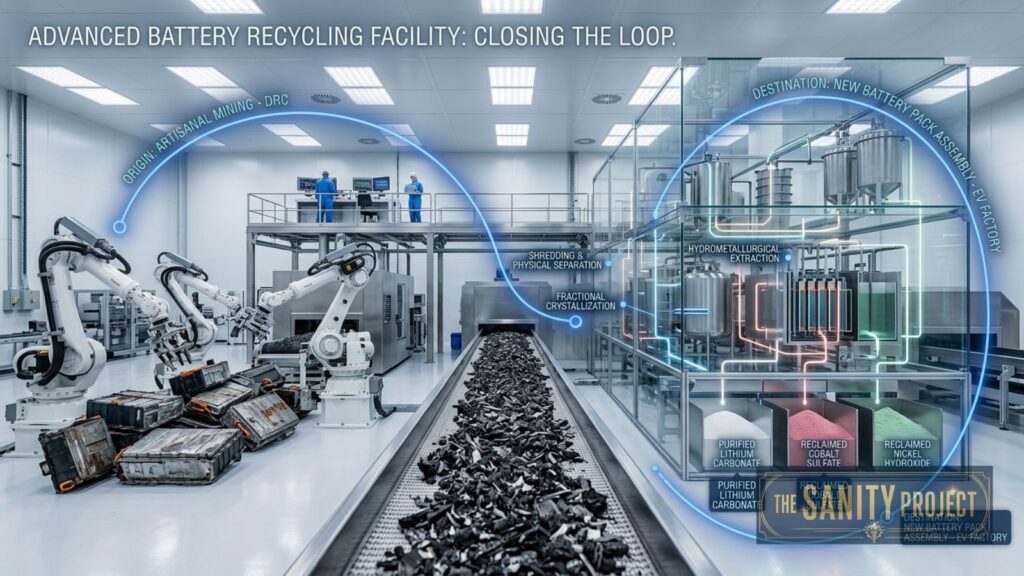
Game-Changer: The Rise of Battery Recycling
A new model in the EV world can transform the landscape: closed-loop battery recycling.
What’s happening:
- Companies like Redwood Materials have developed tech to recover over 95 percent of critical battery metals (lithium, cobalt, nickel, copper) from old batteries
- Used EV batteries are dismantled, shredded, and chemically processed to separate pure metals, which are then reused in new batteries, retaining their full quality
- Think of an EV battery as a mobile bank vault: after years of use, you can open it up, extract the valuable atoms and re-deploy them, again and again
Contrast this with burning a tank of gasoline: every drop is gone forever, polluting the air and requiring a fresh batch of oil for your next drive. With battery recycling, the need for new mining shrinks with every cycle.
At a Glance: EVs vs Gas Cars — The Takeaways
Electric vehicles:
- Higher up-front emissions to manufacture
- Offset those emissions rapidly, usually in 6 to 18 months
- Keep getting cleaner as grids shift to renewables
- Offer the possibility for supply chain accountability and dramatic emissions reductions via recycling
Gasoline vehicles:
- Lower manufacturing emissions, but continual, heavy emissions every day you drive
- Require ceaseless extraction, shipping, refining, and burning of fossil fuels
- Cannot reduce their emissions or become “cleaner” after purchase
Common Myths and Truths About Electric Vehicles
Myth: Battery mining wipes out any potential environmental benefit
Truth: While mining is resource-intensive, EVs recoup that impact quickly, often within the first year or two of driving. Compared to the continuous extraction needed for gas vehicles, the balance is heavily in the EV’s favor over time.
Myth: Gas cars are ethically preferable due to battery supply chain abuses
Truth: Both options face ethical challenges; fossil fuels have their own profound environmental and human costs. The real solution is to push for supply chain reform and better battery technology, not to abandon progress outright.
Myth: The grid is too dirty for EVs to matter
Truth: Even in areas with dirtier grids, EVs outperform gas cars over their lifespan. And as grids get cleaner, so do EVs — a benefit gas cars can never match.
The Road Ahead: Making Informed Choices
Knowledge is only valuable when applied. By understanding the full life cycle analysis of vehicles, you can cut through misinformation and make choices that truly align with your values.
Don’t get distracted by half-truths or cherry-picked statistics. The real story is larger and more nuanced — and for most Canadians, the math and the morality are both pointing toward electric vehicles as the better future.
Choose progress. Demand corporate accountability. Support cleaner grids and battery recycling. The revolution in transportation is here — and it’s closing the loop, not circling the drain.
To subscribe to our weekly newsletter, go to https://thesanity.org/subscribe