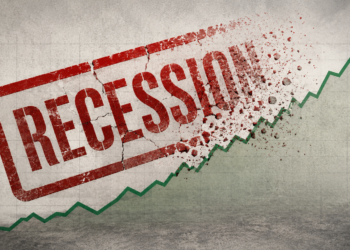
A jobs report lands, markets jump, a protest trends, a politician says something designed to be clipped into nine angry seconds, and by lunch the internet has decided what it all means. That is usually the moment current affairs analysis today goes off the rails – not because facts do not exist, but because interpretation starts sprinting before context has tied its shoes.
The problem is not a lack of information. It is an oversupply of premature certainty. Most people following news are not uninformed. They are overloaded. They are trying to understand inflation, elections, war, crime, AI, debt, migration, housing, and social change while being fed a steady diet of emotional framing. Unsurprisingly, a lot of public discussion ends up sounding confident and thin at the same time.
Good analysis has a different job. It is not there to make readers feel caught up. It is there to help them see what matters, what is noise, and what is still too early to call. That sounds obvious. It is also oddly rare.
What current affairs analysis today often gets wrong
A lot of commentary mistakes motion for meaning. A new poll appears and instantly becomes proof of a political realignment. A single month of economic data becomes the start of a boom or the confirmation of collapse. One viral video becomes evidence of national decay. If you only ever look at the latest datapoint, the world will seem to lurch from crisis to crisis every six hours.
This is where calm analysis earns its keep. The first question is not, what happened? It is, compared to what? Compared to last month, last year, the pre-pandemic period, a normal business cycle, or the public narrative already circulating? The same fact can carry very different meaning depending on the baseline.
Take inflation. For much of the last few years, public conversation treated any easing in the inflation rate as if prices were somehow going back down in a broad sense. They were not. A slower rate of increase is still an increase. That distinction matters to households, voters, and businesses. Yet headlines often flatten it into emotional shorthand because emotional shorthand is faster, and apparently we are all meant to live at headline speed now.
The same distortion shows up in crime coverage, labor market reporting, and political polling. A rise can be real and still not represent a long-term trend. A decline can be meaningful and still leave conditions historically high. Data without time horizon is one of the easiest ways to mislead people while technically telling the truth.
The real task is separating signal from performance
Much of modern news is not just reporting events. It is reporting reactions to events, then reactions to those reactions. That creates a hall-of-mirrors effect where public attention focuses less on the underlying issue and more on who framed it first, who framed it best, and who managed to turn it into identity theater.
A measured approach asks three basic questions. First, what is the underlying fact pattern? Second, what narrative is being attached to it? Third, who benefits if that narrative sticks?
This is not cynicism. It is basic media literacy for adults. Governments shape stories. Parties shape stories. Corporations shape stories. Activists shape stories. Markets shape stories. News outlets shape stories too, often by choosing which angle gets the strongest emotional response. None of that means every narrative is false. It means narratives are not neutral just because they are repeated often.
Subscribe To Our Newsletter!
That is why the most useful analysis is usually a little slower and a little less dramatic. It spends more time on incentives, base rates, historical comparison, and second-order effects. It is less interested in declaring winners and losers by 2 p.m. and more interested in whether the thing people are panicking about is structurally important or merely loud.
Why context matters more than volume
If you follow enough breaking news, everything starts to feel existential. That is not because everything is existential. It is because the incentives of digital media reward urgency, novelty, and conflict. Context, by contrast, is quiet. It often lowers the emotional temperature. Which, from a traffic perspective, is apparently a terrible business model.
But context is what lets readers make sense of a fast-moving story without getting dragged around by every update. A labor strike means one thing if unemployment is low and consumer demand is strong. It means something else if the economy is already contracting. A central bank rate cut can signal relief, weakness, or both. A government spending package can be stimulative in one environment and inflationary in another. The event is not the full story. The surrounding conditions are part of the event.
This is especially true in the United States and Canada, where similar issues often produce different outcomes because the institutional setups are different. Housing affordability, for example, is discussed as if it were a single continental problem with a single moral villain. In reality, zoning rules, migration patterns, financing conditions, construction bottlenecks, and local political incentives all interact differently across regions. One tidy explanation may feel satisfying. It will not help much.
Current affairs analysis today should be comfortable with uncertainty
One of the stranger habits in public commentary is the idea that admitting uncertainty makes analysis weak. Usually it means the opposite. Serious analysis should distinguish between what is known, what is probable, and what is still speculative.
That matters because a lot of bad conclusions come from collapsing those categories. If an economy shows mixed indicators, the honest answer may be that recession risk has risen without a recession being inevitable. If a candidate gains momentum, that does not mean the race is over. If public trust in institutions falls, it does not automatically mean institutional collapse. Sometimes the right answer is, this trend matters, but the confident version of the story is running ahead of the evidence.
Readers are often treated as if they cannot handle that level of nuance. They can. In fact, many are desperate for it. Professionals, investors, managers, and ordinary voters make better decisions when information is framed with probabilities rather than certainty theater. Reality is conditional. Analysis should be too.
What better analysis looks like in practice
A useful framework is simple.
Start with the claim. What exactly is being said? Not the vibe, not the implication, the claim. Then test the timeframe. Is this a short-term fluctuation or part of a larger pattern? Then test the denominator. Raw numbers mislead constantly unless you know what they are relative to. Then test incentives. Why is this framing appearing now, and who gains from urgency, fear, or hope?
After that, look for missing variables. Economic stories often ignore demographics. Political stories often ignore institutional constraints. Cultural stories often ignore incentives created by algorithms. Foreign policy stories often ignore domestic electoral pressure. If a narrative feels too clean, it usually is.
This approach does not strip away judgment. It sharpens it. The point is not to become emotionally detached from public life. The point is to react to the right thing, at the right scale, for the right reason.
That is also why analysis should resist becoming a performance of cleverness. The goal is clarity, not showing off. Readers do not need another commentator auditioning for virality. They need someone willing to say, this headline matters less than you think, or this dull-looking policy change matters more than you think. Often, the most important developments are the least theatrical.
The bigger question behind the headlines
Every major story sits inside a broader pattern. Inflation debates often reflect a deeper struggle over who absorbs economic pain. Culture-war flareups often mask fights over institutional legitimacy. Election coverage often says less about policy than about trust, status, and the public appetite for disruption. If analysis stays at the event level, it misses the architecture underneath.
That architecture is where the real value lies. Not because it predicts everything, but because it helps readers understand what kind of event they are looking at. Is this a temporary shock, a structural shift, or a familiar cycle wearing new branding? That question alone can save people from a lot of manipulated urgency.
The Sanity Project exists in that gap between raw information and usable understanding. Not to tell readers what to think, but to insist that thinking should happen before the conclusion is packaged and sold back to them.
A helpful habit, then, is simple: when the next story arrives preloaded with outrage, certainty, and a ready-made moral script, pause for a beat. Ask what is actually happening beneath the framing. That small delay is where better judgment starts.