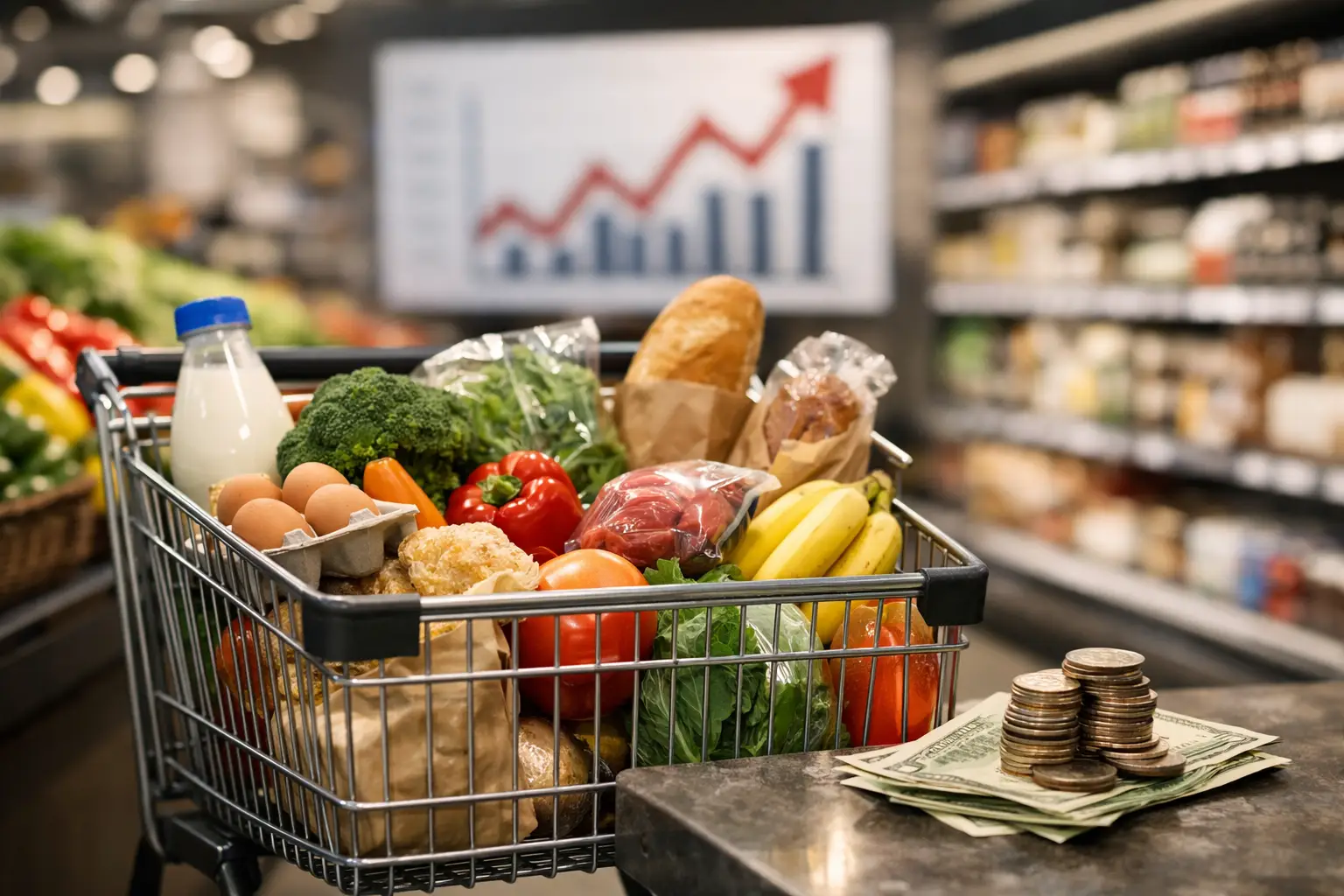
You notice it fastest in the boring stuff. Eggs. Cereal. Ground beef. Yogurt. Nothing dramatic, nothing luxury-coded, just the regular items that somehow turn a quick grocery run into a small act of financial disrespect. So if you’re asking why are groceries still expensive, the short answer is this: overall inflation may have cooled, but the specific forces that shape food prices have not fully reversed.
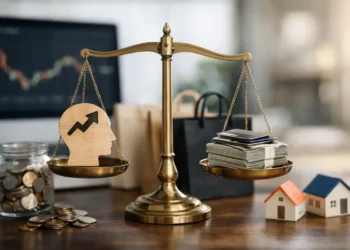
That gap between headline inflation and the grocery bill is where a lot of the confusion lives. People hear that inflation is coming down and reasonably expect prices to follow. But lower inflation does not mean lower prices. It usually just means prices are rising more slowly than before. That is not a technicality. It is the whole story.
Why are groceries still expensive if inflation cooled?
Because grocery prices are not driven by one neat lever called inflation. They are shaped by labor costs, transportation, packaging, insurance, energy, interest rates, weather shocks, disease outbreaks, and the simple fact that once prices move up, they rarely glide back down out of kindness.
Food is also unusually exposed to disruption. A smartphone can be warehoused. A bag of lettuce has other plans. That makes the grocery system more sensitive to short-term shocks and more dependent on every layer of the supply chain working properly. As everyone learned recently, that is a charming theory until reality shows up.
1. Prices came down in speed, not in level
This is the first thing most coverage gets wrong or skips. Inflation measures the rate of change, not the absolute price. If grocery prices jumped sharply in one year and then rose only a little the next year, inflation has cooled, but your bill is still higher than it used to be.
That matters because consumers experience levels, not rates. Households do not buy “disinflation.” They buy milk at $4.79 instead of $3.29 and wonder what exactly improved. From a statistical standpoint, something did. From a budget standpoint, not much.
In other words, the public is not confused. It is reacting to the thing that actually hurts.
2. Grocery supply chains are still more fragile than they look
The supply chain story did not end when the ports got less chaotic. Food supply chains remain exposed to disruptions that are both local and global. Drought in one region, flooding in another, shipping delays, fertilizer costs, livestock disease, and labor shortages all filter into prices.
And unlike some manufactured goods, food has fewer workarounds. If a crop underperforms or a poultry outbreak cuts supply, retailers cannot just manifest a substitute from nowhere. They can source from elsewhere, but often at a higher cost.
This is especially visible in categories like produce, meat, dairy, and eggs. One shock hits supply, another raises feed or transport costs, and suddenly the shelf tag starts looking like a policy failure, a corporate conspiracy, or both. Sometimes those explanations contain a grain of truth. Often the less satisfying answer is that food systems are inherently volatile.
Subscribe To Our Newsletter!
3. Labor got more expensive, and that cost sticks
From farms to warehouses to trucking to retail stores, food depends on labor at every step. Wages rose across many parts of the economy over the past few years, especially in sectors with staffing shortages and high turnover.
That is not necessarily bad news. Better pay can mean a more stable workforce. But it does raise costs, and businesses tend to pass at least part of that through to consumers. Once wages rise, they do not usually reverse just because inflation headlines look friendlier.
This is one reason grocery prices can feel stubborn. Some pandemic-era pressures eased, but labor costs became embedded in the new baseline. The same applies to benefits, overtime, training, and retention costs. None of those vanish because the Federal Reserve has a better month.
4. Energy, transport, and packaging still matter more than people think
Food prices are not only about the food. They are also about diesel, refrigeration, plastics, cardboard, aluminum, rent, and electricity. Moving and storing food is expensive, particularly perishables.
Even when fuel prices are not at crisis levels, they remain elevated enough to keep pressure on distribution. Packaging costs also surged and, in many categories, settled at a higher plateau rather than returning to old norms. The result is simple: even if the farm-side price softens, the final shelf price may not budge much.
That frustrates consumers because the visible product looks unchanged. Same pasta, same cereal, same chicken breasts. But the invisible cost stack behind it is fatter than it was a few years ago.
5. Interest rates made the whole system more expensive
High interest rates are supposed to cool inflation. Broadly, they do. But they also increase financing costs for businesses across the food chain.
Farmers borrow to buy equipment and inputs. Processors finance inventory and expansion. Retailers manage large working-capital needs. When borrowing costs rise, those expenses get absorbed somewhere, and “somewhere” tends to be either margins or prices. In a low-margin business like groceries, prices usually get a vote.
This is one of the less obvious answers to why are groceries still expensive. The policy tool used to fight inflation can, in specific sectors, keep cost pressure alive longer than people expect. Economics has a talent for being technically coherent and emotionally annoying at the same time.
6. Companies learned what consumers would tolerate
Now for the part people are not imagining. Some companies did use the inflationary environment to push prices further than underlying costs alone would justify. Not everywhere, not always, and not in a cartoon-villain way. But when consumers expect prices to rise, firms often gain more room to test higher pricing.
This is not a claim that greed suddenly appeared in 2022. Companies have always wanted higher margins. The difference is that a period of broad inflation gave cover for more aggressive price increases and slower rollbacks.
Competitive pressure still matters. Grocery retail is not a magical profit machine with infinite pricing power. Margins in the sector are often fairly thin. But branded food manufacturers, concentrated suppliers, and certain categories with fewer substitutes can maintain higher prices longer than consumers expect. Once shoppers get used to a new normal, that new normal has a way of staying put.
7. Weather, disease, and global shocks keep hitting food first
Food inflation is not purely a monetary story. It is also biological and environmental. Bad weather affects crop yields. Avian flu affects egg supply. Drought affects cattle herds and feed costs. Conflict disrupts grain, fertilizer, and energy markets.
These shocks do not hit every aisle equally, which is why grocery inflation feels uneven and confusing. One month eggs spike. Another month beef. Then orange juice starts acting like a luxury product. Consumers experience this as randomness. It is not random, exactly. It is a chain of sector-specific disruptions layered on top of already higher baseline costs.
That is also why a full return to pre-2020 grocery pricing was always unlikely. Too many structural pressures changed at once, and several of them are ongoing.
What this means for shoppers
The honest answer is not comforting, but it is clarifying. Grocery prices may ease in certain categories, and some items will fall when supply normalizes. But broad, dramatic price declines across the store are unlikely unless the economy tips into a much weaker demand environment, and that comes with its own problems.
What is more likely is a slower grind. Prices rise less quickly. Promotional activity returns in some categories. Private label gains share. Consumers keep adjusting their habits in quiet, unglamorous ways. Smaller substitutions, fewer impulse buys, more store switching. Not exactly a national recovery montage, but real behavior does not need better cinematography to matter.
There is also a political lesson here. When officials point to cooling inflation while people still feel squeezed, they are not necessarily lying. They are often answering a different question. Voters ask, why is my life still expensive? The data answers, prices are rising more slowly. Both statements can be true, and that mismatch is where trust erodes.
A more useful way to think about groceries is this: food prices are a lagging indicator of a lot of upstream stress. They reflect not just inflation, but the structure of the supply chain, the cost of money, labor market shifts, environmental volatility, and market power in specific corners of the system. Which means the grocery bill is not merely a receipt. It is a compact summary of the economy’s unfinished problems.
The helpful part is not pretending relief is right around the corner. It is seeing the pattern clearly enough to stop waiting for a simple fix that was never coming.