A fake image used to require effort. Now it requires a prompt, a deadline, and maybe a grudge.
That shift explains a lot about current trends in political disinformation. The problem is no longer just false claims moving through fringe corners of the internet. It is a broader change in how narratives are manufactured, amplified, and made to feel socially validated before anyone has time to check whether they are true. The old model was a lie spreading fast. The newer model is a lie arriving prepackaged with visuals, emotional cues, and a built-in audience.
If that sounds dramatic, fair enough. But the more useful question is not whether disinformation exists. Of course, it does. The better question is what has changed in the last few years, and what those changes mean for people trying to follow politics without losing their grip on reality.
Quick Answer: Political disinformation is increasingly characterized by AI-driven, high-speed, and personalized content, moving from fringe actors to systemic, professionalized influence operations, especially in the 2024-2026 election cycles. Key trends include the rise of deepfakes, influencer-driven propaganda, and the weaponization of social algorithms, creating “parallel realities.
Why trends in political disinformation are changing
Political disinformation has always followed incentives. Where attention goes, manipulation follows. What has changed is the structure of the information environment itself.
Platforms reward speed, emotion, and repetition. Audiences are fragmented. Trust in institutions is weaker than it was a generation ago. And cheap creative tools now let small actors do things that once required a media operation. Put those pieces together, and you get a system where falsehood spreads more easily. It adapts more quickly to different audiences.
That matters because modern disinformation is less about a single persuasive message and more about cumulative confusion. Sometimes the goal is to make people believe a false claim. Sometimes it is simply to make them stop believing anyone at all. Cynicism, after all, is politically useful.
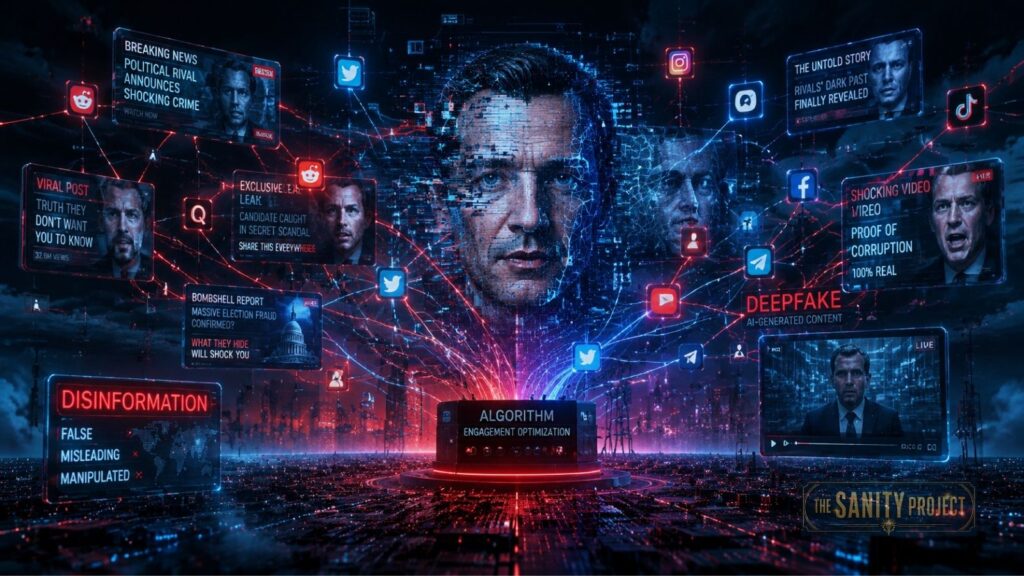
1. Synthetic media is lowering the cost of deception
The most obvious trend is the rise of AI-generated political content. Deepfake videos still get the headlines, but the more common issue is simpler and more mundane: cloned voices, synthetic images, edited clips, and fake screenshots that are just believable enough to circulate before correction catches up.
This changes the economics of disinformation. A manipulator no longer needs a studio-quality operation to create persuasive material. They need basic tools, a sense of what will trigger engagement, and an audience inclined to share before thinking. Which, regrettably, is not exactly a rare combination online.
The trade-off is that synthetic media is not always highly convincing under close scrutiny. Many fakes are sloppy. But close scrutiny is not the point. Most political content is consumed quickly, on small screens, in crowded feeds. In that environment, plausibility often beats accuracy.
Subscribe To Our Newsletter!
2. Real content is being reframed more often than fabricated from scratch
A lot of people still picture disinformation as wholly invented stories. That happens, but one of the more effective trends in political disinformation is the strategic use of real material taken out of context.
A genuine video is clipped to remove what happened before or after. A real statistic is presented without baseline data. An old image is recirculated as if it were current. A public figure says something nuanced, and the quote that spreads is the most inflammatory seven seconds.
This works because contextual distortion is harder to rebut than outright fabrication. When something contains a kernel of truth, fact-checking has to do more work. It has to restore sequence, proportion, and meaning. That is a much heavier lift than simply saying this never happened.
For readers, this creates a practical problem. Authenticity is no longer enough. A real clip can still be deeply misleading.
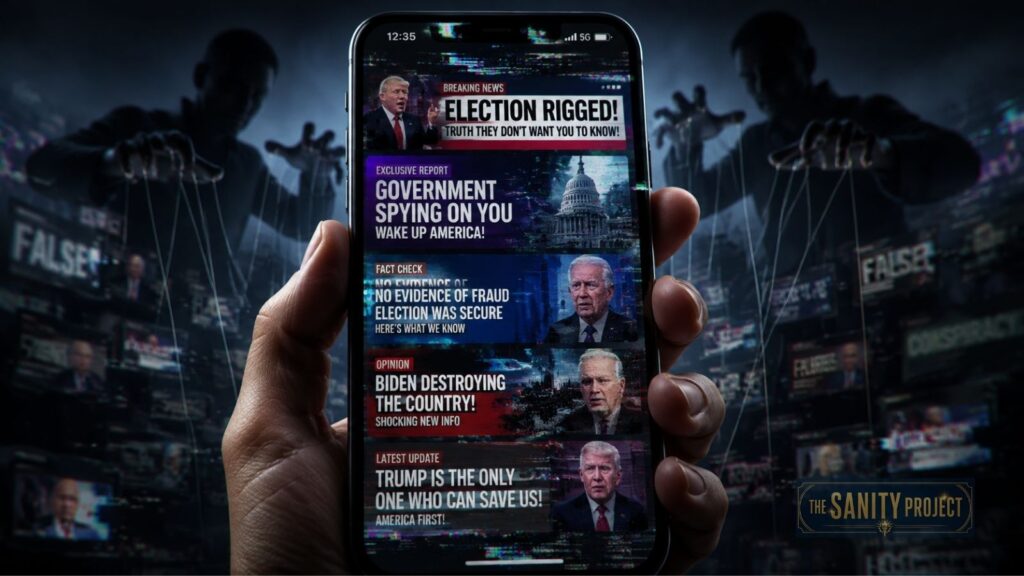
3. Disinformation is moving through personality networks, not just anonymous accounts
The old image of disinformation involved bots, troll farms, and shadowy fake profiles. Those still exist. But increasingly, misleading political narratives move through trusted personalities: influencers, streamers, niche commentators, meme accounts, and partisan micro-celebrities.
That is not accidental. People are more likely to trust familiar voices than formal institutions, especially when those voices sound casual and independent. The content feels organic. It often is not.
Sometimes the distortion is deliberate. Sometimes it is incentive-driven rather than centrally coordinated. A creator posts a misleading take because outrage performs well, not because they are part of some grand operation. The effect can be similar either way. A false or warped claim enters the bloodstream of public conversation with the social proof of a known personality behind it.
This is where the line between disinformation and misinformation gets messy. Not every misleading actor is malicious. Some are just confidently wrong in public at scale, which is not exactly a harmless hobby when the topic is elections, public health, or civil unrest.
4. Emotional targeting is becoming more precise
Disinformation is used to chase mass reach. Now it often aims for emotional fit.
Different audiences receive different versions of the same narrative. One group gets a message framed around corruption. Another gets one framed around censorship. Another gets one framed around identity, crime, or cultural decline. The details vary, but the goal is consistent: trigger a reaction strong enough to override skepticism.
This is one reason broad media literacy slogans can feel a bit thin. Telling people to verify sources is useful, but incomplete. Many disinformation campaigns are not built to survive careful review. They are built to create a temporary emotional state in which careful review never happens.
Anger is effective. Fear is effective. Moral disgust is especially effective. Once a message plugs into those reactions, sharing becomes a form of self-expression rather than a means of information transfer. At that point, truth is competing with identity, and truth usually gets worse distribution.
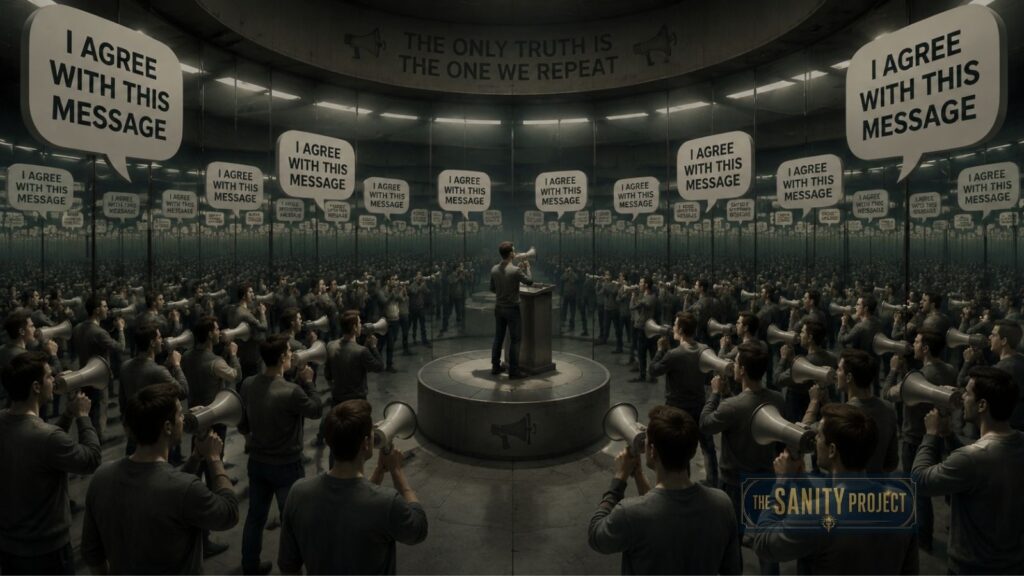
5. The goal is often to flood the zone, not win the argument
One of the biggest mistakes in public discussion is assuming disinformation succeeds only when people fully believe it. Often the actual objective is lower and more achievable: muddy the picture, overload attention, and make shared reality harder to maintain.
If five conflicting explanations appear at once, many people will not investigate further. They will retreat into prior assumptions. That helps whoever benefits from confusion.
This tactic shows up around elections, protests, court cases, and geopolitical crises. Competing narratives emerge at high speed, some false, some half-true, some impossible to verify in real time. The overload itself becomes the strategy.
This is why corrections, while necessary, are not always sufficient. Once information chaos sets in, the public does not neatly return to a stable baseline. Some people remember the correction. Others remember only that “nobody really knows what happened,” which is often exactly the desired outcome.
6. Distrust itself is being weaponized
There is a deeper trend beneath all the others: disinformation increasingly exploits existing distrust rather than trying to create belief out of nothing.
If people already think the media lies, the government hides things, experts protect their own status, or political opponents are existential threats, then misleading content has fertile ground to grow. It does not need to build a worldview. It just needs to activate one.
This is where the issue gets uncomfortable. Some distrust is earned. Institutions do make mistakes, sometimes serious ones. Media coverage can be distorted by incentives, ideology, or simple incompetence. Pretending otherwise only makes the problem worse.
But that truth creates an opening. Every institutional failure becomes raw material for the next wave of manipulation. Real error gets used to justify an imagined conspiracy. Reasonable skepticism gets nudged into blanket disbelief. And blanket disbelief is easy to exploit because it removes standards. If everything is propaganda, then anything can be treated as plausible.
What this means for readers and voters
The practical lesson is not to become paranoid. It is becoming slower.
When a political claim appears perfectly calibrated to provoke outrage, that is a signal. When a clip seems too clean, too convenient, or too aligned with one side’s favourite storyline, that is a signal. When ten accounts suddenly push the same framing with slightly different wording, that is also a signal.
A calm information habit now matters as much as a strong political opinion. That means checking timing, asking what is missing, and noticing whether a post offers evidence or is just emotional choreography. It also means accepting that uncertainty is sometimes the honest answer. Not every developing story can be resolved in one scroll.
The larger point is simple. Political disinformation is becoming less about isolated lies and more about engineered perception. It blends real and fake, people and platforms, identity and incentive. Which means resisting it is not just a matter of better fact-checking. It requires better judgment about how narratives are constructed in the first place.
And that may be the least glamorous form of civic responsibility imaginable. No viral heroics. No clever slogan. Just the quiet discipline of refusing to be managed by someone else’s manipulative edit of reality.