• Home
  • Canadian Politics
  • Energy & Environment
  • Global Affairs & Economics
  • Media & Misinformation
  • Opinion & Commentary
  • Policy Breakdown
  • Weekly Roundups
Saturday, June 6, 2026
  • Login
The Sanity Project
  • Home
  • Canadian Politics
  • Energy & Environment
  • Global Affairs & Economics
  • Media & Misinformation
  • Opinion & Commentary
  • Policy Breakdown
  • Weekly Roundups
No Result
View All Result
  • Home
  • Canadian Politics
  • Energy & Environment
  • Global Affairs & Economics
  • Media & Misinformation
  • Opinion & Commentary
  • Policy Breakdown
  • Weekly Roundups
No Result
View All Result
The Sanity Project
No Result
View All Result
Home Canadian Politics

Why Is Pierre Poilievre Really Refusing Security Clearance?

The true story behind Poilievre and foreign interference

Bo by Bo
April 28, 2026
Reading Time: 5 mins read
0
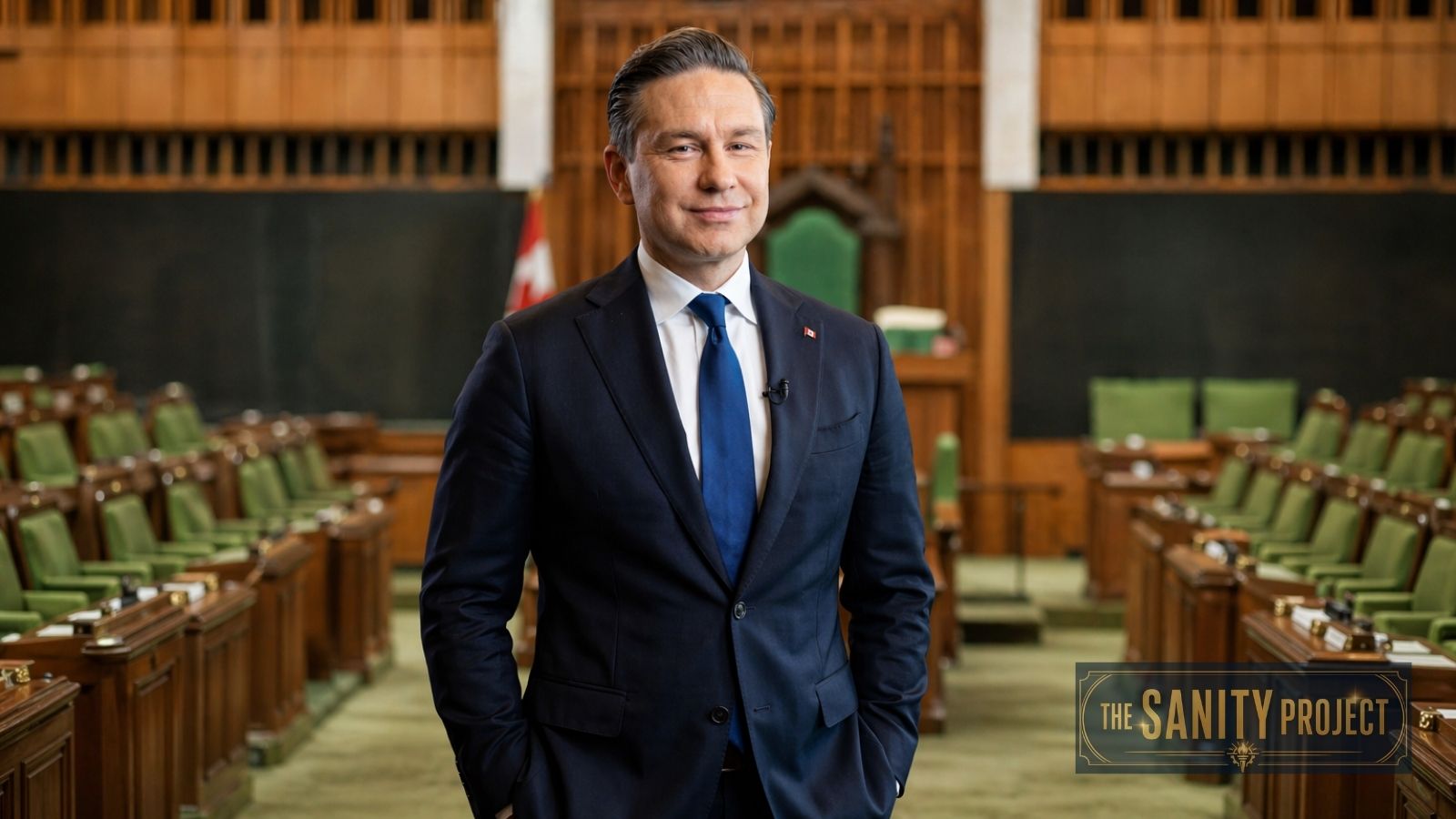
A man in a navy suit stands smiling in the center aisle of an empty parliamentary chamber with green seats. A Canadian flag is visible behind him, and “The Sanity Project” logo appears in the lower right—Pierre Poilievre is pictured.

Pierre Poilievre

Why Did Pierre Poilievre Really Refuse Security Clearance? Unmasking Canada’s Biggest Political Mystery

When it comes to foreign interference in Canada, few names are as vocal as Pierre Poilievre. For months, he has sounded the alarm about threats to Canadian democracy. Yet, when offered access to confidential intelligence with a simple requirement — obtaining a top secret security clearance — Poilievre declined. This decision has unleashed a firestorm of speculation and criticism.

Table of Contents

Toggle
  • Why Did Pierre Poilievre Really Refuse Security Clearance? Unmasking Canada’s Biggest Political Mystery
      • RELATED POSTS
      • Energy Transition Canada Is Actually Facing
      • EV Adoption in Canada Is Slower Than It Looks
      • The Structural Paradox: Why Canadian Household Debt is the Shadow of a Safe Banking System
    • Setting the Stage: What Is a Security Clearance?
    • Pierre Poilievre’s Three Reasons: The Breakdown
      • 1. The “Gag Order” Argument
        • The Reality:
      • 2. The “Already Cleared” Claim
        • The Facts:
      • 3. “It’s a Liberal Trap!”
        • The Facts:
    • The Deeper Question: What’s Really at Stake?
      • What Does a Security Clearance Involve?
      • Possible Explanations
    • Why This Matters for Canadian Politics
      • Trust and Leadership
      • Double Standards
    • How the Security Clearance Refusal Echoes in the Media
      • The Narrative
      • The Role of Nonpartisan Institutions
    • What Should Citizens Make of All This?
      • Ask Tough Questions
      • Demand Accountability
    • Summary: Reason Over Rage

RELATED POSTS

Energy Transition Canada Is Actually Facing

EV Adoption in Canada Is Slower Than It Looks

The Structural Paradox: Why Canadian Household Debt is the Shadow of a Safe Banking System

Why would the politician who demands the most accountability refuse to meet the basic standard himself? In this post, we break down the facts, the arguments, and the wider implications for Canadian politics. If you care about transparency and national security, you need to know what’s at stake.


Setting the Stage: What Is a Security Clearance?

Before we dissect the controversy, it’s crucial to understand what a security clearance is:

  • Top secret security clearance in Canada is essentially a rigorous background check.
  • Administered by CSIS (Canadian Security Intelligence Service), it covers:
    • Personal finances
    • Foreign contacts
    • Personal and professional history
  • If cleared, leaders can attend confidential briefings on national threats, such as foreign election interference.
  • Every major party leader — except Pierre Poilievre — complied with this basic vetting.

Why does this matter? Because the individual who spearheads the conversation on foreign threats has declined the same access given to all his peers.
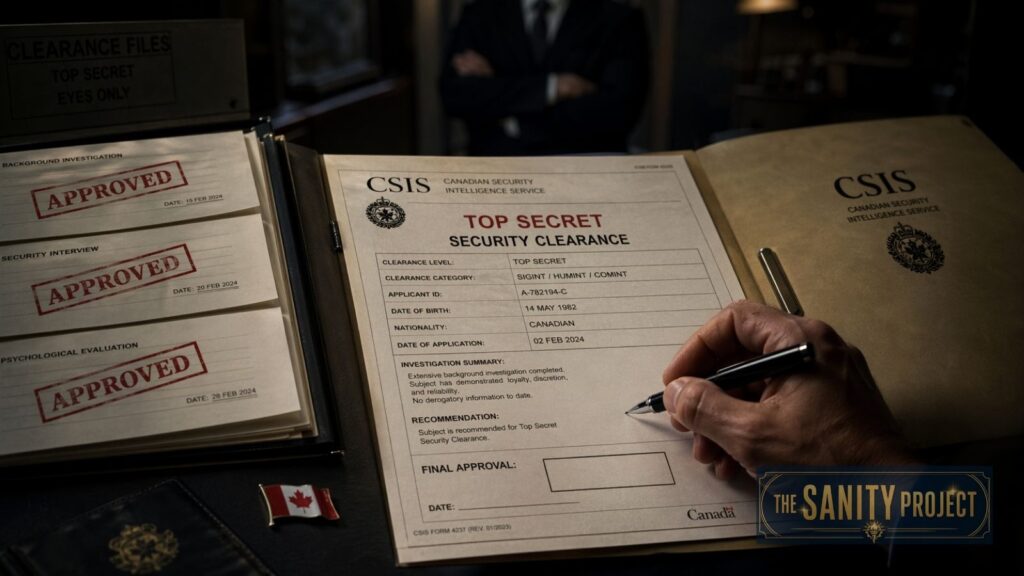

A person fills out a “Top Secret Security Clearance” form for CSIS, the Canadian Security Intelligence Service. Stamps reading “APPROVED” and a small Canadian flag are visible on the desk, along with The Sanity Project logo and documents featuring Pierre Poilievre.
Security Clearance Application

Pierre Poilievre’s Three Reasons: The Breakdown

Pierre Poilievre gave three public reasons for refusing the vetting. Let’s examine each.

1. The “Gag Order” Argument

Poilievre claims: A security clearance would silence him on issues of foreign interference, as he’d be unable to speak freely.

The Reality:

  • Security clearances only restrict the sharing of classified material received through that channel.
  • Public commentary, policy criticism, and debate remain entirely legal.
  • Other leaders — Jagmeet Singh, Elizabeth May, Yves-François Blanchet — received briefings and continue to voice their opinions daily.
  • In practice, no one has been “muzzled” by getting vetted.

Key takeaway:
This misrepresents what security clearances do. It’s about safeguarding secrets, not silencing critics.

2. The “Already Cleared” Claim

Poilievre’s argument:
He doesn’t need a new clearance — as a former cabinet minister who took the Privy Council oath, he’s already vetted.

The Facts:

  • That cabinet clearance expired with the Harper government.
  • Today’s intelligence request requires an active, current review of present-day threats and information.
  • Being cleared a decade ago does not provide access to new, ongoing classified briefings.

Key takeaway:
Claiming to be “already cleared” is factually inaccurate. The current clearance is case-by-case, based on need and recency.

3. “It’s a Liberal Trap!”

Poilievre says:
The whole vetting process is a political ploy to muzzle the opposition, orchestrated by the Liberals.


Subscribe To Our Newsletter!


The Facts:

  • The security clearance process is non-partisan, run by CSIS and the Privy Council Office.
  • The invitation for the briefing came from the Hoag Commission, headed by an independent federally appointed judge.
  • Liberals have no access to clearance files, nor do they control the process.
  • Three other party leaders accepted — all are still active and vocal.

Key takeaway:
Painting a judicial inquiry as a political weapon is deflection, not evidence.


A firefighter in full gear gestures with his arm and signals reporters to stop, requiring security clearance. Reporters with microphones and cameras surround him on a city street at night; glass buildings and fire trucks line the background. The Sanity Project logo appears.
Security Clearance

The Deeper Question: What’s Really at Stake?

After dismantling the three defences, the real issue emerges:
Why did the loudest critic of foreign interference become the only leader to refuse a security clearance?

What Does a Security Clearance Involve?

  • CSIS reviews finances, associations, history, and vulnerabilities.
  • It is an intensive background check by Canadian intelligence — not a random political exercise.
  • Every other party leader agreed. Only Poilievre resisted.

Possible Explanations

  • Is it a matter of principle?
    Perhaps Poilievre believes on principle that elected officials or opposition leaders should never be vetted by state agencies.
  • Or is there something more?
    • Could the background check reveal financial, personal, or professional details Poilievre would rather keep private?
    • Is there a vulnerability that could come to light?

David Mercer poses the question bluntly:
If all other leaders were vetted without issue, why is Poilievre different? Transparency can’t be selective — you can’t demand it of your opponents but reject it for yourself.


Why This Matters for Canadian Politics

Trust and Leadership

The entire controversy spotlights a fundamental reality: Public trust is built on transparency.
When a politician declines standard vetting while championing scrutiny of others, it undermines the credibility of their cause.

Double Standards

Consider these points:

  • Foreign interference is a major threat to Canadian democracy.
  • All but one major leader accepted the standard security vetting.
  • The one leader who refused is also the one making it his central political issue.
  • Poilievre wants to play watchdog but won’t look at the official file.

Potential consequences:

  • Undermining the seriousness of security processes
  • Weaponizing fear and suspicion for political gain
  • Eroding the public’s confidence in democratic checks and balances
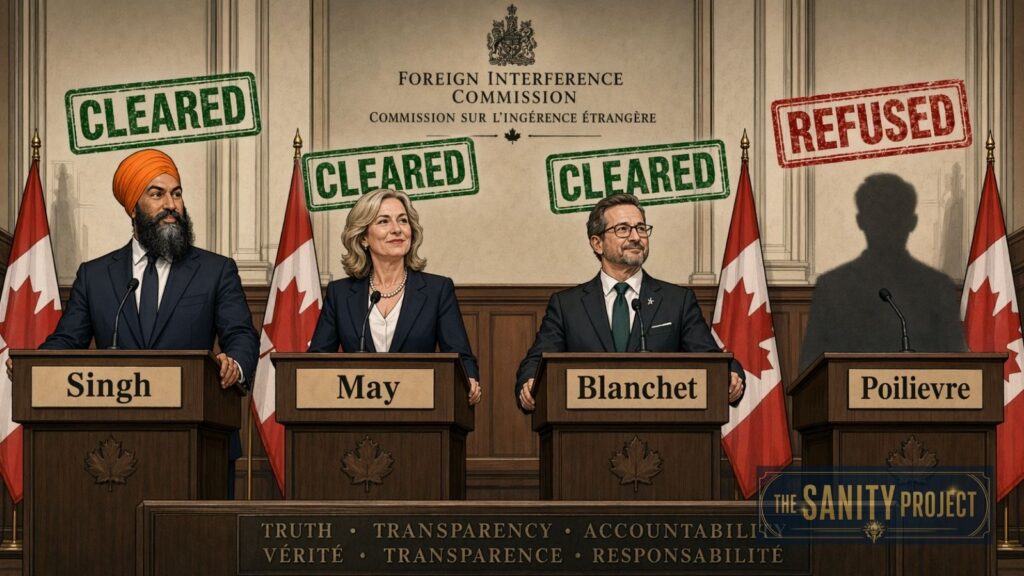
Four Canadian politicians stand at podiums labeled Singh, May, Blanchet, and Pierre Poilievre. Behind them, “Foreign Interference Commission” is written. Singh, May, and Blanchet have “Cleared” security clearance stamps; Poilievre’s is marked “Refused.”.
Security Checked

How the Security Clearance Refusal Echoes in the Media

The Narrative

Media coverage often turns on the drama rather than the details. Headlines about Poilievre frame the issue as both principled stand and political stunt. But, as David Mercer notes, scrutiny shows these defences don’t stand up.

The Role of Nonpartisan Institutions

It’s crucial to reaffirm the nonpartisan nature of vetting and intelligence in Canada.
Suggesting otherwise sows distrust in institutions designed specifically to safeguard democracy from both foreign and domestic threats.


What Should Citizens Make of All This?

Ask Tough Questions

  • Do you believe politicians when they cite personal or procedural reasons for their political choices?
  • Is refusing standard vetting justifiable when everyone else complies?
  • Should transparency be optional for those who demand it of others?

Demand Accountability

It is not enough to claim integrity — leaders must demonstrate it by playing by the same rules they promote for everyone else.

Final thought:
The refusal of a security clearance is not just a personal choice. For someone aspiring to be Prime Minister, it sends a message about their relationship with accountability, transparency, and democratic oversight.

Summary: Reason Over Rage

The loudest critic of foreign interference is the only leader in Ottawa who is unwilling to let CSIS confirm that there’s nothing amiss in his own background.
In a democracy, that matters. Voters deserve honest answers and consistent standards from those seeking their trust — and their votes.


To subscribe to our weekly newsletter, go to https://thesanity.org/subscribe

ShareTweet
Bo

Bo

Related Posts

Energy Transition Canada Is Actually Facing
Energy & Environment

Energy Transition Canada Is Actually Facing

May 21, 2026
EV Adoption in Canada Is Slower Than It Looks
Policy Breakdown

EV Adoption in Canada Is Slower Than It Looks

May 14, 2026
A worried family—mother, father, and daughter—sit at a kitchen table covered with bills, statements, and overdue notices. With canadian household debt rising, a laptop displays an “Interest Rates” chart trending upward.
Global Affairs & Economics

The Structural Paradox: Why Canadian Household Debt is the Shadow of a Safe Banking System

May 6, 2026
Split image: Left side shows a crowded, busy hospital waiting area with people lined up at a registration desk under “OPD” signs. Right side highlights healthcare privatization—a modern clinic where a doctor warmly consults with a patient in a bright office.
Canadian Politics

The Great Healthcare Rebrand: Is Alberta’s New Model a Solution or a Sabotage?

April 30, 2026
Mark Carney Report Card: Separating Hype from Reality on His Economic Impact
Canadian Politics

Mark Carney Report Card: Separating Hype from Reality on His Economic Impact

April 23, 2026
Next Post
Split image: Left side shows a crowded, busy hospital waiting area with people lined up at a registration desk under “OPD” signs. Right side highlights healthcare privatization—a modern clinic where a doctor warmly consults with a patient in a bright office.

The Great Healthcare Rebrand: Is Alberta’s New Model a Solution or a Sabotage?

A city street at sunset with people walking and cars driving. Northstar Bank, a leader in Defence Security and Resilience, stands with Canadian and NATO flags outside. The CN Tower rises in the background as sunlight glows on buildings and street.

Strategic Impact Report: Canada as the Anchor of the New Defence Security and Resilience Bank

Leave a Reply Cancel reply

Your email address will not be published. Required fields are marked *

Recommended Stories

Inflation vs Wages Canada: Who's Winning?

Inflation vs Wages Canada: What Is The True Picture?

May 3, 2026
Energy Transition Canada Is Actually Facing

Energy Transition Canada Is Actually Facing

May 21, 2026
A gray Honda CR-V sits on a factory floor under bright lights. Signs mark it as the last U.S.-bound model made in Ontario due to tariffs, highlighting the broader industry shifts in lithium battery comparison, like LFP vs NMC battery choices.

LFP vs NMC Battery: The $33 Billion Chemistry Gap Reshaping the Global EV Market

May 31, 2026

Popular Stories

  • EV Battery Recycling Is Harder Than It Sounds

    EV Battery Recycling Is Harder Than It Sounds

    0 shares
    Share 0 Tweet 0
  • The $1 Trillion Bet: Rebuilding the Canada Electricity Grid for a Sovereign Future

    0 shares
    Share 0 Tweet 0
  • Strategic Impact Report: Canada as the Anchor of the New Defence Security and Resilience Bank

    0 shares
    Share 0 Tweet 0
  • How Media Narratives Shape Perception

    0 shares
    Share 0 Tweet 0
  • Perception vs Economic Reality: Why We Miss It

    0 shares
    Share 0 Tweet 0

Recent Posts

  • How to Verify Viral Claims Before You Share
  • Current Events Summary Today, With Context
  • How to Separate Signal From Noise

Categories

  • Canadian Politics
  • Energy & Environment
  • Explainers
  • Global Affairs & Economics
  • Media & Misinformation
  • Opinion & Commentary
  • Policy Breakdown
  • Uncategorized

© 2026 JNews - Premium WordPress news & magazine theme by Jegtheme.

Welcome Back!

Login to your account below

Forgotten Password?

Retrieve your password

Please enter your username or email address to reset your password.

Log In
Subscribe To Substack

Powered by
►
Necessary cookies enable essential site features like secure log-ins and consent preference adjustments. They do not store personal data.
None
►
Functional cookies support features like content sharing on social media, collecting feedback, and enabling third-party tools.
None
►
Analytical cookies track visitor interactions, providing insights on metrics like visitor count, bounce rate, and traffic sources.
None
►
Advertisement cookies deliver personalized ads based on your previous visits and analyze the effectiveness of ad campaigns.
None
►
Unclassified cookies are cookies that we are in the process of classifying, together with the providers of individual cookies.
None
Powered by
No Result
View All Result
  • Home
  • Category
  • Landing Page
  • Buy JNews
  • Support Forum
  • Pre-sale Question
  • Contact Us

© 2026 JNews - Premium WordPress news & magazine theme by Jegtheme.

Are you sure want to unlock this post?
Unlock left : 0
Are you sure want to cancel subscription?