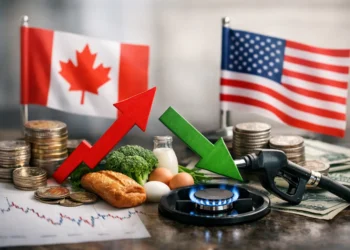
A $90 grocery run that once cost $65 is irritating. A weak hiring report is concerning. Put the two together and the word stagflation starts appearing everywhere – usually with the confidence of someone who has just learned one macroeconomic term.
But is stagflation coming? The honest answer is that it is a meaningful risk, not a condition that can be declared from a few painful prices or one disappointing quarter of growth. Stagflation requires an especially ugly combination: persistent inflation, weak or falling economic output, and a deteriorating labor market. Those forces can overlap temporarily without becoming a durable economic regime.
That distinction matters. Calling every period of expensive living “stagflation” makes the term emotionally satisfying and analytically useless. The better question is whether the underlying signals are moving together – and whether policy makers have room to respond without making one problem worse.
What stagflation actually means
Stagflation is not simply inflation plus bad vibes. Economists generally use the term to describe sustained high inflation alongside stagnant growth and rising unemployment. The classic reference point is the 1970s, when oil shocks, loose policy, weak productivity, and wage-price dynamics created a problem central banks could not easily solve.
Normally, economic weakness cools demand and eventually reduces inflation. Normally, strong growth supports employment and can put some upward pressure on prices. Stagflation breaks that usual pattern. Prices remain stubborn even as the economy loses momentum, leaving central banks with a miserable menu: raise interest rates to restrain inflation and risk more job losses, or ease policy to support activity and risk reigniting prices.
This is why the label matters. A mild recession with inflation falling is painful, but it is not stagflation. Supply-driven inflation with healthy job growth is also not stagflation. The real concern begins when inflation proves resistant while growth and employment weaken in a sustained way.
Is stagflation coming? Watch these five signals together
No single data release settles this question. Monthly economic numbers are noisy, revised, seasonal, and frequently used as props in political arguments. A clearer view comes from looking at several indicators over time.
1. Inflation that stops improving
The first signal is not merely elevated inflation. It is inflation that remains above central-bank targets after the initial shock should have faded. Headline measures can jump because oil, food, or other volatile items move sharply. That affects real household budgets, obviously, but it does not always tell us whether broad inflation is becoming entrenched.
More revealing measures include core inflation, the cost of services, rent-related components, and inflation expectations. If businesses and workers increasingly assume prices will keep rising, they begin making decisions around that assumption. Companies raise prices preemptively. Workers seek larger pay increases to protect purchasing power. The process can feed itself, though it is not automatic.
A one-time energy shock is bad news. Repeated price pressure spreading through the economy is worse news. The difference is not academic when policy makers are deciding whether inflation has been beaten or merely paused for a photo opportunity.
Subscribe To Our Newsletter!
2. Growth that weakens beyond a single quarter
Gross domestic product receives a great deal of attention because it produces a clean headline. But one soft quarter does not establish stagnation. Inventories, trade flows, government spending, and statistical revisions can all move GDP without telling us much about the underlying direction of the economy.
Look instead for broad weakness: slowing consumer spending after adjusting for inflation, declining business investment, weaker industrial production, and reduced new orders. If these persist across several quarters, the case for genuine stagnation strengthens.
The United States and Canada both have economies where consumer spending matters enormously. That creates resilience, but it can also conceal stress for a while. Households can draw down savings, add debt, or postpone rather than cancel major purchases. Eventually, higher borrowing costs and thin cash buffers catch up. The economy often looks fine right until the spending data stop cooperating.
3. A labor market that shifts from cooling to cracking
A slower hiring pace is not necessarily alarming. In fact, after a tight labor market, some cooling can reduce wage pressure without causing widespread hardship. The crucial question is whether employers are simply posting fewer jobs or beginning to cut existing jobs.
Watch unemployment, weekly jobless claims, hours worked, temporary-help employment, and the share of workers who say they are unable to find full-time work. None is perfect. Together, they show whether labor demand is normalizing or deteriorating.
Stagflation becomes more plausible when unemployment rises while inflation remains sticky. That is the combination that traps policy makers. If jobs weaken but inflation is already falling quickly, central banks can often cut rates. If prices are still running hot, rate cuts become much harder to justify. There is no magic setting labeled “fix everything.”
4. Supply shocks that refuse to stay temporary
Stagflation usually needs a supply-side problem. Energy disruptions, shipping constraints, crop failures, tariffs, labor shortages, or sudden jumps in input costs can raise prices while restricting output. These shocks are especially dangerous when they hit an economy that already has limited spare capacity.
Not every supply shock becomes a 1970s-style event. Modern economies are generally less energy-intensive than they were decades ago, and central banks have become more willing to act against inflation. Those are meaningful differences, not comforting trivia.
Still, supply shocks can compound. Higher fuel costs affect shipping, food, manufacturing, travel, and household budgets. Trade barriers can protect one industry while raising costs for many others. Geopolitical instability can push firms to build redundant supply chains, which may be sensible but rarely cheap. Resilience has a price tag. Someone eventually sees it on an invoice.
5. Expectations and policy credibility beginning to fray
The least visible signal may be the most important. Inflation is easier to control when households, businesses, and investors believe policy makers will control it. Once that confidence weakens, expectations can become self-reinforcing.
This does not mean every consumer survey is a prophecy. People often feel inflation most strongly through groceries and gasoline, which are highly visible and purchased frequently. Their personal inflation experience can differ from the official index. Both perspectives contain useful information, but neither should be treated as the whole story.
The deeper concern is a sustained widening gap between what central banks promise and what the public expects. If inflation expectations climb, long-term borrowing costs rise, wage negotiations become more contentious, and businesses become more aggressive in pricing. That does not guarantee stagflation. It makes the path out of inflation narrower.
Why this cycle is not automatically the 1970s
Historical comparisons are useful until they become costumes. The 1970s involved a distinct mix of oil embargoes, institutional wage-setting practices, policy mistakes, and inflation expectations that had become deeply embedded. Today’s economy has different strengths and vulnerabilities.
Central banks have clearer inflation mandates and more experience communicating their intentions. Energy is a smaller share of economic output than it was then. Technology and global supply chains can improve productive capacity, even if those supply chains also create new points of failure.
On the other hand, debt levels make higher interest rates more consequential for households, businesses, and governments. Housing costs are unusually sensitive to financing conditions. Aging populations, labor shortages in key sectors, trade fragmentation, and recurring climate-related disruptions can all constrain supply. The past is not repeating itself. It is offering a warning with updated software.
What to do with the risk without turning it into a lifestyle
For households, the practical response is boring because boring tends to work. Preserve an emergency cushion where possible, avoid assuming borrowing costs will quickly return to unusually low levels, and distinguish between essential spending increases and temporary price spikes. A budget built around permanent pessimism is no wiser than one built around permanent optimism.
For business owners, the key is scenario planning rather than prediction theater. Test what happens if demand softens, input costs rise, or financing stays expensive longer than expected. Companies with pricing power may fare better, but price increases are not a strategy if customers are already stretched. Protecting cash flow and retaining productive employees can matter more than chasing a dramatic forecast.
For everyone else, resist the urge to interpret each inflation print or jobs report as a verdict. Economic conditions change through accumulation. One report can surprise; a pattern deserves attention.
The useful posture is neither complacency nor panic. Watch whether inflation, growth, jobs, supply conditions, and expectations are deteriorating together. If they are, the stagflation risk is real. If they are not, the loudest diagnosis may simply be another case of the public conversation running ahead of the evidence.