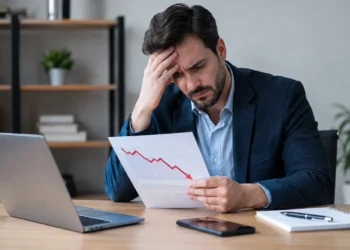
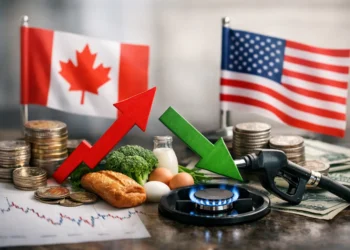
The political damage often begins before the official recession does. A family sees a rent increase, a smaller grocery cart, and a friend laid off. Then comes the announcement that the economy is still growing, technically. That gap between official indicators and lived experience is central to how recessions reshape voter sentiment. People do not vote on a quarterly GDP release. They vote on whether life feels less predictable than it did a year ago.
That distinction matters because the usual story is too neat: recession arrives, voters punish the incumbent, opposition wins. Sometimes that happens. But economic downturns do not produce one uniform political reaction. They can increase demand for change, make voters more risk-averse, deepen distrust of institutions, or push people toward parties that offer a clear target for their frustration. The economy supplies pressure. Politics determines where that pressure goes.
1. Recessions Turn Economic Anxiety Into a Judgment About Competence
Voters rarely need to understand interest-rate policy, productivity growth, or the business cycle to make a political judgment. They use visible outcomes as a shortcut. Are jobs disappearing? Is credit getting tighter? Can young adults afford a home? Is the government’s explanation convincing, or does it sound like an economist reading from a smoke detector manual?
In the United States, the connection between economic conditions and support for the president is well established, particularly when unemployment rises or real income weakens. Yet voters do not assign responsibility with spreadsheet precision. A president may be blamed for a global energy shock, a central bank’s rate decisions, or a recession rooted in conditions years earlier. Fairness is not really the operating system here. Attribution is.
This is why perceived competence can matter as much as the downturn itself. Leaders who acknowledge the pain, explain trade-offs clearly, and show practical action may retain more support than leaders who insist the public is misreading its own bills. A recession does not require voters to become ideological. It often makes them impatient with evasiveness.
2. The Pain Is Uneven, So the Politics Is Uneven
A recession is a national label applied to highly local experiences. One household loses a job; another has a stable salary but watches its retirement account fall. One city sees manufacturing layoffs; another is cushioned by government, health care, or technology employment. Renters, homeowners, recent graduates, retirees, small-business owners, and heavily indebted families can all inhabit different versions of the same economy.
That helps explain why national economic statistics can coexist with sharply divided political moods. Inflation may ease while housing remains unaffordable. Unemployment may remain historically low while new job openings feel inaccessible or pay fails to match living costs. A broad indicator can be accurate and still fail to describe the part of the economy voters experience most intensely.
Canada offers a particularly clear example of this dynamic when housing costs are high. A homeowner with a fixed mortgage and rising property values may hear “economic hardship” very differently from a younger renter trying to enter the market. Neither is necessarily irrational. They are responding to different constraints.
Political campaigns often exploit this unevenness. They select the statistic, story, or neighborhood that supports their argument, then present it as the whole country. The more useful question is not whether the economy is good or bad. It is: good or bad for whom, compared with when, and relative to what they expected?
3. Voters Often Punish Incumbents, but Not Automatically
Economic voting is real, but it is conditional. Incumbents tend to suffer when voters believe conditions have worsened under their watch and no credible explanation or remedy is available. That is a far cry from saying every recession mechanically produces a change in government.
Subscribe To Our Newsletter!
Timing matters. A downturn that hits close to an election is more politically potent than one that occurred early in a term and was followed by a visible recovery. The severity of the shock matters, too. So does whether an incumbent controls enough of the relevant policy levers for voters to regard blame as plausible.
The opposition also has to clear a basic hurdle: voters must believe it could do better. Anger at the governing party does not automatically become confidence in its rival. In some cases, economic uncertainty makes voters less willing to gamble on an unfamiliar leader or a platform that seems vague. Familiarity can become an asset when the alternative feels more uncertain than the present.
This is the inconvenient part for political commentators who prefer tidy laws of history. Recessions create vulnerability, not destiny. A weak opposition can waste a strong economic opening. An incumbent with a credible response can survive a bad cycle. Both outcomes have happened repeatedly.
4. Downturns Make Trust More Valuable and More Fragile
A recession tests more than household budgets. It tests whether people think public institutions are capable, fair, and honest. When banks receive support while households struggle to pay rent, or when policymakers describe an economy as resilient while people are cutting essentials, trust erodes quickly.
That erosion can change voter sentiment in two very different directions. Some voters demand stronger public capacity: better unemployment support, more affordable housing, tighter financial regulation, or more aggressive action against price gouging. Others conclude that government itself is incompetent, captured, or indifferent. Same frustration, opposite prescription.
The difference often rests on prior trust. People who see institutions as flawed but improvable may support reform. People who see them as fundamentally rigged may be more receptive to anti-establishment candidates, conspiratorial explanations, or promises to tear the system down. Economic stress does not create every grievance from scratch. It gives existing grievances a louder microphone.
This is also why clear communication is not cosmetic. During a downturn, leaders cannot simply announce that a policy exists. Voters want to know who it helps, how quickly it works, what it costs, and why the burden is being shared fairly. If those questions go unanswered, someone else will answer them, usually with more certainty than evidence.
5. Recessions Can Shift Turnout, Not Just Party Choice
The electoral effect of a recession is not limited to voters switching sides. It can alter who participates at all. Financial stress consumes time and attention. A person working two jobs, caring for family, or navigating a layoff may be less likely to follow politics closely, donate, volunteer, or vote. Economic hardship can therefore reduce participation among people most affected by public policy.
But anger can also mobilize. Communities facing closures, cuts, or foreclosures may become intensely engaged when they see an election as a real chance to change course. Which effect dominates depends on whether voters feel agency. Do they believe participation could matter, or do they believe every option is a different label on the same disappointment?
That question is particularly important for parties building coalitions around economic frustration. Rhetorical outrage is easy to generate. Turning it into sustained turnout requires organization, credible local messengers, and a believable account of what will improve. A slogan can identify the problem. It cannot pay the utility bill.
The Bigger Shift Is Often Psychological
The deepest electoral effect of a recession may appear after the official recovery begins. People remember the period when work felt precarious, savings disappeared, or institutions seemed slow to respond. That memory can reshape views on debt, trade, immigration, welfare, business regulation, and the basic role of government for years.
This is why a return to positive growth does not instantly restore political confidence. Macroeconomic recovery and emotional recovery operate on different schedules. The former can be measured in quarters. The latter is measured in whether people feel safe making plans again.
For voters, the disciplined response is to resist two temptations: treating every economic problem as proof that one party caused it, and treating favorable national numbers as proof that public frustration is imaginary. Both are comforting shortcuts. Neither is serious analysis.
The next time a politician claims that voters are simply reacting to “the economy,” ask a more useful question: whose economy, whose expectations, and whose explanation of what went wrong? The answer will tell you far more about the political moment than the headline number alone.