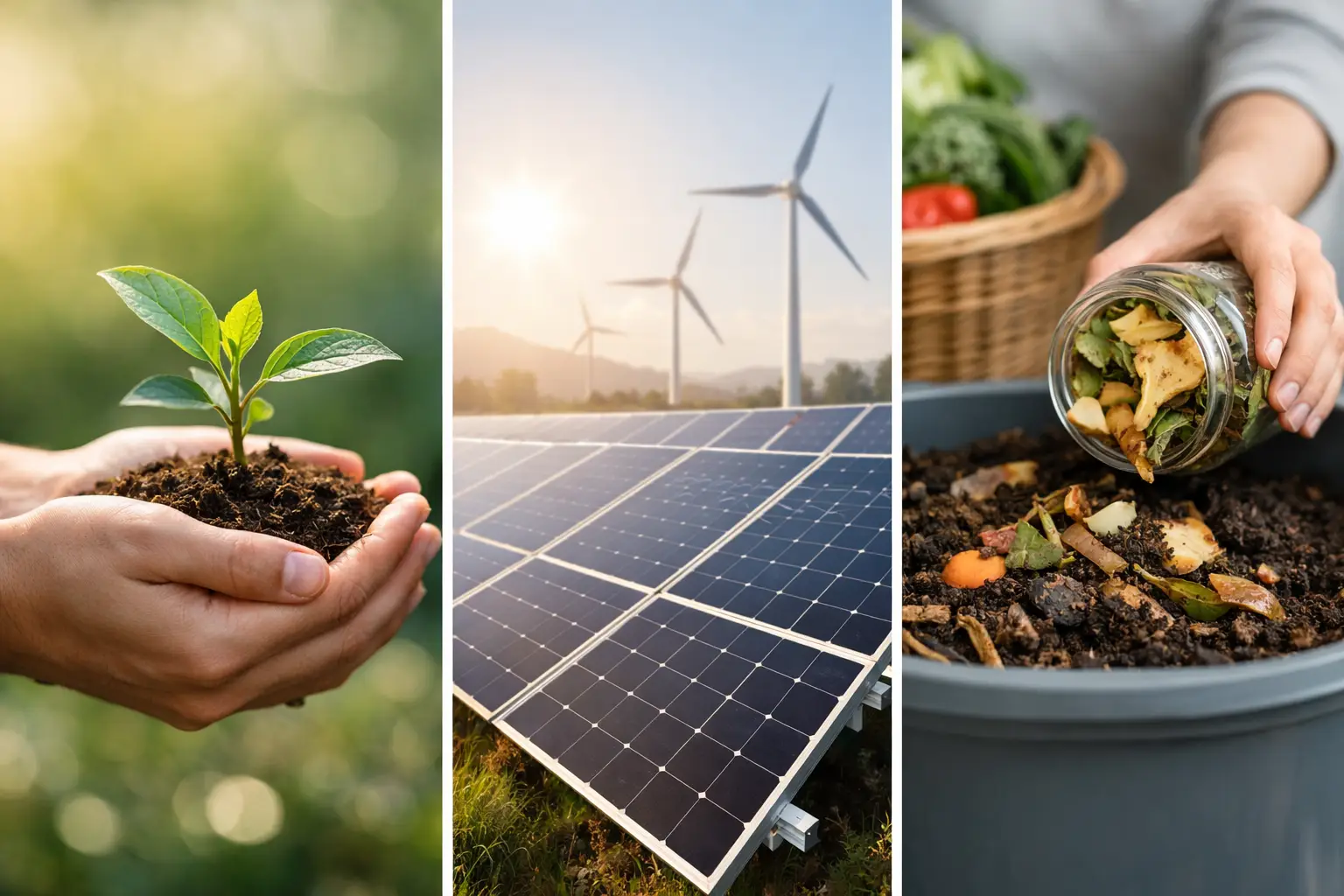
When people ask, “what are three examples of sustainable practices,” they are usually asking for a quick classroom answer: recycle, use less energy, plant trees. None of those is wrong. But it misses the more useful point. Sustainability is not a collection of virtuous-looking gestures. It is the discipline of meeting present needs without quietly transferring larger costs to the future.
That means a practice is sustainable when it reduces resource use, pollution, or long-term risk while still functioning in the real economy. It has to work for households, farms, businesses, and public systems that have bills to pay. A reusable tote bag that sits in a closet is not much of a sustainability strategy. Neither is a corporate pledge with no operational plan behind it.
Here are three examples that hold up better under that test: improving energy efficiency, designing products and materials for reuse, and managing land and water in ways that preserve their productive capacity.
What Are Three Examples of Sustainable Practices?
1. Energy efficiency: use less before building more
Energy efficiency means delivering the same service with less energy. Insulation that keeps a home comfortable, LED lighting, efficient heat pumps, better industrial motors, and software that reduces wasted electricity are all examples. It sounds almost offensively obvious, which may explain why it is routinely treated as less exciting than the latest high-tech climate announcement.
Yet efficiency is often the cheapest and fastest way to lower emissions and energy costs. A building that needs less heating and cooling puts less strain on the grid. A manufacturer that reduces energy per unit can protect margins when fuel or electricity prices rise. For households, the benefit is more immediate: lower utility bills, assuming the upgrade is affordable and properly installed.
The U.S. Energy Information Administration and Natural Resources Canada both track how buildings and transportation shape energy demand. Their data tell a less glamorous story than many headlines: the energy people do not need to buy is often the most reliable form of savings.
There are trade-offs. New equipment has an upfront cost, and an efficient system installed badly can underperform. Efficiency can also create a rebound effect, where lower operating costs encourage people to use more of a service. A cheaper-to-run air conditioner may run longer, for example. That does not make efficiency pointless. It means the results depend on behavior, pricing, building quality, and whether the savings are measured rather than merely assumed.
For organizations, the practical question is not “Are we green?” It is “Where are we paying for waste?” Energy audits, maintenance schedules, and basic consumption tracking can answer that question with more honesty than a glossy sustainability report.
2. Circular design: keep materials useful longer
The second sustainable practice is often described as a circular economy. In plain English, it means designing systems so materials stay useful for as long as possible. That includes repairing products, reusing components, choosing durable goods, refurbishing equipment, and recycling materials when reuse is no longer feasible.
Recycling is the familiar part, but it is not the whole model. Recycling comes after a product has been made, shipped, used, collected, sorted, and processed. It can be valuable, especially for materials such as aluminum, but it also requires functioning collection systems and markets for the recovered material. Tossing something into a blue bin is not a magic spell that turns waste into a new life.
Subscribe To Our Newsletter!
A more durable approach begins earlier. A laptop that can be repaired rather than discarded, a shipping system built around reusable containers, or a construction project that recovers usable materials from demolition can reduce demand for virgin resources. This matters because extracting, processing, and transporting raw materials carries environmental costs before an item ever reaches a consumer.
The Environmental Protection Agency’s waste hierarchy makes the logic clear: source reduction and reuse generally sit above recycling and disposal. Prevention is less visible than cleanup, but it usually does more work. The same idea applies to food. Better inventory management, donation systems, and storage can prevent edible food from becoming waste. Composting helps with what remains, but avoiding waste in the first place is usually the stronger result.
Circular design has limits. Repair can be expensive when labor costs exceed the price of a replacement. Reuse systems require cleaning, return logistics, standardization, and customer participation. Some recycled materials lose quality after repeated processing. These are not arguments for giving up. They are arguments for avoiding the fantasy that every product can be endlessly recycled with no cost or friction.
The better standard is straightforward: prioritize durability and repair where they make economic and environmental sense, then build recovery systems for the materials that genuinely can be recaptured.
3. Sustainable land and water management: protect the asset beneath the asset
The third example is managing land and water so they remain productive over time. This includes practices such as crop rotation, cover crops, reduced soil disturbance, precision irrigation, watershed protection, and restoring wetlands or forest buffers near waterways.
The premise is simple. Soil, freshwater, and healthy ecosystems are not scenery. They are working assets. Soil holds water, supports crops, stores carbon, and reduces erosion. Wetlands can absorb floodwater and filter runoff. Forests and grasslands support biodiversity while protecting watersheds. Once degraded, these systems can be costly and slow to restore.
Agriculture offers a useful case study because it exposes the tension between short-term output and long-term resilience. Heavy tilling, overuse of fertilizer, and irrigation that outpaces local water supplies may raise production in the near term while weakening the resource base that future production depends on. Sustainable farming practices seek to reduce that risk through methods tailored to the farm, the crop, the climate, and the local soil.
That last qualifier matters. There is no universal agricultural checklist. Reduced tillage can improve soil structure in many settings, but it may create weed-management challenges. Cover crops can reduce erosion and improve soil health, yet they require planning, seed costs, and enough water. Precision irrigation can conserve water, but the equipment is not free and the payoff varies widely by region.
This is where public debate tends to become unserious. One side treats any environmental constraint as an assault on production. The other sometimes speaks as if food, housing, and infrastructure materialize without land use or trade-offs. Both narratives are too neat. Sustainable land management is about producing what people need while reducing the chance that the underlying system fails.
For cities, the same principle appears in stormwater management. Permeable surfaces, tree cover, rain gardens, and protected wetlands can reduce flooding and heat while improving local livability. They are not replacements for pipes, roads, or housing. They are part of designing infrastructure that does not create avoidable problems and then call the repair bill an act of nature.
The common thread is not perfection
These three practices look different, but they share a basic logic. Energy efficiency reduces unnecessary inputs. Circular design reduces unnecessary extraction and disposal. Sustainable land and water management protects the natural systems that production and communities rely on.
None is perfect, and none operates outside economics. A credible sustainability plan states costs, constraints, timelines, and measurement methods. It does not pretend every green-labeled decision is automatically wise. Sometimes replacing an old appliance now saves more energy than extending its life. Sometimes a reusable system creates enough transport and cleaning burden that a different option performs better. Context is not an excuse for paralysis. It is how good decisions are made.
The useful question, then, is not whether a practice sounds sustainable. Ask what it reduces, what it shifts elsewhere, how it is measured, and whether it can keep working after the press release has faded. That is where sustainability stops being a slogan and starts becoming a form of long-term competence.